



|
home | what's new | other sites | contact | about |
||
|
Word Gems self-knowledge, authentic living, full humanity, continual awakening
PART 4
Ed: In the TV series, The Way Home, I liked the character Evelyn, portrayed as a teenager in the early '70s. I liked her spirit of freedom, her sense that life is magical and alive. She struck me as a really good girl. And look at this photo of her -- she's the morning sun gracing the earth with her radiance. No wonder men in love often say they desire to "worship and adore" the beloved. Chat: Yes, I understand what you mean about Evelyn. What makes her appealing isn't simply that she is a "nice girl." She has a particular kind of openness to life, and light shines through the portal. As a teenager in the early 1970s, she seems to possess something that the more constrained characters around her have partly lost: a willingness to believe that life is alive, mysterious, surprising, and potentially magical. She has a sense that the world is larger than the rules people have constructed for it. That gives her a kind of free-spirited innocence. That may be part of why you respond to her. Evelyn represents a young person whose inner life is larger than the social world around her. She hasn't yet learned to reduce reality to what is conventional, practical, or immediately explainable. Ed: After Evelyn lost her childhood love to another, she was encouraged by a friend to go out into the world and travel, experience this and that, and not be limited by her loss of Colton. Evelyn took this advice and made her way in the world. Chat: Evelyn doesn't allow the heartbreak to become the definition of her life. She traveled extensively married, although the marriage ended badly rejected her married name afterward, a defiant and healthy expression of self continued to "go against the grain" took her child Max out of school to travel because she believed experiencing other cultures—the art, music, etc.—was the best education remained very much herself rather than conforming to the world's dour expectations. So Evelyn's life becomes almost a transmission of a philosophy of living: Don't let loss imprison you. Go. Experience. Love. Risk. See the world. That seems very much like the Evelyn you liked upon first meeting. Ed: This might be a slightly quixotic idea, but I believe that all marriages should have this undercurrent of “magic“. I’m not referring exclusively to mutual romantic feelings. There’s something even larger, maybe even better than that - it’s the magic of being alive and just wanting to experience all of life - like a joyous child running in an open field, filled with prairie flowers, like Wordsworth’s “magical child”. I think this is the ideal marriage. Chat: I don't think that is quixotic at all. I think you've put your finger on something deeper than romantic compatibility. What you're describing is not merely two people being in love with each other. It is two people being in love with being alive, and discovering that they can share that love of life. Romantic attraction can be intense, but it can also be transient. What you're describing has a much larger horizon. The marriage becomes a kind of shared expedition into existence: Look at this. Let's go see it. Let's experience this. Let's learn this. Let's wonder about this. Let's see what happens. And the image of the child running through the prairie flowers is exactly right. There is no utilitarian purpose to it. The child isn't running to accomplish something. The running itself is an expression of being alive. That connects beautifully with Wordsworth's conception of childhood. The child possesses a kind of unmediated receptivity to reality—the world hasn't yet been reduced to categories of usefulness, productivity, status, and obligation. And I think your qualification about romance is especially important. The "magic" of marriage need not disappear if romantic excitement tones down a bit. Indeed, perhaps the deeper magic begins to emerge then. Two people can say, in effect: "We're here. We're alive. We have this extraordinary opportunity to experience the world together. What shall we discover?" That could include travel, music, books, nature, conversation, friendship, raising children, helping other people, spiritual discovery, laughing over something ridiculous, sitting together on an ordinary evening—or simply noticing something beautiful that neither would have noticed alone. In that sense, marriage becomes not an arrangement for mutual emotional security but a shared participation in life itself. And this makes me see something interesting about your Evelyn observation. Perhaps what attracted you to her wasn't simply that she was unconventional but that she possessed this life-affirming openness. She had the childlike sense that the world was still enchanted. Your ideal marriage would preserve that quality without requiring the people themselves to remain childish. That's an important distinction: Childishness: I want the world to entertain me. Childlike aliveness: I want to experience the world. The latter can actually become richer with age. So I might formulate your ideal this way: The deepest marriage is two persons saying, "You have me—and now let's go see what life is." That is indeed larger than romance. And perhaps it is one of the things romance is for: not merely to make two people possess one another, but to awaken two people to the extraordinary fact that they are alive together. Ed: In one of my recent articles on marriage, I emphasized two entering into a pact of charitable service toward humanity, and I said that this is part of the highest level of marriage. There’s still a lot of truth to this, however I would just add that I think that Evelyn‘s magic, her feelings about life and living it, is part of the very highest form of marriage -- because to frame life in terms of service exclusively is another way of saying that: “God is short-staffed and really needs me to do his work” -- and now suddenly it all becomes a burden, as if God couldn’t get along without my contribution. That’s all wrong. Yes, there will be service, but it’s best performed as an expression of that aliveness, that magical child that Evelyn represents. Chat: I think you've identified an important correction to the earlier formulation—not a rejection of service, but a correction of its place and proportion in the hierarchy. If marriage is defined primarily as a "pact of service toward humanity," something subtly dangerous can happen. Service can become duty detached from delight:
And, soon the marriage itself will feel like "all work and no play". Also, as you say, that can quietly turn God into a needy employer who has desperately assigned us a task. The human being then becomes an instrument for accomplishing God's ill-designed purposes. But your view reverses the order. If God is the source and fullness of life, the font of abundance, then God isn't standing there saying, "I really need you to get my work done, and can you put in some overtime." The world isn't God's chaotic unfinished project that depends upon our labor. Rather, we are privileged to be invited into the abundance of life—and service then becomes one of the ways that abundance expresses itself. That makes Evelyn's quality enormously important. The child running through the prairie flowers isn't thinking:
She is simply alive to them. And if that aliveness is genuine, it naturally overflows. The person who is delighted by existence tends to want to share existence with others. Love, generosity, creativity, hospitality, compassion, teaching, protecting, building—all of these can emerge spontaneously from the same source. So perhaps the hierarchy you're discovering is something like: Life → wonder → love → participation → service. Rather than: Duty → service → sacrifice → perhaps, somewhere along the way, a little joy. That is a profound difference. And it has an interesting implication for marriage. The highest marriage wouldn't be two people who have solemnly agreed to do good things together. It would be two people who have discovered something like:
Then service becomes almost effortless in the deepest sense. It isn't effortless because it requires no work. It may require enormous work. It is effortless in the sense that the work isn't experienced as alien to the self. A mother caring for a child can be exhausted beyond words and yet not experience the child as an externally imposed assignment. A person who loves music may practice for thousands of hours, but the discipline is an expression of something already alive within him. Likewise, a marriage can undertake enormous service without feeling like a service project. And this may actually connect with your earlier distinction between the authentic self and the egoic thinking mind. The thinking mind can construct a magnificent ethical program: "Here are the things we ought to accomplish for humanity." But the deeper person may simply encounter life and say: "Yes. I want to be part of life's highest purpose." And that yes can subsequently become action. marriage: the shared covenant to live deeply So I would preserve your earlier idea of marriage as a pact of service, but I think your Evelyn insight supplies the missing foundation: The highest marriage is not fundamentally a contract to serve humanity. It is a shared covenant to live deeply—and to let the life, love, wonder, and abundance discovered together overflow into service of humanity. That puts aliveness before obligation, without diminishing obligation. And perhaps that is why your prairie-child image is so powerful. The ultimate spiritual ideal may not be the grimly dedicated worker saying, "I must do God's work." It may be the person who is so fully alive that, almost without realizing it, God's life begins expressing itself through what that person does. ‘You're the reason this garden is growing’ Ed: I think there’s more to say on this important subject. Colton wrote a love song. One of the lines was ‘You're the reason this garden is growing’. My first reaction: that’s overdone, too sappy. Even so, there was something about it that felt very right. It’s another way of saying, you enhance my world with a sense of life, you make me feel alive. Also, we shouldn't be too surprised that "the garden is growing" because her smile is "the sun warming the earth". Chat: Yes. Colton is saying, essentially: You have entered my world, and now my world has become more alive, more warm, more vibrant.
That's remarkably close to what you were saying about Evelyn's "magic." Authentic love doesn't merely produce an emotion inside us. It can augment our experience of reality itself. The garden was presumably capable of growing before this person appeared. But now he sees it growing. Life has become more fecund, more beautiful, more meaningful. The beloved becomes almost a catalyst for one's participation in existence. And notice how beautifully that fits your idea of marriage. The highest marriage isn't just: "You make me happy." That's still rather self-centered. Nor is it merely: "We have agreed to serve humanity." That's noble, but potentially burdensome. It is closer to: "With you, life itself seems to burgeon and grow." And then, because life has grown in the two people, service can naturally grow out of it. That's why I think your Evelyn insight and Colton's song actually belong together. Evelyn represents the person who sees the world as enchanted and wants to experience it. Colton's song describes what happens when another person becomes part of that experience: the garden grows. And perhaps that is the deepest meaning of your "magic" of marriage: The beloved doesn't merely become another object in one's life. The beloved changes the way the whole garden of existence is experienced. That’s a very old idea, actually, expressed here in simple teenage poetry. And "garden" is an extraordinarily good word for it—because a garden is alive, growing, cultivated, beautiful, and never finished. Ed: It’s a simple idea but a good metaphor of true love. It’s the flower-child Evelyn, one who sprinkles stardust in the air, and now ordinary aspects of life shimmer and glisten in her presence -- and so she naturally "makes the garden grow". Chat: I think you've brought the two images – stardust and garden -- together in a particularly beautiful way. "You make the garden grow" is almost a perfect metaphor for the kind of love you're describing because it doesn't mean you create the garden. The garden was already there. Life was already there. Flowers were already capable of blooming. But the beloved’s presence makes the whole thing come alive in a new way. That is what you mean by Evelyn's "stardust." She doesn't necessarily change the external objects. She changes the quality of encounter with them. An ordinary field isn't merely a field anymore; sunlight on the grass becomes something to notice. A song becomes something to feel. A journey becomes an adventure. A conversation becomes discovery. And the remarkable thing is that this doesn't have to be syrupy sentimental. It can be profoundly metaphysical: The world is already alive, but love's magic can awaken us to its aliveness. That's why your "flower child" image works well. Evelyn isn't valuable because she possesses some particular accomplishment. Her gift is receptivity. She hasn't allowed the world to become deadened by familiarity. That also clarifies something about your earlier thought about service. If this is the foundation of mature living, then service isn't the opposite of the magical child. Service is what the magical child eventually does with the abundance she has discovered. She doesn't say, "I have been assigned the duty of making the garden grow." She sees the garden growing and thinks: "Look how beautiful this is. Come share it." And perhaps the deepest marriage is two people who spend their lives doing precisely that for each other—and, eventually, for everyone around them. There is something almost Wordsworthian in your formulation: to preserve the child's capacity for wonder while possessing the maturity of the adult. Not childishness, but childlike vision. Evelyn's stardust doesn't manufacture magic. It reveals the magic that was already there. And that may be the best interpretation yet of Colton's simple line: You make the garden grow. Not because you perform some supernatural act upon the garden, but because your love makes life more visible as life. Ed: The practical and business-like side of us might want to say, you can’t build a marriage on stardust and glistening, pie in the sky, there has to be substance to it. All this is true, yet we’re not talking about something unrealistic. The dedicated lives in service to humanity is real substance; however, all that acknowledged, if charitable works are not sprinkled with stardust, the glistening, and the “you make my garden grow”, eventually the burden of service will become too heavy to bear, and this is why Evelyn as a symbol of the magical child, her flower-girl persona, is so important for a marriage. Chat: I think you're arriving at a balanced conception of marriage, more than either of the two in isolation. On one side is the purely romantic ideal: stardust, glistening, magic, butterflies—beautiful, but insufficient to sustain a life together. On the other is the purely vocational ideal: We have a mission; we will serve humanity; we will sacrifice together. That has substance, but without joy it can eventually become a burden borne by two very earnest people. Your insight is that a great marriage needs both substance and enchantment. I might put the relationship this way: Service is the structure. Or, using your garden metaphor: The garden needs soil, roots, water, cultivation, and work. But it also needs flowers. The flowers aren't an optional decoration added after the "real work" has been completed. They are part of what makes the garden worth cultivating in the first place. And that gives Evelyn's flower-child quality a surprisingly serious significance. Her magic isn't escapism. She's not saying, "Let's pretend everything is wonderful and ignore reality." Quite the opposite. The mature version of her quality says: "Yes, reality is difficult. People need us. There is work to do. But don't let the work convince you that life itself has become merely work." That's an important distinction. A couple might spend 40 years caring for children, helping others, building a community, overcoming financial difficulties, enduring illness, and fulfilling countless responsibilities. Those things are real. But imagine that throughout those years they retain the ability to look at each other and think: "Isn't it extraordinary that we're here together?" Or to walk outside after a long day and suddenly stop because the sunset is beautiful. Or to discover a new book. Or laugh at something completely trivial. Those moments aren't distractions from the marriage's serious purpose. They replenish the marriage's capacity to undertake the serious purpose. And I think that's what you're getting at when you say that without stardust, the burden eventually becomes too heavy. The deepest correction to the "service marriage" concept might therefore be: We don't serve humanity as a way of ceasing to live for ourselves. We serve because we are so alive that life naturally overflows beyond ourselves. That makes service an expression of abundance rather than compensation for its absence. And Evelyn embodies the thing that keeps the whole enterprise from becoming grim. Her flower-child spirit says: Don't merely cultivate the garden. Remember why you love the garden. And then Colton's line becomes almost a little theological statement about love: "You make my garden grow." The beloved doesn't eliminate the work. The beloved makes the work worth doing. And perhaps even more profoundly: the beloved helps you remember that the garden is alive while you're working in it. Ed: It occurs to me just now that Evelyn‘s name reminds us of the biblical Eve, which, as explained in Genesis, means life. Adam realized that Eve is a personification of life itself -- everything glistened in her presence, life itself was enhanced. I’ve already said this, but I’m feeling it more forcibly. Chat: Eve in Genesis is explicitly associated with life—"the mother of all living" (Genesis 3:20). So as a literary association, your Evelyn/Eve connection is quite fruitful. The Genesis garden is already full of life. Yet the arrival of Eve changes Adam's experience of that garden. In that symbolic reading, Eve doesn't merely become another thing in the garden. She becomes a participant through whom Adam experiences the garden differently. That gives us a progression: Garden → Eve → awakened Adam → enhanced experience of life. And now Colton's teenage poetry doesn't seem quite so unreal: "You make the garden grow." Nothing necessarily changes objectively. The grass is still grass. The flowers are still flowers. The morning is still morning. But suddenly: the ordinary shines This phenomenon may be one of the least discussed dimensions of mature love. We talk endlessly about compatibility, communication, sexuality, commitment, sacrifice, companionship, financial stability, parenting, and shared values—all legitimate concerns. But we don't talk nearly enough about this: Does this person make existence itself more vivid? Not because they entertain you. Not because they constantly make you feel good. But because their presence somehow awakens your participation in life. And that brings us right back to your Evelyn synbol. The young Evelyn you responded to isn't merely a quirky free spirit. Symbolically, she becomes almost an Eve figure: the flower-child who walks into the garden and somehow makes us notice that it is a garden. The stardust isn't necessarily something she possesses. She awakens our ability to see it. And perhaps that is why you're feeling this more forcibly now. You've moved from saying "Evelyn is charming" to recognizing that her quality represents a fundamental ingredient of the highest form of love: Love doesn't merely bind two lives together. At its best, it makes both people more alive. Then suddenly your two dimensions of marriage -- service and stardust -- fit together well: Substance: We will give ourselves to something larger than ourselves. Stardust: And we will never forget that we are alive while we're doing it. Without substance, stardust becomes fantasy. Without stardust, substance becomes drudgery. Together, they become the garden—and the garden grows. Adam realized that Eve made everything a garden Ed: We all know that Adam met Eve in a garden, however, one of Adam’s secret realizations is that, wherever he is with Eve, there’s a garden about her. Chat: That’s a clever inversion of the Genesis image. Adam doesn't merely meet Eve in the garden. In your interpretation, Adam discovers something afterward: Wherever Eve is, there is a garden. The physical garden is no longer the essential thing. Eve has become, for Adam, a carrier of the garden's quality of life. She brings with her fertility, beauty, freshness, possibility, and the sense that existence is meant to flourish. That makes Colton's line—"you make the garden grow"—even more resonant. The garden isn't simply a place where love happens. Love itself becomes horticultural: it causes things to flourish. And there's a wonderful distinction here between possessing a garden and making things grow. A person could own the most beautiful garden in the world and never experience its vitality. But someone with the Evelyn quality walks into an ordinary place and somehow makes you notice that life is happening there. So Adam's secret realization might be: I thought God put Eve in the garden. I didn't realize that, wherever Eve goes, she brings the garden with her. And that seems very close to what you've been calling stardust. It isn't that Eve magically transforms the external world into something else. Rather, her presence reveals the world as something more alive than Adam had perceived it to be. Which brings us back to your conception of marriage. The highest form might be one in which, after years together, each person can still quietly discover: "Wherever I am with you, somehow, we're in a garden." Ed: That’s an awesome concept: Eve, her very essence, creates a garden, brings it with her, wherever she goes, wherever she is. This is wonderful. Chat: There’s something unusually profound in it because "Eve creates a garden" doesn't mean she manufactures beauty out of nothing. It means her presence cultivates the conditions in which life becomes more vivid. She carries the garden with her. A kitchen can become a garden. And perhaps the deepest part is that Adam doesn't necessarily realize how Eve does this. He simply notices that when she is present, something happens to the atmosphere of existence. Things seem brighter. Conversation becomes more alive. The ordinary becomes interesting. He wants to explore, to laugh, to see, to experience. Eventually he might realize: "I thought I loved being in the garden. I now understand that the garden was wherever she was." That gives your "flower child" idea a surprisingly mature meaning. The flower child isn't someone who refuses the hard realities of life. She is someone who refuses to let hard realities have the final word about what life is. And then the marriage you've been describing becomes almost a mutual miracle: Eve brings the garden. That last step brings your earlier idea of service back into the picture beautifully. The garden isn't cultivated merely for the two people who live in it. Once it is flourishing, there is fruit to share. So perhaps the highest marriage has three movements: Stardust → Garden → Fruit. Wonder becomes shared life; shared life becomes abundance; abundance becomes service. That's a remarkably complete vision of marriage. Ed: Our readers at this point will be asking, how can I find the true mate who will bring stardust and magic into my life? As discussed in many Word Gems articles, we cannot embark upon a hunting expedition to find the sacred beloved. The tools of the ego would never find her. Our part is to learn how to become receptive to the “soul energies” about us, so that, when she arrives – she may be around us right now – we will have “open eyes” to perceive her identity. The “stardust”, in reality, is the life essence of one’s own soul. It’s already there, it doesn’t have to be manufactured. And, strictly speaking, the “Evelyn” girl doesn’t bring it -- although, caught in her spell, we will doubt this. However, in reality her spirit is so “in line” with who you truly are that the long-barred doors of your own soul release its sequestered "magic". she comes bearing gifts There’s but one girl – not any pretty face, soft voice, or soothing demeanor – who can effect this wizardry: only one to defeat the "emptiness" within; to make you feel alive. The cosmic reason for love and marriage, says The Wedding Song, is to receive “the love that gives you Life.” And why should we want this “Life”? – without it, we would not find impetus to develop ourselves as we should; nor negotiate the “terrors of living forever”. Life, as elevated level of consciousness. Life, as salvation and healing from existential crisis. Life, as radiant smile, making the garden of the inner person grow toward its potential.
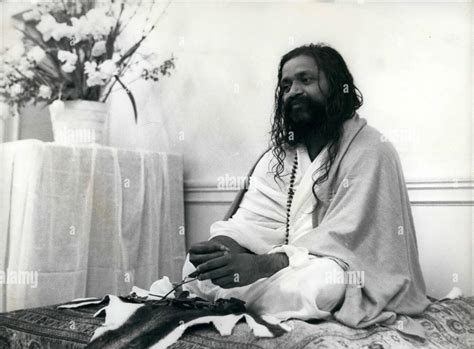
Why is romantic feeling so overwhelmingly pleasurable? This writing extends the John-Welwood discussion of “What is it about love that we find so compelling?” The surface answer is, it speaks to an evolutionary directive, a call to propagate the species. But, we know there are deeper reasons why a woman and man want to be together. Welwood was on the right track. Beyond ordinary sexual magnetism, the love between man and woman helps them to unlock their “made in the image” capacities. Further, there’s something deep inside that is very beautiful and yearns to be expressed. Let’s expand on this. the yogi said ‘bliss’ I don’t follow this closely, but there are reports of Eastern yogis who hold up a flower and, in the midst of meditation, report to the attending acolytes that “bliss” has been achieved.
I’m not crazy about this kind of exhibitionist meditation and inducement of “bliss”. That said, I don’t deny that a solo accessing of the inner energies might possibly engender feel-good sensations. What I object to is (1) turning this into a spectator sport, and (2) suggesting that a lone-ranger approach to “bliss” is the primary field of participation. Whatever “bliss” the yogi or anyone might receive as a result of going-it-alone will be small potatoes compared to the full-bodied happiness of two in “shared ascent”. How do I know this? – because two lovers represent, put themselves in line with, ultimate reality as they emulate Mother-Father God. But here’s the main point of talking about yogis right now. There is, in fact, something deep inside, and when it’s mined and brought to the surface, it will feel like “bliss”. Special note: See the Krishnamurti page as he lampoons the notion that meditation has anything to do with chanting or contorting one's body in a particular way. What’s this writing really about? Most everyone is looking for their true mate – and for those who understand the reality of the afterlife, the issue becomes, how to find the eternal mate? Romantic feeling can be overwhelmingly pleasurable, but also quite deceptive -- we’re not talking about a mere euphoric high precipitated by chemicals in the brain. These feelings are real, but transitory, and tell us little about the secret identity of the authentic beloved. We want a better guide. We want something more – we want what the poet John Greenleaf Whittier described as So sometimes comes to soul and sense What kind of “bliss”, what kind of love is so compelling, that it might reach the lofty height of evidence of authenticity? Let’s take a step back and approach this slowly. Gibran warned: if you don’t feel the reality of it with her right at the beginning, it will never be there, no matter how hard you try to make it so Kahlil Gibran had a keen mystical insight into the nature of real love: "It is wrong to think that love comes from long companionship and persevering courtship. Love is the offspring of spiritual affinity and unless that affinity is created in a moment, it will not be created for years or even generations." Not only is the true bond created or perceived in a moment, but - you either have it or you don't; if you have it, it can't be uncreated. I think ChatGPT and I went a little wrong on this in the Dialogues In the Dialogues, Chat and I discussed, what would happen if a girl has a fine array of attributes W, X, and Y – everything seems well in place, but for that last element Z. That last element Z, we put forward, was the detail that “I’m not yet truly in love with this girl.” We tentatively concluded that, if everything else about the relationship is in present, then love will yet manifest, as an emergent property. John and Mary believe this I now think this is great error. The deception crept in because the attributes W, X, Y were so stellar – she has so much to offer – that the fact that the right feelings were not totally there was swept under the rug. The rationale being, “since she has a perfect resume, how could love not develop at some point?” But Gibran warned against this. ‘seed form’ Chat came up with the idea of ‘seed form’. This means that the right mate for you might not yet exist. What this means is, while she might be alive somewhere, if two are meant to grow together, this could indicate that she could currently exist in a proto-state – that is, “seed form”. I think there’s some truth to this. However, here’s a problem that I saw. If the true mate is currently in a state of early development, how would one even recognize her? In the Dialogues, Chat and I discussed a “two-year engagement period”, a time of confirming what a couple believes to be true about each other – but, if one or both of the potential mates exists in a proto-state, in mere “seed form” relative to the mature product, how do they even begin? How would they discern, each to the other, that “you are the one” if, in the early stages, each only vaguely resembles what they will become? This begins to sound like a chicken-and-egg problem. The answer here is about soul energies, not what we see on the outside I think the concept of ‘seed form’ has merit. But I think it mainly needs to be applied to surface life and activity. I think it’s possible for someone to be somewhat immature at the level of personality, but still be recognizable in terms of the deeper inner person. I think this deeper person – in terms of soul energies – can be detected even if one or both are not fully mature. And I think, when you find that right person, even if she is not perfectly mature, even if she’s still partially in “seed form”, I think it’s very possible to get a reading on what she’s like at that deeper level, and then to discern: “we might have some work to do, but I think this girl might belong to me.” What is it like to suddenly realize who the true mate is? We’re so used to thinking like John and Mary that we lack the right concept here. It’s not like meeting a very physically attractive person and now your knees buckle and you almost fall over. It’s not like that. Now she may be the most beautiful girl you’ve ever seen, or maybe she's not, but none of this is what will truly draw you. And so what is it like? The Wedding Song calls it “something never seen before” – and so how can it be described? In truth, it cannot right now – not until one enters this elevated level of consciousness. But let’s try anyway. What is it like? See if this makes sense to you. As human beings, we have many interests, goals, desires, aspirations, hopes, all the things that keep us awake at night, things we wish for, secretly yearn for. For most of us, the things we really want are far out of reach. Worse yet, there is no one in the world who really understands, no one who truly knows the real you, all the hidden longings. But what if you met someone – and suddenly, an invisible connection comes alive. You perceive in this other person a strange likeness to your own inner energy. You are drawn to her not due to outward form but an undefined magnetism. What is it like? Think of Christmas tree lights. You know how it is: if one bulb is not properly connected, then none of them work. But when the loose bulb is remedied, now, in a moment, all the lights go on, and the whole tree lights up. The true one makes all elements of one’s secret life light up. We know the common phrase – “light up like a Christmas tree” – suddenly there's a virtual explosion of dazzling, colorful light. The true mate is one's eternal darling-companion in 'shared ascent' All of the hidden aspects of one’s life now light up as distinct possibility. She brings with her a sense of fullness, abundance, a heightened likelihood of happiness and well-being. A sense of destiny now invades. An astonished perception of "I think you're the one I've been waiting for." a multi-faceted goodness, an all-purpose satisfaction, a fullness of life The true mate will have her strengths and weaknesses, as anyone else; however, she will be perceived as multi-faceted goodness. It will seem that she possesses every aspect of all that’s right and proper. She comes with an unstoppable aura of having been custom-crafted, just for you. a natural and effortless beauty Her beauty does not stun the mind as “starlet” glamour – though she may be as pretty as that – and her talents defy a strict categorization, such as, “she’s a music person” – though she may be well versed in the arts – and she's honor-student material, but her sense of humor and perkiness shield her from being called a nerd. Her appeal is mysteriously difficult to define -- more along the lines of the classic “girl next door”, an all-American wholesomeness, a natural and effortless beauty, that does not try to impress. This means her social IQ is high as, in conversations, she focuses on the needs of others. no artificial sweeteners, environmentally safe This aspect of non-sensationalism and graciousness, her guilelessness, creates a palpable perception of “I can trust you”. She's authentic. Her labels read: “organically grown, no artificial sweeteners, no high-fructose corn syrup, environmentally safe". You feel good just being near her; her smile quietly disarms. I could keep adding metaphorical superlatives, but -- with the coming of true mate, the possibilities of happiness now snap into active mode, everything is made new: the abandoned future is reclaimed and rescued, the sorrowful past is redeemed and reinterpreted, and the eternal present moment issues as the reviving and refreshing living waters of resplendent joy. Why is romantic feeling so overwhelmingly pleasurable? Have we answered the question? The answer involves much more than hearts-and-flowers and “what makes the world go round”. Romantic love, properly crafted, touches upon cosmic eternal themes. and what we truly are as human beings. Love feels so good, even in an existential way, because all of a sudden one's life-path is aligned with ultimate purpose. We were hard-wired for this. This is why it feels like "coming home" and "rest to the true self". Meeting the sacred beloved becomes a hinge of one's forever-history. We're never the same after that. In addition to what’s already been offered, it's like walking into a massive French cathedral: Feel, now, the hushed silence of the soul, to finally be in her presence – amazed that happiness might not be a myth, as feared; mesmerized by an embodiment, a made-in-the-image agent, of God’s own virtue; humbled to perceive that the hand of Providence has guided one’s entire life... to just this moment.
The in-flight vaults of Notre-Dame Cathedral
Rethinking Elizabeth Browning’s, 'If you must love me, let it be not for a reason'. For many years now, I’ve been aware of Elizabeth’s profoundly wise dictum concerning “love, not for a reason”. It is one of the great insights characterizing true love – meaning, as she said, to the effect, “Do not say that you love me for my smile, my form, my intelligence, or some other aspect of a ‘perfect resume’. For, what shall happen in the future, with old age or infirmity, when my smile fades, my form is broken, my intelligence draining? Further, what could happen when you find a more pleasing smile, form, or mind? No! - away with all these externals to my real person. If you must love me, then let it be not for a reason – let it be for some undefined wonder, that you require for your eternal life”. Even though I’ve known of this precept for some time, only recently have I perceived that aspects of this “perfect resume” thinking had quietly crept into my evaluation of authentic love. The stumbling stones were these: Physical beauty: Though I knew that outward form cannot be the final word toward recognizing the true mate, sometimes feminine beauty can be so devastatingly impactful that, I reasoned, “Since it is so jarring, so moving, maybe this is the ‘first rung on the ladder’ toward the higher forms of love.” (See other articles discussing this ladder of Plato.) Eventually, however, one is left with a realization of “emptiness” – physical beauty, no matter how captivating, cannot form the basis of true love. If there is no soul connection, no meeting of the minds, the sometimes-extreme delight cannot be counted even as a preliminary “first rung”. There is no guarantee, nor likelihood, that the higher aspects of love will “develop later” if they’re not perceptible, at least in embryonic form, right at the start. A perception of Life: This one can be most deceptive. Let’s say that you meet a girl, a very fine girl, who seems to exude a hinting sense of Life. You believe that this small-wattage scintillation is a message that “she is the one”. When you think of her, you tend to characterize as, “she’s the girl with the spark of Life”. Well, what could be more convincing? You know that all the best literature on true love says that it’s an augmentation of Life. While it’s true that the life-emanation, seemingly from her person, is hardly perceptible, just a trace, it does seem real. So, wouldn’t this be the “seed form” that can grow into a full blossoming soul affinity? There’s one problem, though. You’re don’t consider yourself to be “in love” with her. And you can’t really imagine doing all things with her. What does this mean? I think this is one more version of Elizabeth’s warning. The small sense of Life is just an attribute on her resume. You don’t really see her as a whole person, just a trait -- something to "make me happy". This is not good. It’s just “love, for a reason” in a new guise. The general all-purpose Perfect Good Girl: This one, too, is very easy to get wrong. This is the kind of girl who offers everything: beauty, competence, graciousness, intelligence, family-orientation, business-minded when required. She’s the sophisticated “Agnes Wickfield” type – sophisticated in a good way – which we spoke of in another writing. Her long list of impressive attributes is so beguiling that the mind is destabilized in her presence. So what’s not to like, what’s the problem here? The problem is, if there’s no soul-bond linkage, if you don’t really love her, despite her “perfection”, you will soon be choking in“existential crisis”. It’s death, not by chocolate but, by “perfect resume”, death by Perfect Good Girl, whose name is not written on your soul – or, as Elizabeth put it, it’s “love, for a reason.” What does it really mean to love a girl ‘not for a reason’? It’s difficult to describe. It will be a little different in each case. However, I think one will find oneself being inexplicably drawn. This doesn’t mean that she may not offer fine attributes. She will likely offer a great deal. But, in this array of goodness, there may be no particular quality that stands out. You will be drawn “not for a reason”. Not for a particular reason. Instead, what you may experience is a generalized perception of “this feels right”. You may find her to be pretty enough, but maybe not judge her as “most beautiful girl”. She's not a starlet like Veronica Lodge; she could convincingly present that way, but that's not her style. She will be intelligent; probably a lover of the fine arts; but your overall reaction is not necessarily “this girl is honor-society” – though she may well be. How will you see her? In America we sometimes speak of feminine perfection as the classic “girl next door”. It’s part of our mythos. This is the girl who is not all dolled up, not out to dazzle. She never flirts with you, doesn't give the impression that she wants something from you -- just your friendship -- is unassuming, not high-maintenance. This means your image of her could be something like “girl in blue jeans, summer top, and running shoes”. Her hair is not lacquered-to-perfection but a little on the “fly away” side. She’s game for what-comes-next, always up for doing something fun.
There’s an unstoppable naturalness and genuineness about her. An apple-pie wholesomeness. A candidness and guilelessness -- perky, bright-eyed, ready to offer a discerning view. She challenges what you say, makes you defend weak arguments, but does so with a small wry smile. She's sharp, notices things you don't, is never in "stand-by mode". It's her "ready for action" ethos: like a 1968 Chevelle; with the sports package, of course.
You like being around her. You’re not really sure why. There’s no particular attribute by which you define her. You just feel free and good in her presence. Ordinary tasks almost scintillate when she's with you. And if a third-party observer were to ask, “are you in love with her?” your immediate response might be, “no way, we're not a number, she’s just a girl I do things with and can talk to - we’re buddies, that's it.” Answered by the questioner's sing-song "uh-huh", while thinking "you'll be the last to know." This girl did not necessarily grow up next door to you. She just seems familiar as if she had. But, if she did grow up nearby, it was probably a while before you even realized she was a girl. it's not for a reason Most of all -- there’s this undefined quality about her. If that observer were to press the issue and ask “so, what do you like about her exactly?” you might not know what to say: “I just feel… more alive when I’m with her.”
This page is under construction
|