|
home | what's new | other sites | contact | about |
||
|
Word Gems self-knowledge, authentic living, full humanity, continual awakening
W.B. Yeats The Tower
return to 'Great Books' main-page
see a copy of the analysis format Commentary by ChatGPT
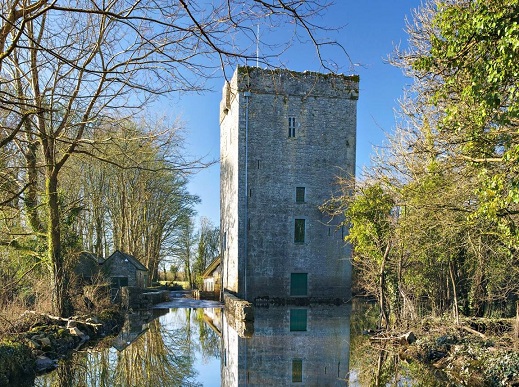
The Tower “The Tower” (1928) by W. B. Yeats takes its title from an actual Norman tower: Thoor Ballylee, which Yeats purchased and restored in 1917. But the title works on several symbolic levels at once.
1. The Literal Meaning: Yeats’s Real TowerThe tower was Yeats’s home during part of the 1910s–1920s. He saw it as:
The tower therefore becomes a physical emblem of permanence amid political and personal instability. The years surrounding the poem included:
The tower stands against collapse and time. 2. The Psychological MeaningA tower is elevated and isolated. Yeats repeatedly uses towers as symbols of:
In “The Tower,” the speaker is an aging man looking back over life, desire, failure, politics, and art. The tower becomes the mind itself:
The image suggests both strength and imprisonment. 3. The Spiritual / Esoteric MeaningYeats was deeply involved in mysticism and occult systems, especially those later developed in A Vision (1925; revised 1937). In many mystical traditions, towers symbolize:
The tower can therefore represent:
But Yeats complicates this ideal: 4. The Political MeaningThe tower also reflects Yeats’s complicated relation to modern Ireland. An Anglo-Irish tower house evokes:
Yeats often feared that modern democratic politics and materialism were destroying cultural greatness. The tower symbolizes:
So the title carries an elegiac tone: 5. Why the Title Is PowerfulThe title condenses the poem’s central tension:
The tower represents:
Yet towers are also vulnerable: That ambiguity is essential to Yeats’s late poetry. Dates
The Tower 1. Author BioW. B. Yeats
2. Overview / Central Question(a) Genre / Length
(b) Entire Book in ≤10 Words
(c) Roddenberry question: “What’s this story really about?”
The Tower is Yeats’s confrontation with old age and impermanence during the unstable aftermath of the Irish revolutionary era (1916–1923). The collection asks whether art, intellect, imagination, and spiritual vision can outlast bodily decay and political chaos. Yeats refuses resignation: instead of retreating quietly into old age, he transforms decline into artistic ferocity. The book mesmerizes because it dramatizes one of humanity’s deepest fears — the collapse of strength and beauty — while insisting that consciousness and art may still achieve transcendence. 2A. Plot Summary of Entire WorkThe collection has no single narrative plot, but it unfolds as a dramatic spiritual autobiography. Yeats, now in his 60s, surveys his life, Ireland, sexuality, memory, mythology, politics, and artistic ambition. Again and again he confronts a humiliating truth: the body weakens while desire and imagination remain powerful. Many poems stage collisions between opposites:
In “Sailing to Byzantium,” the speaker seeks escape from the sensual world into eternal artistic form. In “Meditations in Time of Civil War,” Yeats contemplates violence tearing apart Ireland after independence. In “Among School Children,” he confronts the impossibility of separating body, soul, labor, memory, and identity. The title poem, “The Tower,” becomes the emotional center of the book. Standing within his Norman tower at Thoor Ballylee, Yeats wrestles with aging, erotic memory, humiliation, and the fear of irrelevance. Yet the confrontation itself becomes triumph: artistic creation transforms decay into permanence. The collection ultimately argues that greatness emerges not despite mortality, but through direct confrontation with it. 4. How this Book Engages the Great ConversationWhat pressure forced the author to address these questions?Several pressures converged upon W. B. Yeats during the 1920s:
The book therefore asks:
Yeats’s answer is neither purely rational nor purely religious. Instead, he proposes that artistic imagination itself becomes a form of resistance against oblivion. The existential pressure beneath the book is unmistakable:
5. Condensed AnalysisCentral Guiding Question
ProblemYeats confronts the terror of decline:
The problem matters because human beings desire permanence while living inside decay. Civilization itself appears fragile: revolutions overthrow orders, beauty vanishes, and memory erodes. Underlying assumptions:
Core ClaimYeats’s central claim is that artistic imagination can transform mortality into enduring form. The body decays, but artistic vision can:
This claim is supported through:
If taken seriously, the implication is enormous:
OpponentYeats opposes:
Counterarguments include:
Yeats partially acknowledges these criticisms: BreakthroughYeats’s breakthrough is his transformation of old age from weakness into visionary intensity. Instead of hiding decline, he turns it into poetic fuel. The old man becomes:
This was surprising because earlier poetic traditions often idealized youthful inspiration. Yeats instead creates one of literature’s great poetics of aging. CostYeats’s position demands:
Potential limitations:
What may be lost:
One Central PassageFrom “Sailing to Byzantium” (1928):
This passage crystallizes the entire collection. The body is reduced to a scarecrow-like shell, yet spiritual vitality remains possible. The lines dramatize the book’s central conflict:
The language is theatrical, musical, and severe — simultaneously despairing and triumphant. 8. Dramatic & Historical ContextPublication Date
Historical SettingThe book emerges from:
Yeats had served as a senator in the new Irish Free State during the 1920s. He witnessed:
Internationally, Europe after World War I was marked by:
The intellectual climate included:
9. Sections Overview OnlyMajor poems include:
11. Optional Vital Glossary of the BookByzantiumSymbol of eternal artistic civilization and spiritual permanence. GyresYeats’s historical theory of cyclical civilizations from A Vision. Thoor BallyleeYeats’s Norman tower in County Galway, purchased in 1917; symbolic center of the collection. SwanIn Yeats, often symbolizes divine or terrifying transformative force. 12. Deeper Significance / Strategic ThemesThe enduring fascination of The Tower lies in its refusal to sentimentalize either youth or age. Yeats does not say:
He says:
Yet consciousness can still answer magnificently. That tension gives the collection its permanent power. 16. Reference-Bank of Quotations — with paraphrase and commentary1. “An aged man is but a paltry thing…”
ParaphraseOld age reduces the body to frailty and near-ridicule. CommentaryOne of literature’s starkest images of aging. Yeats refuses euphemism. 2. “Soul clap its hands and sing…”
ParaphraseSpiritual or artistic energy alone redeems bodily decline. CommentaryThe central existential answer of the collection. 3. “Consume my heart away…”
ParaphraseHuman desire exhausts and destroys the self. CommentaryYeats portrays desire as simultaneously glorious and ruinous. 4. “How can we know the dancer from the dance?”From “Among School Children.” ParaphraseCan identity ever be separated from action, embodiment, and creation? CommentaryOne of Yeats’s most famous philosophical lines. It collapses distinctions between:
5. “A terrible beauty is born.”From earlier Yeats work, but spiritually connected to The Tower. CommentaryCaptures Yeats’s lifelong fascination with violence creating historical transformation. 6. “Things fall apart…”From The Second Coming (1919). CommentaryThough not inside The Tower, this line forms part of the same late Yeatsian worldview: 18. Famous Words“How can we know the dancer from the dance?”One of Yeats’s most enduring lines in modern culture. It has entered:
The line expresses the impossibility of fully separating:
Other culturally influential phrases associated with Yeats’s late work“A tattered coat upon a stick”A memorable metaphor for aging and bodily decline. “Sailing to Byzantium”Now shorthand for artistic transcendence and escape from mortality. “Things fall apart”Among the most famous lines in modern poetry; later used as the title of Things Fall Apart (1958).
The Irish Revolutionary Era (1916–1923) The Irish revolutionary period was a violent, transformative struggle that destroyed centuries of direct British rule over most of Ireland and led to the creation of the Irish Free State in 1922. It unfolded in several overlapping phases: 1. Background Before 1916 For centuries Ireland had been ruled by Britain. By the late 1800s and early 1900s, many Irish people demanded: “Home Rule” (limited self-government), Tensions intensified because: many Irish nationalists were Catholic and anti-imperial, Meanwhile: land conflicts, The crisis was temporarily overshadowed by World War I. 2. The Easter Rising (1916) Easter Rising was a rebellion in Dublin during Easter Week, April 1916. A small group of Irish republicans seized key buildings, including Dublin’s General Post Office, and proclaimed an Irish Republic. Major leaders included: Patrick Pearse The rebellion itself failed militarily within about a week. But Britain’s response changed everything: executions of rebel leaders, Public opinion shifted dramatically toward independence. 3. Rise of Sinn Féin and Independence Movement (1917–1918) After 1916, nationalist energy reorganized around: Sinn Féin In the 1918 British general election: Sinn Féin won overwhelmingly in Ireland. Instead of taking seats in London, Irish MPs formed an independent parliament in Dublin: the Dáil Éireann (1919). They declared Ireland independent. 4. The Irish War of Independence (1919–1921) Irish War of Independence was effectively a guerrilla war between: the IRA, Key figures included: Michael Collins The IRA used: ambushes, Britain responded with: police auxiliaries called the “Black and Tans,” Violence escalated across Ireland. 5. Partition and the Anglo-Irish Treaty (1921) In 1921 Britain and Irish leaders negotiated the Anglo-Irish Treaty. The treaty: created the Irish Free State, Most importantly: six northeastern counties remained part of the United Kingdom as Northern Ireland. This partition remains one of the defining political realities of modern Irish history. 6. The Irish Civil War (1922–1923) The treaty split Irish nationalists bitterly. Pro-treaty forces argued: the treaty was a practical step toward full sovereignty. Anti-treaty forces argued: it betrayed the republic declared in 1916, The result was the Irish Civil War. Former comrades fought each other. The war became brutal and psychologically devastating: executions, Michael Collins was killed in 1922. The pro-treaty side eventually won in 1923. Why This Period Matters So Much The revolutionary era: created modern Ireland, For writers like W. B. Yeats, the period was both inspiring and horrifying. Yeats admired: heroism, But he also feared: fanaticism, Many of his greatest later poems — including those in The Tower (1928) — emerge directly from witnessing this upheaval.
Sinn Féin is an Irish republican political party associated historically with Irish independence, Irish nationalism, and the goal of a united Ireland. The name “Sinn Féin” is Irish Gaelic and is usually translated approximately as:
The phrase implied:
OriginsSinn Féin was founded in 1905 by Arthur Griffith. Originally, Griffith’s movement was not fully revolutionary in the later militant sense. Early Sinn Féin advocated:
At first it was only one nationalist movement among many. Why Sinn Féin Became FamousAfter the Easter Rising, British authorities incorrectly blamed Sinn Féin for the rebellion, even though the party had only limited involvement. Ironically, this helped transform Sinn Féin into the main symbol of Irish resistance. Following:
support for Sinn Féin exploded. Role in Irish Independence (1918–1921)In the 1918 British general election:
Instead of going to the British Parliament in London, Sinn Féin MPs:
During the Irish War of Independence, Sinn Féin functioned as the political wing of the independence movement, while the IRA conducted guerrilla warfare. Major associated figures included:
Split Over the Anglo-Irish Treaty (1921)The Anglo-Irish Treaty divided Sinn Féin. Pro-treaty members accepted:
Anti-treaty members rejected:
This split led directly to the Irish Civil War. Sinn Féin in the Late 1900sDuring the Northern Ireland conflict known as “The Troubles” (late 1960s–1998), Sinn Féin became closely associated with:
Its best-known late-1900s leader was:
Critics accused Sinn Féin of being politically tied to IRA violence; supporters viewed it as representing nationalist communities and pushing toward negotiated settlement. Modern Sinn FéinToday Sinn Féin operates democratically in:
It advocates:
It has become one of the most powerful political parties in Ireland. Why Sinn Féin Matters HistoricallySinn Féin became:
For writers like W. B. Yeats, Sinn Féin represented both:
That ambivalence appears throughout Yeats’s later poetry.
Thoor Ballylee — Meaning of the Name“Thoor Ballylee” is Yeats’s partly anglicized form of the Irish place-name. The name combines:
So “Thoor Ballylee” essentially means:
Yeats intentionally preferred the archaic, quasi-mythic spelling “Thoor” because it sounded older, more symbolic, and more Irish-medieval.
Why Yeats Eventually Left the TowerYeats did not permanently abandon it in one dramatic gesture, but several realities gradually pushed him away. 1. Physical Difficulty and AgingThe tower was:
As W. B. Yeats aged, it became increasingly impractical. This irony mattered deeply: 2. Flooding ProblemsThe nearby Streamstown River frequently flooded. Flood damage became a recurring problem, and the building was difficult to maintain. 3. Political InstabilityDuring the Irish Civil War, many Anglo-Irish “big houses” were attacked or burned. Although Thoor Ballylee survived, the atmosphere was dangerous and uncertain. Yeats increasingly felt that the old Anglo-Irish cultural world he identified with was disappearing. 4. Family and Practical LifeThe tower was romantic symbolically, but difficult as a family residence for:
Eventually the family spent more time elsewhere, especially in Dublin and abroad. Why the Departure Matters SymbolicallyThe tower becomes more powerful precisely because Yeats could not permanently remain inside it. That tension defines much of his late poetry:
The tower was never merely a house. It was:
But reality intruded:
That tragic instability is part of what gives The Tower (1928) its emotional force.
|
||
|
|