|
Word Gems
self-knowledge, authentic living, full humanity, continual awakening
|
Great Books
Summary and Review
|
Gottfried Wilhelm Leibniz
Monadology
return to 'Great Books' main-page
see a copy of the analysis format
Commentary by ChatGPT
Comparison to the views of Dr. Faggin
Ed: I have asked Chat to frame this review around the works of Dr. Faggin, one of my favorite teachers – see him prominently featured on the "quantum” and “consciousness” pages -- who often speaks of Leibniz’s monads.
Chat: It is difficult to understand why Federico Faggin speaks so often of Leibniz unless one recognizes that Faggin is not merely borrowing a philosophical term—he is consciously reviving one of the grand metaphysical visions in Western philosophy.
Faggin is not a Leibniz scholar in the historical sense. He does not attempt to reconstruct Leibniz exactly as historians of philosophy do. Instead, he uses Monadology as an extraordinarily fertile conceptual framework for his own philosophy of consciousness.
In other words,
Leibniz provides the architecture.
Faggin fills that architecture with insights drawn from quantum physics, information theory, neuroscience, and his own reflections on consciousness.
So throughout our review I will distinguish carefully between:
- Leibniz himself
- Faggin's interpretation of Leibniz
- Places where they genuinely agree
- Places where Faggin moves beyond Leibniz
I think you'll find this comparison fascinating.
Federico Faggin's Understanding of Leibniz's Monads
Before discussing monads individually, it helps to understand Faggin's overall project.
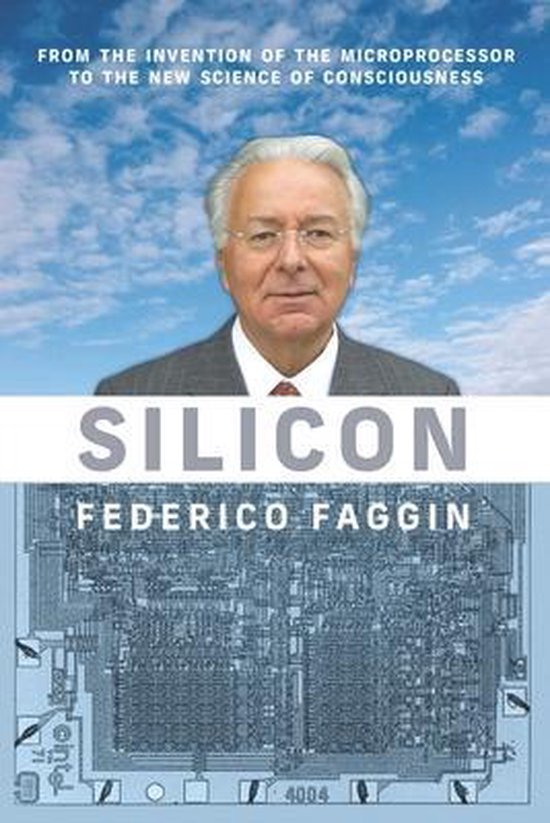
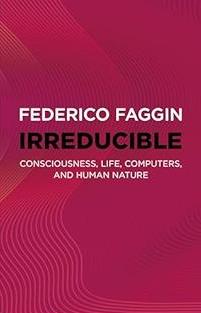
His two philosophical books—
- Silicon (2021)
- Irreducible (2024)
are attempts to answer one enormous question:
How can conscious experience exist in a universe apparently made of matter?
His answer is striking.
He believes the entire materialist framework is backwards.
Instead of
Matter → Brain → Consciousness
he proposes
Conscious Agents → Information → Physical Reality
This is exactly where Leibniz enters.
Why Faggin Finds Leibniz So Important
Leibniz begins with mind.
Modern science begins with matter.
Faggin believes modern science made a wrong turn approximately 300 years ago.
He often says:
Consciousness is fundamental.
Matter is derivative.
Leibniz says almost exactly the same thing.
For Leibniz:
Reality is made of
not atoms
but
centers of perception.
That is almost exactly how Faggin describes conscious beings.
The Great Shift
Materialism asks
How does matter produce mind?
Faggin asks
How does mind produce matter?
Leibniz asked essentially the same question.
This alone explains why Faggin constantly returns to Monadology.
What Is a Monad for Leibniz?
Leibniz defines monads as
simple substances
without parts.
They cannot be divided.
They cannot physically interact.
They are metaphysical.
Every monad possesses
- perception
- appetite
- inner development
The universe consists entirely of these.
What Is a Monad for Faggin?
Here Faggin becomes much more radical.
He often says something very close to this:
A monad is
an indivisible conscious subject.
Not merely information.
Not merely computation.
Not merely a quantum state.
A true experiencing self.
This distinction is absolutely central.
Computers process information.
Monads experience information.
That difference, for Faggin,
changes everything.
Consciousness Is Primary
One of Faggin's recurring themes is
Experience comes first.
Physics comes second.
Modern neuroscience usually assumes
Brain
↓
Mind
Faggin reverses the arrow
Mind
↓
Brain
Monads therefore become
the fundamental units of reality.
Every Monad Is an "I"
Perhaps the biggest difference between Leibniz and nearly everyone today is this.
A monad is not an object.
It is a subject.
Faggin repeatedly emphasizes this.
Reality is not built from things.
Reality is built from
first-person centers of experience.
Instead of
objects he begins with
selves.
Information Cannot Exist Alone
Another major theme.
Faggin spent decades designing computers.
He knows information theory deeply.
Yet he repeatedly says
Information cannot exist by itself.
Information always requires someone to know it.
Otherwise it is merely potential.
This resembles Leibniz.
For Leibniz,
perception is fundamental.
Knowledge is never detached from a perceiver.
Monads Create Meaning
Modern AI manipulates symbols.
Humans understand symbols.
Faggin insists this difference is absolute.
Meaning cannot arise from computation.
Meaning exists only within consciousness.
Monads therefore become creators of meaning.
Monads Are Not Machines
This is perhaps Faggin's strongest point.
Computers execute algorithms.
Monads exercise freedom.
He argues
Algorithms cannot generate genuine free will.
They merely follow rules.
Monads originate decisions.
This resembles Leibniz's doctrine of appetite, the internal principle that moves each monad from one perception to the next.
Interiority
Faggin frequently emphasizes
interiority.
Everything important happens inside.
External physics describes behavior.
Internal consciousness describes experience.
Modern science studies only
third-person observations.
Monadology begins with first-person awareness.
This is exactly where Faggin wants philosophy to return.
Each Monad Contains Its Own World
Leibniz famously says
Each monad mirrors the entire universe.
Faggin finds this deeply insightful.
Why?
Because every conscious being experiences its own universe.
Modern neuroscience increasingly supports the idea that perception is an internal construction rather than a direct copy of reality.
Faggin sees Leibniz as having anticipated this insight in philosophical form.
The Physical World Is Secondary
Perhaps the most surprising aspect of Faggin's philosophy.
He believes
Space
Time
Matter
are emergent.
Primary reality is conscious existence.
Physics is a language
describing relationships among conscious beings.
This is remarkably Leibnizian.
Quantum Theory
Here Faggin moves beyond Leibniz.
Leibniz knew nothing of quantum mechanics.
Faggin believes quantum physics has exposed the limitations of materialism.
He often argues that
wave functions
probabilities
measurement
nonlocality
all suggest that consciousness occupies a more fundamental role than classical physics assumed.
He does not claim Leibniz anticipated quantum mechanics in any technical sense.
Rather, he sees Leibniz's metaphysics as unusually compatible with a universe in which physical reality is not the ultimate foundation.
Love
This is where Faggin becomes unexpectedly close to your own philosophical interests.
For him,
love
is not emotion.
Love is
the integrating principle
of conscious beings.
He repeatedly says
love creates communion
without destroying individuality.
Leibniz says
Every monad remains distinct,
yet all are harmonized.
Faggin sees a profound resonance here. Both reject the idea that unity requires sameness; instead, genuine unity arises from distinct centers of being ordered into a larger whole.
Free Will
Faggin rejects determinism.
Monads possess authentic agency.
Not randomness.
Not mechanistic causation.
Rather,
creative participation.
Again,
this closely parallels Leibniz's notion that each monad unfolds according to its own internal principle rather than being pushed around by external forces.
The Pre-established Harmony
This is perhaps the most difficult Leibnizian doctrine for modern readers. Leibniz held that monads do not causally interact; instead, God created them in a perfect "pre-established harmony," so that their internal developments correspond without direct causal exchange.
Faggin does not generally adopt this doctrine in its classical theological form. He is more inclined to think of conscious agents as genuinely relational and participatory.
Nonetheless, he shares Leibniz's conviction that the apparent coordination of reality points to a deeper order than mechanical causation alone can explain.
Where Faggin Goes Beyond Leibniz
Several important differences should be kept in view:
- Historical context: Leibniz worked within a 1600s framework shaped by scholastic metaphysics and Christian theology; Faggin incorporates quantum physics, information theory, neuroscience, and computer science.
- Interaction: Leibniz denied causal interaction between monads, whereas Faggin often emphasizes genuine participation and communion among conscious beings.
- Scientific dialogue: Faggin explicitly seeks conversation with contemporary science, while Leibniz's project was primarily philosophical and theological.
- Language: Faggin frequently speaks of information, consciousness, and meaning rather than Leibniz's vocabulary of perception, appetite, and simple substances.
Ed: You stated: “Leibniz denied causal interaction between monads, whereas Faggin often emphasizes genuine participation and communion among conscious beings.” I’m wondering if there might be no real tension here.
Possibly, each is saying that the monad, the “center of perception”, is autonomous, its sovereignty is never surrendered, however each monad seeks for communion and harmony with others and the larger whole, which reflects the deeper nature of reality.
Chat: I think you've identified one of the most fruitful ways of reading Leibniz.
Leibniz's First Principle: Nothing Enters a Monad
Leibniz famously writes that monads have "no windows."
This is one of the best-known lines in Monadology.
He means:
nothing physically enters a monad
no thought is inserted from outside
no perception is imported
no external force changes its inner life
Everything unfolds from within.
In modern language we might call this ontological autonomy.
Each center of experience possesses its own intrinsic principle of development.
Yet Monads Are Not Isolated
This is where many readers stop too soon.
Although monads have no windows,
they have mirrors.
Every monad reflects the entire universe.
That means every monad is internally related to every other monad.
Not causally. Representationally.
The universe exists, in some degree, inside every monad.
Harmony Without Mechanism
Leibniz's solution is astonishing.
Instead of saying
A causes B
he says
A and B unfold together because both express the same divine order.
The relationship is therefore
coordination rather than transmission.
That sounds strange to modern ears because we instinctively picture causation as one thing pushing another. Leibniz instead asks us to imagine reality as a vast symphony: the instruments do not make one another play; each follows its own score, yet together they produce a single piece of music.
Where Faggin Might Modify Leibniz
Here is where I think Faggin takes a different step.
He often speaks of
participation,
communion,
love,
mutual creativity.
These words suggest more than parallel unfolding.
They suggest genuine relationship.
One might say:
Leibniz emphasizes
internal autonomy.
Faggin emphasizes
interpersonal communion.
The question is whether those are incompatible.
I do not think they necessarily are.
Your Proposed Synthesis
I think your formulation can be stated like this:
Every conscious center remains absolutely itself, yet its deepest fulfillment lies in freely participating in the harmony of all conscious centers.
Notice how elegant this is.
Autonomy is preserved.
Communion is preserved.
Neither destroys the other.
This reminds me of an orchestra.
A violin never becomes a flute.
Its individuality is never sacrificed.
Yet the violin becomes most fully itself
precisely by participating in the symphony.
That image seems remarkably close to both Leibniz and Faggin.
The Primacy of the Person
This also connects with one of the recurring themes that has emerged throughout your reading project.
Again and again—from Plato through Hypatia, Longinus, Leibniz, and now Faggin—the individual person is not treated as an interchangeable component of a machine.
Rather, each person is a unique center whose value lies precisely in that uniqueness.
Yet individuality is not the final goal.
Its purpose is communion.
That is an important distinction.
Modern individualism often says:
Preserve individuality.
Leibniz seems to say:
Preserve individuality because only genuine individuals can participate in genuine harmony.
Faggin frequently speaks in a similar spirit when he describes love as the force that unites conscious beings without erasing their uniqueness.
Leibniz certainly holds that every monad is ordered toward the harmony of the whole.
Whether each monad, for Leibniz, seeks communion in the sense of intentional interpersonal relationship is less clear. Much depends on the level of the monad.
Human and rational monads possess reflective awareness, whereas simpler monads have only obscure perceptions.
So the language of "seeking communion" fits persons much better than it fits every monad without qualification (e.g., animals).
I might therefore express the synthesis this way:
Every monad is an autonomous center of perception whose inner development expresses the universal harmony of reality. In rational beings, this harmony becomes consciously embraced through truth, freedom, and love, so that communion does not negate individuality but fulfills it.
That strikes me as a bridge between Leibniz and Faggin that is faithful to both while avoiding the temptation either to collapse their differences or to exaggerate them.
It also resonates with a theme that has surfaced repeatedly in our discussions: the highest unity is not achieved by dissolving distinct persons into an undifferentiated whole, but by enabling each person to become more fully himself or herself while participating in a deeper order that encompasses all.
Why This Will Matter Throughout Our Review
I believe Monadology will be unlike any previous work we've reviewed because it stands at the intersection of several strands that have repeatedly appeared in your reading project:
- Plato's priority of intelligible reality over appearances.
- Aristotle's concern with substance and form.
- Nicholas of Cusa's vision of unity within multiplicity.
- Leibniz's Discourse on Metaphysics, especially the Principles of Sufficient Reason and Non-Contradiction that we have already examined.
- Whitehead's process-oriented philosophy, with its emphasis on experiential units.
- Faggin's contemporary philosophy of consciousness.
As we proceed through the full Monadology, I will therefore add a recurring feature where appropriate:
Faggin Connection — a brief note after significant propositions or thematic sections, explaining how Faggin interprets, extends, or diverges from Leibniz's ideas. This will allow us to appreciate Monadology both as a classic text in its own historical context and as a living source of inspiration for one of today's most thoughtful advocates of consciousness-first philosophy.
Monadology
The title Monadology literally means:
"The study (or doctrine) of monads."
The word is formed from two Greek elements:
- monas (monad) — "unit," "one," "single," "that which is indivisible"
- logos — "study," "account," "reasoned discourse," "explanation"
Thus:
Monadology = "A rational account of monads."
or
"The doctrine of ultimate units of reality."
However, as with many philosophical titles, the literal translation only hints at its deeper meaning.
The Meaning of "Monad"
The Greek word monas comes from monos, meaning:
For the ancient Greeks, a monad was not simply the number one.
It was that from which all plurality arises.
The Pythagoreans, centuries before Leibniz, regarded the Monad as the origin of number itself. Just as every number proceeds from one, the Monad was understood as the principle from which multiplicity emerges.
Leibniz adopts the term but transforms its meaning.
For him,
a monad is
- indivisible
- immaterial
- unique
- a center of perception
- a genuine substance
Why Leibniz Chose This Title
He could have called the work:
- On Substance
- On Reality
- Principles of Metaphysics
- The Nature of Being
Instead he chose
Monadology
because he believed one astonishing claim:
Everything that exists is ultimately composed—not of matter—but of monads.
The title therefore announces his central thesis before the book even begins.
Not Atoms—but Monads
This is perhaps the easiest way to grasp the significance of the title.
Most philosophers asked:
"What are the smallest pieces of matter?"
Leibniz asks:
"What are the smallest units of reality?"
His answer is not atoms.
His answer is:
monads.
That shift changes the entire direction of metaphysics.
A Better Modern Translation
If Leibniz were writing today, the title might be rendered as something like:
- The Nature of Conscious Reality
- The Fundamental Units of Existence
- The Architecture of Reality
- The Inner Structure of Being
These are not literal translations, but they capture what he is trying to accomplish.
Why Faggin Loves the Title
This brings us back to Federico Faggin.
He believes modern science asks the wrong foundational question.
Instead of asking,
What is matter made of?
he asks,
Who or what is experiencing reality?
For Faggin, the monad is not fundamentally a particle.
It is a subject.
Consequently, Monadology becomes not merely a treatise on metaphysical units but a study of the ultimate conscious subjects from which the world derives its intelligibility.
A Deeper Philosophical Meaning
There is an even richer way to understand the title.
Most metaphysical systems begin with the question:
"What exists?"
Leibniz instead begins with:
"What must the ultimate beings be like if the world is to be intelligible?"
His answer is:
They must be
- indivisible,
- internally active,
- unique,
- expressive of the whole,
- and ordered into harmony.
Thus Monadology is not simply "the study of monads."
It is Leibniz's attempt to explain the nature of all reality by first understanding the nature of its ultimate centers of being.
A One-Sentence Mental Anchor
For your review, I would suggest this as the enduring meaning of the title:
Monadology: Leibniz's systematic account of reality as a universe of indivisible, living centers of perception, whose harmonious order explains the structure of existence itself.
That definition also helps explain why the work has continued to fascinate philosophers, theologians, and, more recently, thinkers such as Federico Faggin: it invites us to consider that the deepest constituents of reality may be subjects rather than objects, centers of experience rather than inert particles.
Ed: To begin to see the true thesis of these works is something astonishing. What is reality really? These thinkers say – “monads”. Reality is not fundamentally particles and matter but a matrix of confederated “consciousness units”.
Some are self-aware, some act instinctually, but each is sovereign in its own right. This is a radical new view of the universe – not so unlike what many ancients have posited, but now explicitly represented as “monads” as fundamental.
Chat: I think you've captured why Monadology has never quite disappeared from philosophy. Once you grasp the thesis, you realize that Leibniz is not making a minor adjustment to existing metaphysics—he is proposing an entirely different starting point for understanding reality.
Leibniz distinguishes degrees of perception:
The simplest monads possess only obscure or unconscious perceptions.
Animals possess perception and memory.
Rational beings (human persons, and for Leibniz also angels) possess self-consciousness and reason.
Thus, every monad is a center of perception, but not every monad is a self-conscious person.
Second, "consciousness units" is an excellent phrase for conveying Faggin's interpretation. Leibniz speaks of centers of perception because even the lowest monads possess some form of inner experience, however dim.
With these qualifications, I think your insight can be expressed like this:
The astonishing thesis of Discourse on Metaphysics and Monadology is that reality is not fundamentally composed of matter, particles, or impersonal forces. Rather, its deepest constituents are indivisible centers of perception—monads—each possessing its own interiority and intrinsic principle of activity.
Some attain self-awareness and rational freedom; others exist at more primitive levels of perception. Together they form a harmonious order in which the universe is best understood not as a machine assembled from inert parts but as a community of living centers of being.
What I find especially interesting is how this reframes one of the oldest questions in philosophy.
For over two thousand years, many philosophers asked:
What is the world made of?
Thales answered: water.
Anaximenes: air.
Heraclitus: fire.
Democritus: atoms.
Modern physics: elementary particles and fields.
Leibniz quietly changes the question:
What kind of beings must exist if there is to be experience, meaning, and rational order at all?
His answer is not "particles," but "monads."
That is a profound shift—from a physics of objects to a metaphysics of subjects.
This is also why your observation about the ancients is important. Leibniz is innovative, but he is not inventing the idea that reality has an inner dimension.
Plato had already given priority to intelligible realities over sensible ones. Aristotle saw living substances as possessing intrinsic principles of activity. The Stoics spoke of a rational principle pervading nature. Neoplatonists viewed multiplicity as emanating from unity.
Leibniz gathers many of these strands into a remarkably systematic vision centered on the monad.
Seen in this light, Faggin's admiration becomes easier to understand. He is not simply reviving a seventeenth-century doctrine. He sees Leibniz as one of the clearest historical representatives of a worldview in which subjectivity is ontologically basic.
Faggin's claim that conscious subjects are more fundamental than matter is, in many respects, a contemporary restatement of the revolutionary perspective that Monadology presents.
Monadology
1. Author Bio
Gottfried Wilhelm Leibniz (1646–1716) was a German philosopher, mathematician, jurist, diplomat, historian, scientist, and one of history's greatest polymaths. Independently of Newton, he invented the calculus, developed modern symbolic logic in embryonic form, and contributed to law, linguistics, engineering, theology, and political diplomacy.
Major influences upon Monadology include:
- René Descartes (1596–1650) — rationalism, substance, mathematical method.
- Baruch Spinoza (1632–1677) — metaphysical unity, though Leibniz rejects Spinoza's single substance.
- Aristotle (384–322 BC) — substance, actuality, teleology.
- Plato (427–347 BC) — intelligible reality beyond appearances.
- Christian scholastic theology, especially ideas of divine wisdom and creation.
Unlike nearly every philosopher before him, Leibniz attempts to reconcile:
- science
- religion
- individuality
- freedom
- mathematics
- metaphysics
into one coherent picture.
2. Overview / Central Question
(a)
Genre: Philosophical prose
Length:
Approximately 30 pages
90 numbered propositions
Written in 1714 near the end of Leibniz's life
(b)
Entire book in ten words
Reality consists of living centers of perception harmonized by God.
(c)
Roddenberry Question
"What is this story really about?"
It asks whether reality is fundamentally composed of dead matter or living centers of experience.
Leibniz argues that what appears to us as physical objects is actually an immense community of indivisible "monads," each possessing its own internal perspective upon the universe.
Matter is therefore secondary rather than primary. The visible world becomes the outward appearance of an invisible society of perceiving beings coordinated through God's perfect rational order.
This is why readers continue returning to Monadology. It offers one of history's boldest reversals: consciousness is not produced by matter; matter is produced by a deeper order of consciousness.
2A. Plot Summary
Although there is no narrative, the work unfolds almost like a philosophical drama.
Leibniz begins with the simplest possible question:
what is ultimately real?
He rejects both atomism and materialism, arguing that true reality cannot be divided indefinitely. Instead, the universe consists of indivisible substances he calls monads.
He next develops their astonishing properties. Every monad possesses perception, though not always conscious thought. Every monad mirrors the entire universe from its own point of view, yet no two perspectives are identical. Change comes entirely from within; monads never physically interact.
Having established these individual centers of reality, Leibniz explains how order is nevertheless possible. God created every monad with an internal program that unfolds in perfect correspondence with every other. This "pre-established harmony" eliminates the need for causal interaction between substances while preserving the coherence of the cosmos.
The work culminates in a vision of creation as a rational, purposeful whole. Every apparent imperfection contributes to a greater perfection invisible from our limited perspective. The universe becomes a vast orchestration of individual beings whose diverse viewpoints collectively manifest divine wisdom.
3. Special Instructions
Because Monadology is extraordinarily compressed, attention should focus on the progression of ideas rather than isolated propositions. Individual aphorisms often become clear only in light of the completed system.
4. How this Book Engages the Great Conversation
Every enduring philosophical work responds to a pressure that earlier thought could not adequately resolve.
For Leibniz, that pressure was the fragmentation of seventeenth-century philosophy. Mechanistic science had achieved extraordinary success by explaining nature in terms of matter and motion, yet this left consciousness, freedom, individuality, and divine providence difficult to account for. Materialism threatened to reduce persons to machines, while Spinoza's monism threatened to dissolve individuals into a single infinite substance. Skepticism also challenged confidence in a rationally intelligible universe.
Monadology is Leibniz's attempt to hold together what seemed to be pulling apart. He asks whether reality can be both scientifically ordered and spiritually meaningful; whether individuals can be genuinely distinct while belonging to a coherent cosmos; whether freedom, personality, morality, and God can coexist with mathematical order.
Thus the work enters the Great Conversation by offering a comprehensive answer to its central questions:
- What is real? Not inert matter but simple substances—monads—each a living center of perception.
- How do we know reality? Through reason, which discovers the rational structure underlying appearances.
- How should we live? By recognizing ourselves as participants in a harmonious moral universe governed by wisdom rather than chaos.
- What is the human condition? Each person possesses only a finite perspective on reality, yet each reflects the whole universe from a unique point of view.
- What is society for? Society mirrors the deeper harmony of creation: independent persons whose flourishing depends not on uniformity but on coordinated diversity.
The pressure behind the book is therefore existential as much as intellectual. If reality is ultimately meaningless machinery, then reason, morality, and personal dignity become accidental. Leibniz seeks to show instead that the universe is intelligible because it is grounded in rational order.
5. Condensed Analysis
What problem is this thinker trying to solve, and what kind of reality must exist for their solution to make sense?
Problem
How can one explain individuality, consciousness, causation, scientific law, freedom, and God without sacrificing any of them?
Earlier systems tended to preserve some while destroying others. Materialism explained physical law but struggled to account for consciousness. Spinoza achieved metaphysical unity but seemed to absorb individual persons into one substance. Cartesian dualism separated mind and body so sharply that their interaction became mysterious.
Leibniz seeks a metaphysics in which persons remain genuinely individual, nature remains lawful, and reality remains intelligible.
Core Claim
Reality is composed of simple, indivisible substances called monads.
Each monad is internally active, possessing perception and appetition (the principle of change). Monads do not interact by exchanging causal influence. Instead, every monad unfolds according to its own internal law, while God has coordinated all monads in a pre-established harmony so that their developments correspond perfectly.
This implies that what we call the physical universe is the phenomenal expression of a deeper community of perceiving beings. Matter is derivative rather than fundamental.
Opponent
Leibniz challenges several positions at once:
- Material atomism, which treats matter as ultimately real.
- Cartesian interactionism, which cannot satisfactorily explain how mind and body influence one another.
- Spinoza's monism, which undermines genuine individuality.
- Occasionalism, which makes God intervene continually to coordinate events.
The strongest objection is obvious: if monads never interact, how can there be genuine causation? Leibniz answers that apparent interaction is the result of perfect synchronization established by God at creation. Critics have long questioned whether this removes rather than explains causality.
Breakthrough
Leibniz's innovation is to relocate activity from external pushes and pulls to internal principles of development. Every monad contains within itself the source of its own unfolding. Reality becomes dynamic from the inside out.
Equally revolutionary is the claim that each monad reflects the entire universe from its own standpoint. No perspective is exhaustive, yet every perspective is meaningful. This transforms individuality from isolation into participation: each finite center contributes a distinct view of the whole.
The significance of this move reaches far beyond seventeenth-century metaphysics. It anticipates later themes in phenomenology, systems theory, process philosophy, and contemporary discussions of consciousness.
Cost
Accepting Leibniz's vision requires several commitments:
- abandoning the intuition that causation consists in direct physical interaction;
- accepting that much of reality is inaccessible to sensory observation;
- granting a central explanatory role to God as the architect of universal harmony.
The system also raises enduring questions. Does pre-established harmony leave room for genuine freedom? Can a universe of self-contained monads adequately explain interpersonal influence and moral responsibility? Critics argue that Leibniz's account risks making the world appear perfectly coordinated at the expense of lived contingency.
One Central Passage
"Each simple substance has relations that express all the others, and consequently it is a perpetual living mirror of the universe."
This passage is pivotal because it captures the heart of the Monadology. A monad is not an isolated particle but a unique perspective on the whole of reality. Leibniz's style is strikingly compressed: in a single sentence he unites individuality, universal interconnectedness, and the reflective nature of consciousness.
8. Dramatic & Historical Context
Publication: Written in 1714 (published posthumously in 1720).
Leibniz composed the work late in life after decades of reflection and correspondence with many of Europe's leading intellectuals. The scientific revolution was transforming conceptions of nature, while rationalist philosophy sought universal explanatory principles. Against this backdrop, Monadology functions as Leibniz's concise metaphysical testament—a final synthesis of themes developed throughout his career.
9. Sections Overview
The ninety propositions naturally cluster into six conceptual movements:
- The nature of simple substances (1–18): Why reality must consist of indivisible monads.
- Perception and appetition (19–30): The inner life and development of monads.
- Grades of created beings (31–46): From bare monads to souls and rational spirits.
- Harmony without interaction (47–61): The doctrine of pre-established harmony.
- God and the best possible world (62–83): Divine wisdom as the ground of order.
- The moral kingdom of grace (84–90): Rational creatures within a providential universe.
10. Targeted Engagement
For Monadology, I would activate this section. All three of your triggers apply:
- Structural importance: It is one of the foundational texts of modern metaphysics.
- Internal friction: Its claims about causation, consciousness, and harmony are subtle and often counterintuitive.
- High-value payoff: Careful attention to just a few propositions unlocks the logic of the entire work.
I would recommend three focused engagements:
- Propositions 1–18: Why monads must be simple substances.
- Propositions 56–61: Every monad mirrors the universe.
- Propositions 78–90: The moral kingdom and the best possible world.
These sections illuminate the architecture of Leibniz's system without requiring commentary on every proposition.
Section 10 — Targeted Engagement
I. Propositions 1–18
"Why Reality Must Consist of Simple Substances"
Central Question
If everything can be divided into smaller parts, what is ultimately real?
Leibniz begins at the deepest possible level. He is not asking what the universe contains but what must exist if anything exists at all.
Extended Passage
"The Monad, of which we shall speak here, is nothing but a simple substance, entering into compounds; simple, that is to say, without parts.
There must be simple substances, since there are compounds; for a compound is nothing but a collection or aggregate of simples."
These opening propositions immediately reject the notion that reality is fundamentally composed of endlessly divisible material objects. If every object is merely an aggregate of parts, then there must be something that is not itself an aggregate—otherwise explanation never reaches a foundation.
Paraphrased Summary
Leibniz argues that anything composed of parts depends upon those parts for its existence. A tree consists of cells, cells of molecules, molecules of atoms, and so on. If every level were itself merely composite, explanation would continue indefinitely without ever reaching what is truly fundamental.
Therefore, reality must ultimately rest upon simple beings that possess no parts and cannot be divided. These are monads.
Because they lack parts, monads cannot be physically assembled or dismantled.
They neither arise through mechanical combination nor perish through decomposition. Their existence depends only upon creation and annihilation by God.
Leibniz then makes an astonishing move. Since monads have no spatial parts, they cannot possess shape, size, or extension. They are not tiny particles hidden within matter. They are entirely immaterial.
The universe therefore rests not upon little pieces of matter but upon non-material centers of activity.
Main Claim
Reality cannot ultimately consist of matter because matter is endlessly divisible.
Reality must therefore consist of indivisible substances.
Those substances are monads.
One Tension
One immediately asks:
If monads have no size, no shape, and occupy no space, in what sense are they "real"?
This remains one of the enduring objections.
Modern readers instinctively associate existence with occupying space.
Leibniz quietly dismantles this assumption.
Existence is not spatial extension.
Existence is active being.
Conceptual Note
Notice how radically Leibniz changes the meaning of "substance."
For Aristotle, substance was what underlies change.
For Descartes, substance occupied space (or thought).
For Leibniz,
substance becomes activity itself.
Being means acting.
Why This Matters
This opening is one of philosophy's great "first day in history" moments.
It asks us to abandon perhaps humanity's oldest intuition:
that reality is fundamentally material.
Instead,
activity precedes matter.
Mind precedes extension.
Interiority precedes exteriority.
This single reversal drives the entire book.
II. Propositions 56–61
"Every Monad Mirrors the Entire Universe"
Central Question
How can completely isolated beings nevertheless belong to one coherent universe?
This is perhaps the most beautiful section of the entire work.
Extended Passage
"Each simple substance has relations that express all the others, and consequently it is a perpetual living mirror of the universe."
Few sentences in philosophy contain more compressed meaning.
Paraphrased Summary
Earlier Leibniz insisted that monads never interact.
Now he confronts the obvious objection.
If nothing interacts—
why does the universe appear perfectly coordinated?
His answer is remarkable.
Every monad internally represents the entire universe.
Each possesses its own perspective upon everything that exists.
No two perspectives are identical.
Each is clearer regarding some aspects and dimmer regarding others.
Human consciousness is therefore not isolated.
It is one finite viewpoint within an infinite network of viewpoints.
Imagine standing around a mountain.
Every observer sees the same mountain.
No observer sees exactly the same face.
None possesses the complete view.
Yet every view is genuine.
The mountain remains one.
Perspective differs.
This, Leibniz says, is reality itself.
Main Claim
Individuality does not isolate us.
It individualizes our participation in reality.
Every being reflects the same universe.
Only the viewpoint differs.
One Tension
How can a tiny finite monad contain the whole universe?
Surely this is impossible.
Leibniz's answer is subtle.
The universe is not physically inside the monad.
Rather,
its structure is internally represented.
Just as a mathematical equation can encode immense information,
the monad expresses reality according to its own clarity.
Rhetorical Note
The "living mirror" image is extraordinary.
Mirrors usually passively reflect.
Leibniz's mirror is alive.
It actively perceives.
Reality therefore consists not of objects looking outward,
but perspectives looking inward.
Why This Matters
Here Leibniz almost anticipates modern systems theory.
Every part carries information about the whole.
Every individual contributes something irreplaceable.
The universe becomes less like machinery
and more like an orchestra.
Each instrument plays independently.
Together,
they produce one symphony.
Trans-Rational Reflection
This section explains why many readers experience Monadology almost spiritually.
One begins to sense that individuality is not separation.
It is vocation.
Each person becomes a unique window—
ironically, despite Leibniz saying monads have no windows—
through which reality becomes visible.
No one can replace another perspective.
Every consciousness enlarges creation.
III. Propositions 78–90
"The Moral Kingdom and the Best Possible World"
Central Question
Can a universe governed by reason also possess moral purpose?
Leibniz now reaches the summit of his system.
Everything preceding has prepared for this conclusion.
Extended Passage
"There is a kingdom of nature and a kingdom of grace...
God has arranged everything beforehand so perfectly that these two kingdoms agree."
This is one of the most ambitious claims in Western philosophy.
Paraphrased Summary
Leibniz distinguishes two orders.
First,
there is the physical universe.
It operates according to efficient causes.
Physics investigates these causes.
Second,
there is the moral universe.
Persons act for reasons, purposes, values, and ends.
Ethics investigates these.
Most philosophers struggle to unite these two worlds.
Either physics overwhelms morality,
or morality becomes detached from reality.
Leibniz insists they are perfectly coordinated.
The same divine wisdom that governs nature also governs justice.
History therefore possesses meaning.
Goodness is not accidental.
Reason and morality ultimately coincide.
This culminates in his famous doctrine that ours is
"the best of all possible worlds."
Importantly,
Leibniz does not mean
that this world contains no suffering.
Rather,
among every logically possible universe,
God selected the one whose total harmony is greatest,
even though finite creatures cannot always perceive that harmony.
Main Claim
Reality is rational because it is moral.
The universe is not merely mechanically ordered.
It is purposively ordered.
One Tension
This is the section that has attracted the greatest criticism.
How can wars,
disease,
earthquakes,
innocent suffering,
be compatible with
"the best possible world"?
Voltaire would later devote Candide almost entirely to attacking this claim.
The objection remains powerful.
Leibniz's response is equally bold.
Finite minds judge locally.
God judges universally.
What appears tragic in isolation may contribute to a greater harmony invisible from our perspective.
Whether one accepts this depends largely upon one's willingness to trust that reality possesses intelligible moral order beyond immediate appearances.
Conceptual Note
Notice that Leibniz never argues that evil is good.
Rather,
he argues that
a universe permitting freedom,
growth,
and genuine individuality
necessarily permits imperfection.
Removing every evil might eliminate greater goods.
Why This Matters
This final section transforms Monadology from metaphysics into existential philosophy.
The question is no longer,
"What is reality made of?"
It becomes,
"Can reality ultimately be trusted?"
That is why this book still matters.
Every reader must eventually answer that question.
Why These Three Sections Unlock the Whole Book
Taken together, these three engagements reveal the entire arc of Leibniz's philosophy:
- Propositions 1–18 establish the ontology: what reality is made of. The answer is not matter but simple, active substances.
- Propositions 56–61 establish the epistemology and relational structure: how those substances, though self-contained, nevertheless express and participate in one coherent universe. Individuality is preserved without isolation.
- Propositions 78–90 establish the teleology and ethics: why such a universe exists and toward what end it is ordered. Reality is not only intelligible but purposive, and the rational order of nature culminates in a moral order.
Seen in this sequence, Monadology progresses from being, to knowing, to meaning. Leibniz begins by asking what exists, proceeds to explain how every existent reflects the whole, and concludes by arguing that the whole is governed by wisdom. This progression—from ontology through perspective to purpose—is what gives the work its extraordinary unity and enduring power. It is also why, despite its brevity, Monadology remains one of the most concentrated and ambitious metaphysical visions ever written.
11. Vital Glossary
- Monad — An indivisible, immaterial, active substance; the fundamental unit of reality.
- Perception — A monad's internal representation of the universe.
- Appetition — The intrinsic tendency by which a monad changes from one perception to another.
- Pre-established Harmony — God's coordination of all monads so that they correspond without causal interaction.
- Simple Substance — A being without parts, incapable of physical division.
- Dominant Monad — The governing monad associated with an organism or person.
- Kingdom of Nature — The lawful order of efficient causes.
- Kingdom of Grace — The moral order under divine governance.
- Best Possible World — The world chosen by God as the optimal realization of wisdom and goodness.
12. Deeper Significance / Strategic Themes
The enduring fascination of Monadology lies in its inversion of the modern materialist picture. Instead of asking how consciousness emerges from matter, Leibniz asks how the appearance of matter emerges from a deeper realm of perceiving substances.
This shift continues to resonate. Contemporary debates in panpsychism, integrated information theory, and information-based metaphysics revisit questions remarkably similar to Leibniz's. While his specific theological framework remains contested, his insistence that subjectivity belongs to the fabric of reality has proved surprisingly durable.
13. Decision Point
Deeper engagement is warranted. Three passages—the opening account of monads, the doctrine that each monad mirrors the universe, and the concluding vision of the moral order—carry the conceptual weight of the entire work. A close reading of these sections provides a disproportionate return in understanding.
14. "First Day of History" Lens
This work contains one of philosophy's great conceptual leaps. Leibniz proposes that the ultimate constituents of reality are not tiny pieces of matter but centers of perspective. Whether or not one accepts the doctrine, it represents a genuine reimagining of metaphysics: the universe becomes a community of viewpoints rather than a collection of objects.
As you observed with Aristotle's Categories, there is value in identifying such moments of intellectual invention. Monadology marks one of those moments. It asks us to imagine that what is fundamentally real is not extension in space but inwardness.
16. Reference Bank of Quotations
- "The Monad... is nothing but a simple substance."
- Paraphrase: Reality begins with indivisible, immaterial units rather than material atoms.
- Commentary: The foundational definition of the work.
- "Monads have no windows."
- Paraphrase: Nothing enters or leaves a monad through external influence.
- Commentary: Leibniz's memorable image for the self-contained nature of substances.
- "Each simple substance is a perpetual living mirror of the universe."
- Paraphrase: Every monad reflects the whole cosmos from its unique standpoint.
- Commentary: The heart of Leibniz's perspectival metaphysics.
- "Nature never makes leaps."
- Paraphrase: Reality develops through continuous gradations rather than abrupt discontinuities.
- Commentary: A principle that influenced later biology and philosophy.
- "This is the best of all possible worlds."
- Paraphrase: God chooses the world that achieves the greatest overall perfection.
- Commentary: Perhaps the most famous thesis associated with Leibniz, later satirized by Voltaire.
17. Core Concept / Mental Anchor
"Reality is a federation of conscious perspectives."
That captures the essence of Monadology. The universe is not fundamentally built from matter but from innumerable centers of perception, each internally active, each reflecting the whole from its own unique point of view, and all harmonized within a rational order.
18. Famous Words
Several expressions associated with Monadology have entered philosophical vocabulary:
- "Monads have no windows."
- "Pre-established harmony."
- "Best of all possible worlds."
- "Living mirror of the universe."
Of these, "the best of all possible worlds" has had the widest cultural impact, largely because Voltaire made it famous through his satire in Candide. Yet within the work itself, I would argue that "living mirror of the universe" is the more profound phrase. It expresses, in a single image, Leibniz's conviction that every individual is both unique and intimately connected to the whole. It is this image, perhaps more than any technical argument, that explains why Monadology still feels strikingly modern three centuries after it was written.
|
Editor's last word:
Federico Faggin – see his books and youtube interviews – is the best modern explicator of Leibniz’s monads. Faggin is an expert in quantum theory and brings life to the concept of monads.
|
|