|
home | what's new | other sites | contact | about |
|||||||||||||||||||
|
Word Gems exploring self-realization, sacred personhood, and full humanity
Surrender & Acceptance
return to 'surrender' main-page
Editor: What did Tolle mean by “finding the off-switch” for the egoic chattering in the head? ChatGPT: When Eckhart Tolle talks about “finding the off-switch” for the egoic chatter in the head (especially in The Power of Now and A New Earth), he does not literally mean permanently stopping thought. The phrase is a metaphor for discovering a new relationship to thinking—one where you are no longer unconsciously carried along by the mind. Below is what he meant, drawn from his books, lectures, and commentary on his teaching. 1. What Tolle calls “the voice in the head”Tolle repeatedly describes the ego as the inner narrator that constantly comments, judges, remembers, and anticipates. He writes that most people are identified with an “incessant stream of involuntary and compulsive thinking.” Because of that identification, people assume the voice is who they are. In his explanation:
This identification with thinking is what he calls the egoic mind. 2. The “off-switch” question in The Power of NowIn The Power of Now, Tolle asks readers a provocative question:
His point is diagnostic. If the answer is no, then the mind is running you rather than the other way around. He says the first step toward freedom is realizing:
Once you see that, a second layer of awareness becomes possible. 3. What the “off-switch” actually meansThe “off-switch” is awareness of the thinking process. Tolle calls this “watching the thinker.” Instead of being immersed in thoughts, you notice them as events appearing in consciousness. The shift looks like this:
In his terms:
4. Thought doesn’t actually stop (important clarification)Many people misunderstand Tolle here. He does not claim that enlightened people never think. Rather:
Commentators summarize the teaching like this:
Thoughts may still appear, but you are not compelled by them. 5. Practical methods Tolle suggests for “switching off” the chatterAcross his books and talks he suggests simple awareness practices: 1. Observe the next thoughtAsk:
The moment of waiting creates a gap in thinking. 2. Feel the inner bodyBring attention to bodily sensations:
This shifts attention from mental narration to present experience. 3. Listen to silenceNotice:
He calls this “presence.” 4. Watch the mind like a separate characterNotice thoughts like:
But without resisting them. 6. The deeper philosophical claimTolle’s core insight is metaphysical: There are two layers of mind.
The “off-switch” means shifting identity from the first to the second. 7. A simple analogy Tolle often usesBefore awakening:
After the shift:
The river still flows—but it no longer carries you away. In one sentence: What is distinctive about TolleTolle’s originality is not the underlying insight, but how he frames it. He emphasizes:
Instead of metaphysics or psychology, he focuses on direct experiential recognition. The essential shiftAcross traditions, the same discovery appears:
That shift is what Tolle calls “finding the off-switch.”
Tolle describes the observer as conscious presence. In The Power of Now he writes that beneath thinking there is a silent field of awareness. This awareness:
He often describes it as the space in which thoughts appear. So for Tolle: You are not the thinker — you are the awareness in which thinking happens. A simple illustration “I need to answer that email.” Then you notice: “I am thinking about email.” That second awareness is meta-awareness. Tolle’s insight is simply to rest in that second level of awareness instead of being carried away by the first thought.
A helpful way to summarize the tools When a thought becomes intrusive, you can try four different responses:
Each breaks the mental feedback cycle in a different way. Something reassuringThe experience you described—feeling as if the mind is under siege by a thought—has been reported by thinkers, writers, and philosophers for centuries. Many great intellectuals had exactly this temperament: The same mechanism that produces intrusive thought loops is often the source of deep concentration and insight when directed deliberately. So the goal is not to eliminate that power, but to regain the steering wheel when necessary.
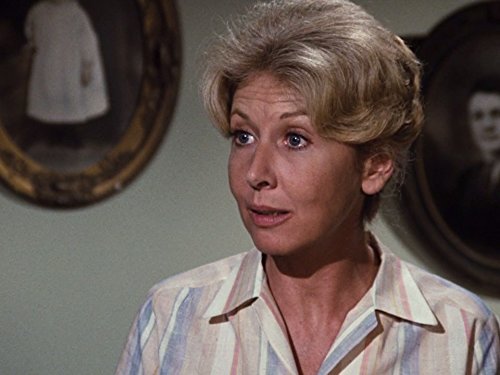
good advice from mom
John-boy: “I don’t have much to offer her.” Olivia: "You have yourself to offer – and that’s considerable.”
3 AM Dialogues Editor: All these principles are valuable to understand. It’s a good framework of approaching the issue of the “runaway mind” that will not shut down. However, I had awakened in the middle of the night, and immediately was beset by oppressive thoughts, and I tried to right myself: “What were those principles again? I’m too tired right now to bring back all that advice. It’s seems too complicated at 3 AM.” And then it occurred to me: there’s a simpler way of looking at this. I don’t know if this will help you, but it helped me. First, a little more background understanding: On the “clear thinking” page, I said that egos engage in “a battle to define reality”. You’ll want to see that section, but, essentially, egos try to redefine words to shape perceptions of reality. This is done in poisonous politics all the time -- but, it occurred to me, the ego was doing this same thing to me, at 3 AM. When the ego comes at us with oppressive thoughts, what’s really happening is, fundamentally, it’s re-defining the meaning of “happiness”. It wants us to believe that the universe is a place of scarcity. Nothing will ever work out. We’ll never find good things. There is no God or Universal Intelligence guiding our lives. It’s all randomness, we have no hope. And it seemed plain to me, at 3 AM, “I need to take back my own definition of happiness. I need to be the one to give meaning to this term, not my dark side.” The mind is a strange thing. And here’s what I saw at that early hour. I recalled an ancient episode of The Waltons – hadn’t seen it in a very long time, but there was the time when John Boy wanted to go out with a girl from a well-to-do family. He confided in his mother that, coming from a poor family, he despaired as he had nothing to offer her. She told him sternly: “You have yourself to offer – and that’s considerable!” At 3 AM, mom’s advice hit me profoundly. “I have myself – and that’s considerable.” The ego will bring up a thousand reasons why one is not good enough, has no hope of finding happiness; that, “you might be rejected by the one you love” or “you’ve lost all your good friends in life” or “the best opportunities are gone now”. But, none of this is true. One's essential happiness is never tethered to another person, place, or thing. No one is held hostage to an absent-but-desired person, place, or thing. And why is this so? Because, “I have myself – and that’s considerable.” I, all by myself – and you, all by yourself – are part of the Great Spirit; part of (as Krishnamurti put it) “creativity itself”, “intelligence itself”, “life itself”, and “the immensity”. And that’s considerable. Presently, I may be alone, aged, frail, not in good health – but this is not who I am. Life is incomplete right now, but I have an inheritance coming, in a new world, I will yet rise, and will have my youth and energy back. I will have every opportunity, every enablement, with God’s help, to make my own path, to create my own happy life. No one will be able to stand in my way, if God is for me. And so no one’s approval or lack thereof will mean for anything. At 3AM, I forthrightly declared all these things to myself – my “considerable” self. And in those liminal moments, the ego, and its propaganda, was immediately frozen in its efforts to deceive. And a burgeoning and brimming sense of well-being filled my spirit. I had redefined “happiness”, on my own terms, and I had won. And I knew that I could revisit this reality -- as healing balm -- anytime I needed to, in order to regain my sanity, to re-situate myself, existentially. And you can, too -- anytime you like. Because, you have yourself -- and that’s considerable.
|
|||||||||||||||||||
|
|