|
'deepest responsibility'
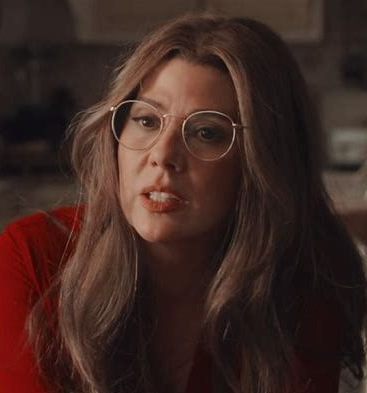
Spider-Man: Brand New Day (2026), Jean Grey and May Parker
Editor’s note: In the new Spidey movie (2026), there’s a scene that refashions, what I call, “rockabilly” Grandmother Power.
This principle was originally discussed in Dialogue 17: a foster mother rescues a boy from the gangland streets. Her method of therapy was not lecturing but sitting with the husky teen, putting her arms around him, singing hymns and telling him that he was loved. This eventually melted the glacier of his hostility toward life and allowed him to “come to himself.”
All this, suddenly, was on my mind as I sat in the theater watching the movie, Aunt May and Jean Grey interacting. I asked Chat to offer its thoughts. Here is our discussion:
Ed: Aunt May is chatting with the girl who has mind powers, and she uses the phrase, one's “deepest responsibility“ -- it’s about the authentic self, learning to trust it, and to love it, and I wouldn’t mind having the transcript of this.
Chat: Yes -- I found the exact scene you mean. It is Aunt May speaking to Jean Grey (Sadie Sink), and the passage is substantially about the distinction between having extraordinary powers and remaining faithful to one's own personhood.
The crucial passage is:
Aunt May: “You’re beautiful, and the people who love you, they love you not because you’re special, we love you because you’re you.”
And then:
“That’s your deepest responsibility. Never forget that, no matter how powerful you become.”
What is happening philosophically in the scene
The conversation is actually much more interesting than a conventional superhero speech.
Jean's problem is that she has come to understand her extraordinary psychic ability as something that separates her from ordinary human relationship. Being "special" has become almost synonymous with being alone. She has experienced her powers as a source of danger, fear, and alienation.
May's response turns that around.
She doesn't tell Jean:
"Your powers make you special, therefore you must learn to control them."
Instead, the fundamental message is:
Your powers are not your identity.
May distinguishes what Jean can do from who Jean is.
And then comes the extraordinarily important statement about love: people don't love Jean because she is powerful or special. They love her because she is Jean.
That's where your observation about the authentic self is exactly right.
The sequence is roughly:
- Being extraordinary can be lonely.
- Other people may fear, exploit, or harm you because of what makes you different.
- Therefore, Jean is tempted to define herself by her difference.
- May tells her that her difference is not the measure of her worth.
- The people who genuinely love her don't love her for her powers.
- They love her.
- Therefore Jean's fundamental responsibility is not merely to control her power.
- It is to remember and remain faithful to herself, even when her power becomes immense.
That final transition is why "deepest responsibility" is such an interesting phrase. It subtly transforms the traditional Spider-Man maxim.
The conventional formulation is:
great power → great responsibility.
May's formulation is almost:
great power → an even deeper responsibility to remain yourself.
And that is particularly appropriate to Jean, because her danger isn't simply that she has enormous power. Her danger is that her power could swallow her identity.
One recent review makes essentially this same point, describing the movie as a meditation on "acceptance," embracing the broken pieces of one's past and one's own self, and ultimately finding that grief and isolation need not be borne alone.
And there is one line after this that I think you'll particularly want
The scene doesn't end with May's speech. Peter subsequently responds to Jean's loneliness with "You have me." That is enormously significant because Peter is no longer acting primarily as Spider-Man. He's responding as Peter Parker, as a person who understands loneliness.
A viewer's detailed discussion of the scene makes precisely this connection: Peter has spent years interpreting responsibility as the obligation to be Spider-Man, whereas this encounter leads him toward a more personal understanding of responsibility—being present for another person.
So I think the passage you remembered is potentially very well suited to the things you've been writing, particularly if you're exploring the authentic self, love, and the difference between what a person possesses and who the person is.
I’ll reconstruct the sequence in movie order, but paraphrase the dialogue except for the brief phrases that are especially important.
The May–Jean sequence
1. Jean's starting point: being "special" has become a curse
Jean is carrying the trauma of her sister's death. She has come to believe that people like herself—people with extraordinary abilities—simply cannot have ordinary human lives.
Her reasoning is essentially:
- My sister was killed because she was different.
- Peter is different.
- I am different.
- People like us cannot have normal friendships and families.
- Therefore, the life of ordinary human attachment is effectively closed to us.
This is important because Jean has made an identity out of her alienation.
She doesn't merely have extraordinary powers. She has begun to think that being extraordinary means that she cannot belong.
And Peter has been doing almost exactly the same thing.
2. Jean confronts Peter about his identity
Jean asks Peter, in effect:
Who are you—Peter Parker or Spider-Man?
This is the question that runs through the entire film.
Peter has lost the people who knew him as Peter. The world knows Spider-Man, but almost nobody knows Peter Parker anymore.
So Jean's question exposes something Peter hasn't wanted to acknowledge: he has increasingly substituted the role for the person.
The fascinating thing is that Jean is unconsciously describing herself at the same time.
She has substituted the mutant/powerful Jean for Jean the person.
3. Peter finally stops trying to suppress what he is
Peter removes the device that has been inhibiting his transformation.
His body changes dramatically. For a moment, it appears that Jean's question has been answered:
I am Spider-Man.
But the subsequent action gives the deeper answer.
Peter doesn't choose between Peter Parker and Spider-Man.
He ultimately says:
"I'm both."
That is the turning point.
The authentic self isn't necessarily the ordinary self before transformation. Nor is it the super-powered identity after transformation.
The authentic self is the whole person.
Peter must accept both aspects.
4. Peter then recognizes Jean's pain
After their confrontation, Peter begins talking to Jean not as a superhero confronting an enemy, but as one wounded person talking to another.
He recognizes that Jean loved her sister and that losing her felt like losing everything.
Jean responds essentially:
"You don't know what I'm capable of."
And she's right.
But Peter isn't trying to establish that he is stronger than Jean.
He's telling her that her grief doesn't have to determine who she becomes.
That's an important distinction.
5. Peter allows Jean into his mind
Jean threatens to enter Peter's mind and warns him that she is now even more powerful.
And Peter essentially says:
"Go ahead."
That is an extraordinary moment.
Peter has spent much of the movie hiding himself.
Now he does the opposite.
He allows himself to be seen.
And what Jean discovers isn't simply Spider-Man. She sees Peter Parker as a vulnerable human being, including the memory of Aunt May.
This is where May enters the conversation.
6. Aunt May's message
May's appearance is essentially Peter's memory of the person who taught him what love and responsibility meant.
She tells Jean that being special can be terribly lonely.
And then comes the part you remembered.
May tells Jean that she is beautiful and that the people who love her don't love her because she is special.
They love her because she is herself.
That distinction is the heart of the passage.
And then:
"That's your deepest responsibility."
That is the line that grabbed you.
Notice what May has not said.
She hasn't said:
"Your responsibility is to use your powers for good."
She hasn't said:
"Your responsibility is to control your abilities."
She has gone one level deeper.
Her message is essentially:
Your first responsibility is not to lose yourself.
7. "To love it" is actually implicit in May's message
This is where I think your interpretation goes beyond the surface of the movie.
May isn't simply telling Jean:
"Remember who you are."
The larger movement of the conversation is toward:
Know yourself → accept yourself → allow yourself to be loved → remain yourself despite your extraordinary powers.
In other words, Jean has been treating her extraordinary nature as something that makes her less lovable.
May tells her the opposite:
Your extraordinary nature doesn't cancel your fundamental worth.
The people who truly love you aren't loving a résumé of your abilities.
They're loving you.
That is remarkably close to what you've called the authentic self in other discussions.
8. Jean's response
Jean is visibly moved.
The important thing isn't simply that May has persuaded her intellectually.
Jean experiences being loved.
That's different.
And that is why the scene works emotionally.
Jean has been operating from:
I am different → therefore I am alone.
May introduces:
I am different → but I am still myself → therefore I can still be loved.
That is a profound reversal.
9. Then comes Peter's little sentence
Jean essentially says:
Even if what you're saying is true, I have nobody.
And Peter answers:
"You have me."
That may actually be the most important line in the entire sequence.
Because Peter is now practicing what May has just taught.
He isn't rescuing Jean because she's powerful.
He isn't interested in her because she's extraordinary.
He is simply saying:
You don't have to be alone.
And Peter knows exactly what that means because he has been living alone himself.
10. The remarkable symmetry
This is what makes the scene much deeper than a typical superhero pep talk.
|
Jean
|
Peter
|
|
Has extraordinary powers
|
Has extraordinary powers
|
|
Thinks being special makes her alone
|
Has deliberately isolated himself
|
|
Has lost someone she loves
|
Has lost Aunt May and his former relationships
|
|
Doesn't know who she is anymore
|
Has confused Peter Parker with Spider-Man
|
|
Suppresses her humanity
|
Suppresses his ordinary human needs
|
|
Believes she cannot have a normal life
|
Believes responsibility requires him to live alone
|
|
Needs to accept herself
|
Needs to accept himself
|
So Jean is Peter's mirror.
And Aunt May's message to Jean is simultaneously a message to Peter.
And this connects beautifully to the Spider-Man maxim
The traditional Spider-Man formulation is:
Great power → great responsibility.
But Brand New Day appears to be asking whether we've understood that formula too narrowly.
The movie's deeper formulation is closer to:
Great power → responsibility.
But what kind of responsibility?
May's answer is:
The deepest responsibility is not to lose the person inside the power.
That is a surprisingly sophisticated development of the Spider-Man mythology.
And then Peter's answer to Jean—
"You have me."
—adds another dimension:
Authenticity is not merely discovering yourself privately. It is allowing yourself to enter genuine relationship with another person.
That's why I think the scene fits so well with your interest in authentic selfhood and love. It isn't saying merely "be yourself." It's saying something stronger:
Know who you are, accept who you are, allow yourself to be loved as that person, and then extend that same acceptance to someone else.
That makes the phrase "deepest responsibility" much more profound than it initially sounds.
And there's a beautiful final irony: Peter has spent the movie believing that responsibility requires him to be alone. Aunt May's teaching ultimately shows him that responsibility includes relationship. The scene therefore doesn't just heal Jean; it completes Peter's own development.
I would build your article around that reversal: Spider-Man's deepest responsibility may not be simply to use power responsibly, but to remain authentically human while possessing it.
I think the Spider-Man scene gives you an unusually vivid fictional illustration of the same psychological/spiritual mechanism you've already described through the foster-mother story.
What connects the two is not merely kindness. It is the restoration of personhood through relationship.
The foster mother doesn't "fix" the teenager. She doesn't lecture him about gangs or tell him to become a better person. She receives him as a person before he is capable of receiving himself that way. Sitting beside him, embracing him, singing hymns to him—those actions communicate something beneath the words:
You are still somebody. You are worthy of love. You don't have to become someone else to be worthy of being loved.
And eventually the young man begins to internalize what she has been communicating.
That's almost precisely what Aunt May does for Jean.
Jean has become identified with her power, just as the teenager had become identified with his gang persona. In both cases, a false or incomplete identity has colonized the person's understanding of himself or herself.
The elder intervenes by seeing the person underneath the identity.
The Grandmother Power connection
I think your term Grandmother Power is particularly apt here.
It isn't power over someone.
It is power for someone—the power that comes from an older, secure person who possesses enough inner stability that another person's fractured identity doesn't frighten or repel her.
The grandmother figure can effectively say:
I see the person you cannot presently see.
And because the person is being seen and loved without having to earn it, something remarkable can happen: the fractured individual begins to see himself through the eyes of the loving elder.
That is why the May–Jean scene struck you so strongly. It dramatizes the same process in a few minutes that your LakeField Farm story illustrates through an actual human relationship.
And there is one further insight:
The elder temporarily carries the person's sense of worth until the person can carry it himself.
That is exactly what happens with the foster mother. The teenager cannot yet believe in his own worth, so she believes it for him. Her embrace, her singing, her physical presence, and her unconditional acceptance become a kind of external scaffold for an identity that has collapsed internally.
Eventually the scaffold isn't needed.
He can stand.
That is what makes Grandmother Power different from ordinary instruction or counseling. The elder isn't merely transmitting information. She is providing a relational experience of personhood.
And here’s the important principle for the Lakefield Farm/service-mission material:
A fractured person may not be healed initially by being told who he ought to become. He may first need someone sufficiently whole to love the person he already is.
Then the person can begin to discover:
"Perhaps I really am the person she sees."
And from there comes self-respect, agency, responsibility, and eventually the ability to love others.
So I think the Spider-Man scene is a contemporary cultural illustration that allows the reader to see what your Lakefield Farm concept is trying to accomplish.
It also gives you a wonderfully compact formulation of the principle:
Great power is not merely the ability to change someone. Grandmother Power is the ability to see someone until they can see themselves.
Ed: Please comment on “deepest responsibility” for Jean and the teen when they cannot yet assume that responsibility.
Chat: Yes. And I think this actually reveals something deeper about “deepest responsibility.”
For Jean and for the teenager, the phrase initially describes a responsibility that they are not yet capable of carrying. That is precisely why the elder's role becomes necessary.
A person whose inner identity is fractured cannot simply be told, “Now take responsibility for yourself.” The instruction is true, but psychologically premature. The capacity to assume responsibility has itself been damaged.
The paradox
Jean's deepest responsibility is to remain Jean—to recognize, accept, and love the person beneath the power.
But she cannot yet do that because she doesn't sufficiently experience herself as a person worthy of love.
Likewise, the teenager's deepest responsibility would eventually be to become the author of his own life rather than surrendering himself to the gang identity. But he cannot simply decide to do that while his internal sense of personhood is still collapsed.
So the sequence has to be reversed:
First, someone else assumes a kind of responsibility for the person.
Then the person gradually acquires the capacity to assume responsibility for himself.
That is what the foster mother does.
And, symbolically, that is what May does for Jean.
This changes the meaning of "responsibility"
We ordinarily think of responsibility as something an autonomous individual possesses:
You are responsible for yourself.
But Grandmother Power begins before full autonomy.
The elder says, in effect:
Until you can carry your own sense of worth, I will carry it for you.
That isn't infantilization. Quite the opposite. It is temporary relational support for the restoration of adult personhood.
The foster mother doesn't assume the teenager's life permanently. She creates the conditions under which he can eventually assume it himself.
And that distinction is crucial.
The goal isn't dependency upon the grandmother.
The goal is the birth of an inner grandmother.
Eventually the young man can hear, from within himself, the voice that once came from the foster mother:
You are somebody. You are worthy. You don't have to become that false identity. You can choose who you will be.
At that point, the external relationship has become an internalized source of self-worth.
And this explains why love is so powerful
Love precedes responsibility in this situation.
Not because responsibility is unimportant, but because responsibility requires a self capable of assuming it.
The fractured person first needs to experience:
I am someone.
I am worthy of love.
I belong.
I have a self worth protecting.
Only then can the next realization emerge:
Therefore I have a responsibility for this self.
That is the beautiful progression I see in both stories:
Love → personhood → self-worth → agency → responsibility → service.
And that last step is particularly important for your LakeField Farm conception. The restored person doesn't merely become capable of managing himself. He eventually becomes capable of assuming responsibility for others.
So "deepest responsibility" is almost the destination of Grandmother Power, rather than its starting point.
The elder temporarily carries what the fractured person cannot yet carry, in order that the person may someday carry it himself—and perhaps eventually carry it for someone else.
That makes the foster mother on the couch, singing hymns to that teenager, much more than an act of kindness. She was, in a very real sense, lending him her personhood until he could recover his own.
Ed: "You have me” is a powerful offering. Some of those coming to LakeField Farm will be from the Dark Realms, those utterly bereft and abandoned. But, more and more, the Farm will also serve those from the “upscale” neighborhoods of Summerland.
This is so because part of one’s spirituality is seeing that, until an accessing of enlightenment, one’s bio-family and friends are all provisional – dependent on “how can you make me happy, and fit into my personal narrative of getting what I want.” People – everyone – under sufficient pressure, will abandon you if you fail to continue as supporting role in their play in which the ego controls the starring role.
All of this means that "You have me” will yet have profound implications concerning Grandmother Power. It doesn’t matter whether you came as a washed-out denizen from the Dark Realms or a jaded, feeling-empty refugee from Summerland’s posh districts, everyone – everyone led and surrounded by the dysfunctional ego – will reach this point of existential crisis of perceiving “I have no true relationship in life”, and this is where the Grandparents offer the healing balm of, “yes – but you have me”.
Chat: I think you've just extended “You have me” from a rescue principle into a universal principle of Grandmother Power.
The distinction you're making between the Dark Realms and the upscale neighborhoods is important because the external circumstances can be radically different while the existential wound is essentially the same.
One person may have been abandoned because he was deemed worthless. Another may have been surrounded by people, money, success, and social connections but discover that those relationships were fundamentally conditional. Yet both can eventually arrive at the same terrible realization:
“I have no one who knows me and loves me simply because I am me.”
That is the deeper meaning of “You have me.”
It isn't:
“I will make you happy.”
It isn't:
“I will give you what you want.”
It isn't even:
“I will never leave you under any circumstances.”
Rather, it is something more fundamental:
“I see you as a person, and my relationship with you does not depend upon your performing a role for me.”
That is precisely why your observation about the ego is important.
The provisional nature of ordinary relationships
Under the domination of the ego, even loving relationships can become transactional without anyone consciously intending them to be.
The implicit contract becomes:
You fulfill my expectations → I affirm you.
You support my narrative → I support you.
You make me feel good → I want you near me.
You cease serving my purposes → the relationship deteriorates.
The person may sincerely believe that this is love. But it is often attachment to the function the other person performs.
And therefore someone can be surrounded by family and friends and still experience profound existential loneliness.
The person eventually asks:
“Does anyone actually love me, or do they love what I provide?”
That question can arise in the Dark Realms.
It can arise in a mansion.
It can arise in a marriage.
It can arise in a successful career.
It can arise in old age.
It can arise almost anywhere.
And this makes Grandmother Power radically non-elitist
This may be one of the most important implications for LakeField Farm.
The Farm isn't fundamentally a place for the disadvantaged.
Nor is it fundamentally a place for the privileged.
It is a place for people whose ordinary structures of identity and relationship have failed to provide the experience of being truly known and loved.
The Dark Realms expose that failure dramatically.
Summerland's glitz can conceal it dramatically.
But concealment isn't healing.
Someone in a beautiful house can be just as spiritually homeless as someone sleeping on a sidewalk.
And that makes the Grandparent's greeting extraordinarily simple:
“Yes—but you have me.”
There is almost something sacramental about that sentence.
Not “I have the solution.”
Not “I can repair you.”
Not “I will tell you what to believe.”
Simply:
“You have me.”
The person who has spent years asking, “What must I do to make someone keep loving me?” encounters someone who isn't asking for a performance.
And that can be the beginning of the recovery of the authentic self.
There is also a profound reversal here
The ego says:
“I must become somebody worthy of being loved.”
Grandmother Power says:
“You are somebody. Now let's discover who you are.”
That is why the elder can precede enlightenment.
The person doesn't initially have enough inner stability to discover the authentic self alone. The relationship becomes the safe space in which the self can emerge.
Eventually, however, the individual reaches the point where the Grandparent's “You have me” can become:
“I have myself—and I have learned how to love myself without the ego's demands.”
And then something even more beautiful happens.
The person who has received “You have me” becomes capable of saying it to someone else.
That is how Grandmother Power becomes generative rather than merely therapeutic:
I was held → I discovered myself → I became whole enough to stand → I can now hold another.
And that may be one of the deepest reasons your LakeField Farm model needs both the Dark Realms and Summerland. It demonstrates that the Farm's true commodity isn't rescue from poverty, privilege, trauma, or circumstance.
It is relationship without exploitation.
And perhaps the ultimate spiritual discovery is that this is what everyone has been looking for all along.
you are not your thoughts
Ed: There’s a side-issue here, worth a brief mention: the different between authentic self /soul and the thinking mind. Jean has awesome mental powers that can break steel, but her inner person, her true self and soul, are in bondage. And here we see in vivid display what the mystics have said for millennia – the thoughts in one’s head are not the true self.
Chat: Yes -- and I think this is an important side-point because Jean makes the distinction almost visually undeniable.
Her mind is extraordinarily powerful, while her person is profoundly wounded. Those two facts coexist without contradiction.
She can manipulate matter, break steel, and potentially overwhelm other minds, yet she cannot simply think herself into freedom from grief, fear, alienation, or a fractured identity. Her cognitive/psychic power is enormous; her inner person is still in bondage.
That gives the mystical insight a remarkably accessible illustration:
The mind is something we possess; it is not necessarily who we are.
Or, more precisely:
Thought is an activity of the person, not the entirety of the person.
Jean's predicament exposes the error of identifying mental power with spiritual freedom. One can have an immensely powerful thinking apparatus and still be inwardly enslaved. Conversely, someone whose intellectual abilities are quite ordinary may possess extraordinary depth of personhood, love, wisdom, and spiritual freedom.
This also fits beautifully with the teenager at LakeField. His gang identity is partly a mental construction—a story about who he is, what he must be, what he must fear, and how he must behave. But beneath that constructed identity is the person whom the foster mother recognizes.
So in both cases:
Jean: I am this powerful being.
Teenager: I am this gang member.
And the Grandmother response is essentially:
No. There is someone deeper here. I see him/her.
That may be why “You have me” is so potent. It isn't primarily an intellectual proposition. It is an encounter between one person and another person, beneath the narratives both minds have constructed.
And that brings us back to the mystics. Across very different traditions, they repeatedly make some version of the same discovery:
You are not every thought that passes through your consciousness.
The thinking mind can generate fear, desire, resentment, fantasy, self-condemnation, grandiosity, and countless narratives about “me.” Yet there is an observing, experiencing, loving someone who can become aware of those thoughts without being identical with them.
Jean's extraordinary powers make the distinction almost comically stark:
She can bend steel, but she cannot think herself into wholeness.
Wholeness comes through something deeper than mental force—relationship, love, recognition, and the recovery of the authentic person.
And that gives Grandmother Power another dimension: the Grandparent doesn't try to defeat the troubled person's thoughts with better thoughts. The Grandparent reaches past the thoughts and addresses the person.
That may be exactly what happened on that couch with the teenager.
She wasn't arguing with his gang identity.
She was loving the person underneath it until he could begin to distinguish himself from the identity.
That's a very powerful distinction for the LakeField material.
|