|
Word Gems
exploring self-realization, sacred personhood, and full humanity
William Wordsworth
Lyrical Ballads
return to "Poetry" main-page
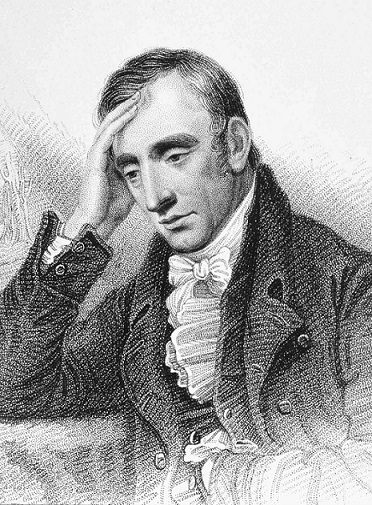
William Wordsworth (1770-1850)
|
Key item: With his friend Samuel Taylor Coleridge, William Wordsworth founded the Romantic movement in British poetry with the publication of their Lyrical Ballads, turning away from the scientific rationalism of the Enlightenment.
William Wordsworth (1770–1850) was one of the foremost poets of the English Romantic movement, whose work transformed the landscape of English literature by emphasizing emotion, imagination, and the profound beauty of nature. He was born in Cockermouth in the scenic region of the Lake District, which deeply influenced his love of landscapes, rural life, and natural beauty. Wordsworth’s early life was marked by personal tragedy, including the death of his mother when he was eight and his father when he was thirteen, experiences that profoundly shaped his sensitivity to human emotion and loss.
He studied at St John's College, Cambridge, where he cultivated his literary interests. In 1790, Wordsworth traveled to France, witnessing the French Revolution, an experience that initially inspired hope for social and political change and influenced his early radical ideals. Returning to England, he settled in the Lake District and began his lifelong poetic exploration of nature, memory, and the human spirit.
Wordsworth’s collaboration with Samuel Taylor Coleridge produced Lyrical Ballads (1798), a revolutionary work that championed simple, everyday language and ordinary subjects as suitable for poetry. His magnum opus, The Prelude, is an autobiographical epic poem reflecting on the growth of his mind, consciousness, and poetic imagination. Throughout his career, Wordsworth’s poetry celebrated the spiritual and moral value of nature, childhood innocence, and the ordinary experiences of rural life.
In recognition of his literary achievements, Wordsworth was appointed Poet Laureate of the United Kingdom in 1843, a position he held until his death in 1850. His legacy endures as a poet who bridged personal reflection with universal themes, elevating the natural world and human feeling as central subjects of poetic inquiry. (ChatGPT)
|
Who were the Romantic Poets?
Commentary by ChatGPT
How did Lyrical Ballads come to be written?
The story of Lyrical Ballads is deeply tied to the emergence of English Romanticism and the collaboration between William Wordsworth and Samuel Taylor Coleridge. Here’s how it came about, step by step:
1. The Intellectual Context
In the late 18th century, English poetry was dominated by ornate, formal, and classical styles. Wordsworth and Coleridge were dissatisfied with this: they wanted poetry to speak to ordinary people and to reflect genuine emotion and experience. Wordsworth had already been developing his ideas about the “language really used by men” and about finding beauty and profundity in everyday life.
2. Wordsworth’s Vision
Wordsworth had a theory of poetry that emphasized:
He had been experimenting with poems that treated common subjects in accessible language, especially in works like “Lines Written in Early Spring” and “Tintern Abbey” (though the latter was slightly later, 1798).
3. Coleridge’s Contribution
Coleridge brought a complementary vision: imagination, the supernatural, and the lyric power of the mind. He contributed poems that explored the more mystical and visionary aspects of human experience.
4. The Collaboration
-
Wordsworth and Coleridge decided to publish a joint collection that would embody their shared aesthetic.
-
They worked mostly in 1797–1798. Wordsworth contributed poems drawn from his observations of rural life; Coleridge contributed imaginative and philosophical pieces.
-
Their goal was revolutionary: to redefine English poetry so it was accessible, emotionally resonant, and connected to nature and the human mind.
5. Publication
-
First edition: 1798, anonymously credited.
-
The first edition included Wordsworth’s preface (added more prominently in 1800) which laid out the theory of poetry that the collection exemplified.
-
The famous 1800 edition expanded the collection and added the Preface, which became a foundational Romantic manifesto.
6. Impact
-
Lyrical Ballads is widely seen as the starting point of English Romanticism.
-
It challenged existing norms, popularized the use of common language in poetry, and emphasized the centrality of feeling and imagination.
In short, Lyrical Ballads came into being because Wordsworth and Coleridge shared a vision of a new poetry—grounded in ordinary life, emotion, and imagination—and collaborated to bring that vision to the public in a single, influential volume.
An abridged essence of Lyrical Ballads
Here is a full list of the 23 poems from the 1798 Lyrical Ballads with three-line excerpts and very short summaries.
The book begins with a preface, reproduced here in abridged fashion and paraphrased:
Epigraph:
Quam nihil ad genium, Papiniane, tuum!
(How worthless this would be to your taste, Papinian!)
Abridged Preface
The object of these poems is to choose incidents and situations from common life,
and to relate or describe them, throughout, as far as possible, in a selection of language really used by men.
The principal object, then, is to make the essential passions of the mind accessible to all readers.
Poetry is the spontaneous overflow of powerful feelings,
recollected in tranquility. The emotion must be genuine; it should arise from everyday experiences,
often found in rural life, and expressed in simple diction.
The language of poetry should be natural, not artificial or high-flown,
and the best subjects are those drawn from humble life, rather than grand or classical themes.
Imagination is crucial: it unites the ordinary with the extraordinary,
giving insight into human nature and creating a sense of delight.
Poems must also maintain unity, coherence, and beauty,
arising naturally from the incident or the thought described.
While the poems are simple in language, they are sophisticated in thought,
engaging readers’ minds and hearts without pretension.
Coleridge and I have tried to combine simplicity with philosophical depth,
exploring the nature of human feelings and the workings of the mind.
Poetry, in this view, is both a mirror and a teacher:
it reflects life and guides the reader to see truth and beauty in everyday experience.
The measure of a poem’s success is in its ability to move the reader
and to awaken the passions in harmony with the subject matter
The 23 poems:
1. The Rime of the Ancyent Marinere – Coleridge
Excerpt:
“It is an ancient Mariner,
And he stoppeth one of three.
‘By thy long grey beard and glittering eye, Now wherefore stopp’st thou me?’”
Summary:
A long narrative ballad about a mariner who kills an albatross and is cursed. He endures isolation, witnesses supernatural events, and learns to appreciate the natural and spiritual world. Themes include guilt, penance, redemption, and the moral consequences of human action.
2. The Nightingale – Coleridge
Excerpt:
“No cloud, no relique of the sunken day
Distinguishes the West, no long thin slip
Of sullen light along the horizon.”
Summary:
A reflective lyrical poem celebrating the nightingale’s song. Coleridge contrasts the natural beauty of the bird with human imagination, suggesting that poetry can capture fleeting moments of wonder and emotion. Emphasizes imagination and the connection between mind and nature.
3. Love – Coleridge
Excerpt:
“There was a knight, a gay young knight,
And he rode o’er the hill with his lady bright,
His heart was light, and his sword was bright.”
Summary:
A narrative exploring romantic love through medieval imagery. It examines fidelity, human emotion, and the interplay of joy and anxiety in love. Coleridge emphasizes imagination, storytelling, and the emotional depth of everyday human experiences.
4. The Foster-Mother’s Tale – Wordsworth & Coleridge
Excerpt:
“I do remember, when I was a child,
I was ofttimes left at home, and my dear foster-mother
Taught me the first rudiments of sense and piety.”
Summary:
A short narrative emphasizing guidance, moral instruction, and the bond between a foster mother and child. Reflects Wordsworth’s interest in childhood, education, and the shaping of character through everyday experiences. Themes of care, love, and moral growth are central.
5. The Idiot Boy – Wordsworth
Excerpt:
“There was a boy; ye knew him well,
A little, silly, harmless thing.
His mother loved him with all her heart.”
Summary:
The story of a mentally challenged boy sent on an errand by his mother. It highlights maternal love, rural life, and social perception of disability. Wordsworth emphasizes compassion, patience, and the dignity of ordinary people, while exploring the deep emotional bonds within families.
6. Simon Lee, the Old Huntsman – Wordsworth
Excerpt:
“Simon Lee, my elderly neighbour,
With his blue coat, and rusty sword,
Was once a huntsman in his youth.”
Summary:
A portrait of aging and human fragility. Simon Lee is a once-active huntsman now broken by time and hardship. The poem reflects on social neglect, the dignity of labor, and the empathy owed to the elderly, using vivid rural imagery to evoke a moral reflection.
7. Lines Written in Early Spring – Wordsworth
Excerpt:
“I heard a thousand blended notes,
While in a grove I sat reclined,
In that sweet mood when pleasant thoughts bring sad thoughts to the mind.”
Summary:
A meditation connecting nature with human emotion. Wordsworth reflects on the beauty of spring, the sorrow caused by human corruption, and the moral lessons we can draw from observing the natural world. Themes include harmony, reflection, and the interconnection of mind and landscape.
8. Lines Written a Few Miles Above Tintern Abbey – Wordsworth
Excerpt:
“Five years have past; five summers, with the length
Of five long winters! and again I hear
These waters, rolling from their mountain-springs.”
Summary:
A reflective poem exploring memory, nature, and spiritual growth. Wordsworth meditates on how the mind changes over time, the restorative power of nature, and the moral and emotional lessons it provides. Focuses on continuity, self-awareness, and the quiet profundity of everyday experience.
9. We Are Seven – Wordsworth
Excerpt:
“A simple child,
That lightly draws its breath,
And feels its life in every limb, what should it know of death?”
Summary:
A dialogue between the narrator and a child about mortality. The child insists her deceased siblings are still “part of the seven,” emphasizing innocence and perception. Explores the contrast between adult rationality and childlike understanding, highlighting persistence of familial bonds beyond death.
Full text of "We Are Seven"
A simple child
That lightly draws its breath,
And feels its life in every limb,
What should it know of death?
I met a little cottage girl:
She was eight years old, she said;
Her hair was thick with many a curl
That clustered round her head.
She stood at the door of her little home,
In sunshine or in shade,
And she could speak of the dead with glee,
And count them all beside.
“I spoke with her the other day,
And asked her, quaint and free,
‘How many are you in your family?’”—
“Seven,” said she.
“And where are the two gone?
Two of my brothers are gone to heaven.”
“And are there not only five left then?”
She answered, “No;
For we are seven.”
I took her hand,
And led her through the hall:
“Two of my brothers are gone;
So count the rest with me.”
“And where are the others gone?”
“They lie down in the churchyard,
Two in one grave.
But we are seven,” said she.
Then I went with her
To see the place;
And we stood by the churchyard side,
And looked upon the graves.
And she was still,
But smiled,
And said,
“We are seven.”
10. Goody Blake and Harry Gill – Wordsworth
Excerpt:
“Good wife, good wife, do not the poor oppress,
Nor let thy husband vex them more,
The snow lies deep upon the ground, and frost is on the moor.”
Summary:
A moral tale about cruelty and revenge in rural life. Goody Blake’s stinginess contrasts with Harry Gill’s compassion. Themes of social justice, human cruelty, and ethical behavior in ordinary life are emphasized. It’s a cautionary narrative in Wordsworth’s typical simple diction.
11. The Thorn – Wordsworth
Excerpt:
“O Constance, do not weep,
But hear a tale of strange and fearful woe,
That fell on a poor girl.”
Summary:
A story of grief and isolation. A young woman suffers social shame and personal sorrow. Themes include human cruelty, suffering, and moral reflection, showing Wordsworth’s interest in the psychology of ordinary people and the moral lessons embedded in their lives.
12. The Brothers – Wordsworth
Excerpt:
“Two brothers went to seek their fortunes,
Leaving their mother in the vale,
To try the world beyond the hill.”
Summary:
Explores family duty, loyalty, and the consequences of human choices. Through rural narrative, Wordsworth examines moral and emotional conflicts, the bonds of kinship, and the tension between personal desire and ethical responsibility.
13. The Last of the Flock – Wordsworth
Excerpt:
“The shepherd’s cottage on the hill,
Stands lonely in the evening still,
And the small flock moves slowly to the fold.”
Summary:
A pastoral reflection on aging, loss, and the passage of time. Through the lens of rural life, Wordsworth meditates on mortality, solitude, and the impermanence of human endeavors, emphasizing emotional resonance and moral reflection.
14. The Two April Mornings – Wordsworth
Excerpt:
“Two April mornings came,
And I wandered in the fields alone,
Each marked with the memory of the past.”
Summary:
Explores memory, loss, and emotional attachment to people and places. The poem emphasizes reflection, the persistence of affection, and the ability of natural settings to evoke profound emotion and moral contemplation.
15. Anecdote for Fathers – Wordsworth
Excerpt:
“A little child came running home,
Her father called, and she obeyed,
With joy and laughter in her eyes.”
Summary:
Highlights moral guidance and childhood education. Through a simple narrative, Wordsworth emphasizes family bonds, moral development, and the shaping of character in ordinary rural life.
16. Lines Written in London – Wordsworth
Excerpt:
“I wandered through the streets of London town,
And saw the crowds with faces pale and worn,
No leaf, no green, no pleasant shade in sight.”
Summary:
Contrasts urban hardship with rural tranquility. Observes suffering and moral neglect in the city, emphasizing empathy, social responsibility, and the importance of moral reflection even in modern, crowded spaces.
17. Old Man Travelling – Wordsworth
Excerpt:
“I saw an aged man, with staff in hand,
Moving slowly o’er the dusty road,
His face marked with years of toil.”
Summary:
A short observation celebrating dignity and human story in ordinary rural life. Encourages empathy and attentive observation, showing moral and emotional depth in seemingly minor details of life.
18. Anecdote for Mothers – Wordsworth
Excerpt:
“A mother teaches her child to see,
To hear, and to feel,
The lessons of kindness and right conduct.”
Summary:
Focuses on education, empathy, and moral instruction. Shows the shaping of character through maternal care and daily experience, emphasizing Wordsworth’s belief in the ethical and emotional development of children.
19. The Mad Mother – Wordsworth
Excerpt:
“A mother, wandering, lost in grief,
Wept for the children she had lost,
Her eyes were hollow, her heart full of sorrow.”
Summary:
Explores mental distress, grief, and social isolation. Highlights emotional intensity, human vulnerability, and the moral reflection evoked by suffering in ordinary rural life.
20. The Poor Ditcher – Wordsworth
Excerpt:
“An old man labors at his ditch,
And tells his tale of grief and toil,
His hands roughened by a lifetime of work.”
Summary:
Focuses on rural poverty, labor, and dignity. Reflects Wordsworth’s interest in human endurance, moral awareness, and the value of ordinary lives, using simple narrative and empathetic observation.
21. The Small Celandine – Wordsworth
Excerpt:
“I found a little flower beside the brook,
Its petals small, its color bright,
Hidden under leaves, yet radiant in the sun.”
Summary:
A lyrical celebration of small joys in nature and the attentiveness of childhood. Emphasizes observation, delight, and the moral and emotional education derived from close interaction with the natural world.
22. The Pet Lamb – Wordsworth
Excerpt:
“A child and her little lamb play on the hill,
She follows its footsteps eagerly,
Laughing and singing as they wander.”
Summary:
A gentle narrative illustrating innocence, simple affection, and rural domestic life. Highlights the moral and emotional lessons in care, compassion, and the natural bond between child and animal.
23. The Affliction of Margaret – Wordsworth
Excerpt:
“Margaret sat alone beside the door,
Her thoughts heavy with grief,
Watching the shadows lengthen on the ground.”
Summary:
A story of personal suffering and sympathy. Explores the emotional and moral responses of individuals to hardship, emphasizing human empathy, reflection, and the moral weight of ordinary experiences.
|