|
Word Gems
exploring self-realization, sacred personhood, and full humanity
Lord Byron
She Walks In Beauty
return to "Poetry" main-page
Commentary by ChatGPT
|
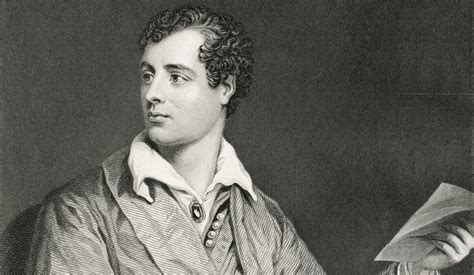
George Gordon Byron (1788–1824)—known to history as Lord Byron—was one of the leading figures of the Romantic movement and one of the most brilliant, scandalous, and influential poets of the 19th century.
Early Life
Born in London on January 22, 1788, Byron inherited the title of 6th Baron Byron at the age of ten after the death of his great-uncle. He grew up partly in Aberdeen and was educated at Harrow School and later at Trinity College, Cambridge.
He was born with a clubfoot, a condition that caused him physical pain and deep personal sensitivity throughout his life. Despite this, he developed striking good looks, charm, and a powerful social presence.
Literary Rise
Byron first gained public attention with his satire English Bards and Scotch Reviewers (1809), but his fame exploded with the publication of the first two cantos of Childe Harold's Pilgrimage in 1812. He famously remarked, “I awoke one morning and found myself famous.”
His major works include:
Byron became closely associated with the “Byronic hero”: a proud, brooding, rebellious, and often self-destructive figure—modeled in part on himself.
Scandal and Exile
Byron’s personal life was marked by intense love affairs, rumors of incest, and mounting debts. His marriage to Annabella Milbanke collapsed within a year, and in 1816, amid public scandal, he left England permanently.
He traveled through Europe, spending time in Geneva (where he befriended Percy Bysshe Shelley and Mary Shelley) and later settling in Venice and Ravenna. His relationship with his half-sister Augusta Leigh and with Claire Clairmont (who bore him a daughter) intensified public controversy.
Greece and Death
In 1823, Byron sailed to support Greek independence from the Ottoman Empire during the Greek War of Independence. Though he did not see major combat, he spent much of his fortune organizing troops and supplies.
He died of fever on April 19, 1824, in Missolonghi at the age of 36. His death made him a martyr-figure in Greece, where he remains a national hero.
Character and Legacy
Byron combined dazzling wit, emotional intensity, satire, sensuality, and political passion. He was both aristocrat and rebel, cynic and idealist. Unlike the meditative spirituality of William Wordsworth or the visionary idealism of Percy Bysshe Shelley, Byron’s poetry often pulses with irony, theatricality, and self-awareness.
He profoundly influenced European literature, inspiring writers from Alexander Pushkin to Goethe and shaping the archetype of the dark Romantic antihero.
|
Who were the Romantic Poets?
How did She Walks In Beauty come to be written?
Lord Byron wrote She Walks in Beauty in June 1814 after attending a London evening party.
The Immediate Inspiration
At the gathering, he saw his cousin by marriage, Anne Wilmot, who was wearing a black mourning dress spangled with glittering decorations. She was grieving a recent family loss. The contrast of the dark gown with the brilliance of the ornaments, combined with her composure and gentleness, struck Byron powerfully.
He reportedly composed the poem the very next day.
The famous opening lines reflect that visual impression:
She walks in beauty, like the night
Of cloudless climes and starry skies…
Notice how the image is not daylight brilliance, but night illuminated by stars—darkness softened and ennified by light. That imagery mirrors the black mourning dress lit by sparkle.
Context in Byron’s Life
This was 1814—during Byron’s period of enormous fame following the success of Childe Harold. He was moving in fashionable London society, though already embroiled in emotional complications and scandal.
Unlike many of his more turbulent love poems, She Walks in Beauty is striking for its restraint. There is no drama, no anguish, no seduction—only admiration. It celebrates harmony between outward beauty and inward purity:
A mind at peace with all below,
A heart whose love is innocent!
Some critics see this as Byron briefly stepping away from the Byronic hero’s turbulence into something almost classical in poise.
Publication
The poem was later included in the 1815 volume Hebrew Melodies, a collection of lyrics written to be set to music by Isaac Nathan. Though the subject is not explicitly biblical, it was grouped with those songs.
In short:
The poem was inspired by a real woman at a party, seen in mourning black adorned with sparkle. The interplay of darkness and light became the central metaphor for a beauty that is both radiant and serene.
She Walks In Beauty (1814), Lord Byron
She walks in beauty, like the night
Of cloudless climes and starry skies;
And all that’s best of dark and bright
Meet in her aspect and her eyes;
Thus mellow’d to that tender light
Which heaven to gaudy day denies.
One shade the more, one ray the less,
Had half impair’d the nameless grace
Which waves in every raven tress,
Or softly lightens o’er her face;
Where thoughts serenely sweet express
How pure, how dear their dwelling-place.
And on that cheek, and o’er that brow,
So soft, so calm, yet eloquent,
The smiles that win, the tints that glow,
But tell of days in goodness spent,
A mind at peace with all below,
A heart whose love is innocent!
Commentary:
She walks in beauty, like the night
Of cloudless climes and starry skies;
And all that’s best of dark and bright
Meet in her aspect and her eyes;
Thus mellow’d to that tender light
Which heaven to gaudy day denies.
Paraphrase:
She moves with a kind of beauty that resembles a clear, star-filled night — not harsh or glaring, but deep, calm, and luminous. Everything most lovely about darkness and light seems to come together in her face and especially in her eyes.
The richness of night and the radiance of starlight blend perfectly in her appearance. This combination becomes softened and balanced into a gentle glow — a tender kind of light — the sort of radiance that heaven does not grant to the loud, overly bright glare of daytime.
Glossary
• climes – Regions or climates; here it suggests distant, perhaps exotic lands.
• aspect – Appearance or outward expression, especially of the face.
• mellow’d – Softened, made gentle or harmonious.
• tender light – A soft, delicate glow rather than a harsh brightness.
• gaudy – Excessively bright, showy, or flashy in a way that lacks refinement.
• denies – Refuses or does not grant.
Modern connection:
Today we might say someone has a “quiet presence” — not dazzling in a loud or flashy way, but deeply compelling. The poem suggests that true beauty is not about intensity or spectacle; it’s about balance. In modern terms, it contrasts the overstimulating brightness of the spotlight with the calm, magnetic glow of someone who doesn’t need to demand attention to hold it.
Deeper significance:
Byron presents beauty as harmony — the perfect equilibrium between opposites. Darkness is not treated as negative, nor light as overpowering. Instead, beauty emerges from their union. The night image suggests depth, mystery, and infinity, while the stars imply illumination within that mystery. Heaven “denying” this light to day implies that overt brilliance lacks subtlety. The passage subtly challenges the assumption that brightness alone equals beauty; instead, it elevates balance, moderation, and inward radiance as higher forms of aesthetic and even moral harmony.
One shade the more, one ray the less,
Had half impair’d the nameless grace
Which waves in every raven tress,
Or softly lightens o’er her face;
Where thoughts serenely sweet express
How pure, how dear their dwelling-place.
Paraphrase:
If there were even the slightest increase in shadow, or the smallest decrease in light, it would diminish — even by half — the indescribable elegance she possesses. Her beauty depends on a perfect balance; the faintest alteration would disturb it. This delicate grace seems to move through every strand of her dark hair and to cast a gentle brightness across her face. In her expression, her calm and peaceful thoughts quietly reveal themselves. Those thoughts show that the place where they reside — her mind and heart — is pure and precious.
Glossary
• shade – A degree of darkness or shadow.
• ray – A beam or small amount of light.
• impair’d – Damaged, weakened, or reduced (spelling reflects older usage).
• nameless grace – A beauty or elegance too subtle or refined to be fully described in words.
• raven tress – A lock of deep black hair (raven refers to the bird known for its dark feathers; tress means a curl or strand of hair).
• serenely – Calmly, peacefully, without agitation.
• dwelling-place – The place where something lives or resides; here meaning the mind or heart.
Modern connection:
We might say someone has a perfectly balanced presence — nothing feels excessive or lacking. Even subtle changes in tone, posture, or expression can alter how we perceive someone. Byron is noticing how small details — the softness of light, the movement of hair, the calmness of expression — combine to create a whole impression. It reflects how, even today, we sense when something is “just right” without being able to fully explain why.
Deeper significance:
This stanza deepens the theme of harmony. Beauty is not random; it is proportion and equilibrium so exact that the slightest deviation would disturb it.
But Byron moves beyond physical description: the outer harmony reflects an inner one. Her face is not merely attractive — it communicates serenity and moral purity. The body becomes a visible expression of the soul.
Byron implies that true beauty arises when inner goodness and outer appearance are in quiet alignment, suggesting a unity of aesthetics and ethics — beauty as a reflection of inward clarity and peace.
And on that cheek, and o’er that brow,
So soft, so calm, yet eloquent,
The smiles that win, the tints that glow,
But tell of days in goodness spent,
A mind at peace with all below,
A heart whose love is innocent!
Paraphrase:
On her cheek and across her forehead there is a softness and calmness, yet her expression still speaks clearly and meaningfully. Even without words, her face communicates. The gentle smiles that naturally attract affection, and the warm color glowing in her complexion, reveal something about how she has lived.
They suggest that her days have been lived in kindness and moral goodness. Her expression shows a mind that is at peace with the world around her and a heart capable of loving in a way that is pure and free from corruption.
Glossary
• brow – The forehead.
• eloquent – Expressive; able to communicate feeling or meaning clearly without necessarily using words.
• tints – Subtle colors or shades in the complexion.
• win – To attract or gain affection or admiration.
• goodness spent – A life lived in virtue or moral integrity.
• all below – The earthly world; humanity or worldly life.
• innocent – Pure, free from guilt, corruption, or harmful intent.
Modern connection:
We often say that someone’s face “shows their character” — that kindness leaves its trace in a person’s expression. Byron suggests that beauty is not merely structural or physical; it is shaped by how one lives. Today, we still sense when someone radiates ease, goodwill, and sincerity. It is not cosmetics or symmetry alone, but the visible imprint of a life lived thoughtfully and kindly.
Deeper significance:
The poem culminates by fully uniting outward beauty with inward virtue. Physical features — cheek, brow, smile, complexion — become evidence of moral harmony. Byron suggests that serenity of mind produces serenity of appearance. The final lines elevate the poem from admiration of beauty to reverence for innocence and peace.
Beauty here is not seductive, tragic, or turbulent (as in many Byronic works), but integrated and whole. The highest beauty, Byron implies, is the visible sign of a soul at rest, aligned with goodness and untouched by corruption.
Brief summary of the entire poem
The poem is a lyrical celebration of a woman whose beauty is defined not by brilliance or showiness, but by perfect harmony. Byron compares her to a clear, star-filled night, where darkness and light blend in balanced proportion. Her appearance reflects a delicate equilibrium — neither too bright nor too shadowed — suggesting that even the slightest alteration would diminish her grace.
As the poem progresses, Byron moves from describing her physical features to suggesting that her outward beauty reveals inner qualities. Her calm expression, gentle smiles, and soft coloring imply a life lived in goodness. Ultimately, the poem concludes that her physical beauty is inseparable from moral purity: she possesses a peaceful mind and an innocent heart.
In essence, the poem presents beauty as harmony — the visible expression of inward serenity and virtue.
|