|
home | what's new | other sites | contact | about |
||||
|
Word Gems self-knowledge, authentic living, full humanity, continual awakening
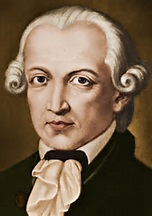
Immanuel Kant
return to 'Great Books' main-page
Immanuel Kant (1724–1804)
What Other Thinkers Have Said About Kant Kant Glossary: Technical Vocabulary Made Plain
Critique of Pure Reason (1781,1787) Background: Why Kant Had to Write the Critique Background: Why Kant is the ‘central sun’ of modern philosophy Background: The Two Editions: 1781 and 1787 Study I: Preface to the First Edition (A, 1781) Study II: Preface to the Second Edition (B, 1787) Study III: Introduction to the Critique of Pure Reason The Introduction as a whole: orientation / map Section I: The Distinction Between Pure and Empirical Knowledge Section II: We Are in Possession of Certain A Priori Cognitions Section III: Philosophy Needs a Science of the Limits of Reason The concluding movement into the Transcendental Aesthetic Study IV: The Transcendental Aesthetic The Transcendental Aesthetic as a whole: orientation / map Opening orientation: Sensibility, intuition, matter, and form Section I: Of Space: Preliminary Orientation The Metaphysical Exposition of Space The Transcendental Exposition of Space Conclusions from the Exposition of Space Section II: Of Time: Preliminary Orientation The Metaphysical Exposition of Time The Transcendental Exposition of Time Conclusions from the Exposition of Time General Remarks on the Transcendental Aesthetic The final conclusions: Space and Time as Forms of Sensibility Synthesis: What Kant Has Established About Space and Time Transcendental Aesthetic: Vocabulary Consolidation Transition from the Transcendental Aesthetic to the Transcendental Analytic
this page is under construction
|
||||
|
|