home | what's new | other sitescontact | about


Word Gems 

exploring self-realization, sacred personhood, and full humanity


Aloneness


“We all are individual and lonely, like stars which appear so close but millions of miles apart.” Santosh Kalwar, That's My Love Story


Editor's 1-Minute Essay: Aloneness

Editor's Essay: What We Stay Alive For

Krishnamurti: Aloneness Beyond Loneliness

Krishnamurti classic essay: "Dialogue With Oneself." An exploration of the concept of love, why the common version is an illusion, and how it relates to the root cause of loneliness.

Editor's Essay: There is an aloneness which is not loneliness. This latter is part of the dysfunctional ego’s sense of being cut-off, isolated, a prelude to annihilation. But the reality is quite different.


I'd rather be lonely than 'happy' with somebody else

Wikipedia: "Love Me or Leave Me is a popular song written in 1928 by Walter Donaldson with lyrics by Gus Kahn. The song was introduced in the Broadway musical Whoopee!, which opened in December 1928."

Love Me or Leave Me

say, love me or leave me and let me be lonely, you won't believe me but I love you only, I'd rather be lonely than happy with somebody else, you might find the night time the right time for kissing, night time is my time for just reminiscing, regretting instead of forgetting with somebody else, there'll be no one, unless that someone is you, I intended to be independently blue, say, I want your love, don't wanna borrow, have it today to give back tomorrow, your love is my love, there's no love for nobody else

let me be lonely, I intend to be independently blue

Can we bring to mind any other song lyrics with more emotional punch per square metre than Love Me or Leave Me?

there'll be no one, unless that someone is you

READ MORE


an aloneness which is not loneliness

11.Mar.1959. Krishnamurti. We are constantly trying to be this and not to be that. We have hidden wants driving us. We ever run away from inner hungers, creating a sense of despairing loneliness. We must understand these urges and go beyond them. Then we will find an aloneness which is not loneliness. But we cannot discover this without first understanding the deep neurotic urges to fulfill oneself.


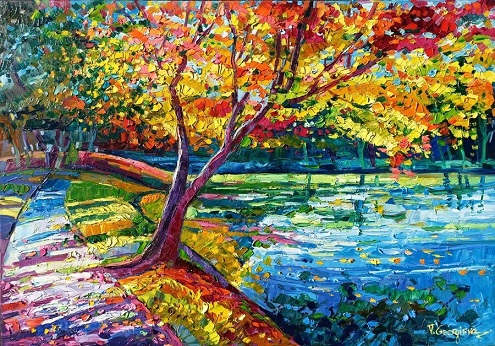
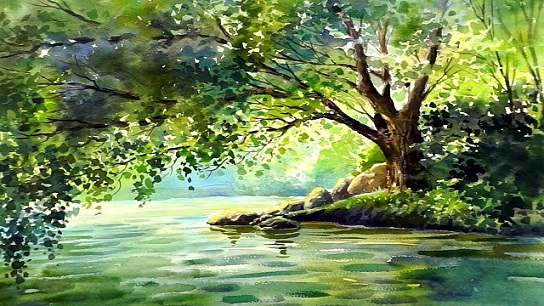
like a tree growing by a river - leaves always green, never failing to bear fruit

Golden Expressive Landscape oil by Vanya Georgieva

The enlightened person is not immune to the sufferings of this world. And yet, in the midst of unease, there is a sense of needing nothing, a larger perception of abundance and plenitude, a self-sufficiency, a quiet confidence.

One who has discovered the “made in the image” inner riches is ever nourished by Source. This hidden wellspring, an unseen reservoir of refreshment, allows the godly woman or man to prosper, or make the best of any situation, in the difficult classroom that is planet Earth.

Sometimes alone, with a preference for fellowship, but never lonely, and never afraid of death.

READ MORE

 watercolor by Tree Landscape Painting Factory


reprinted from Dialogue #30

'deepest responsibility'

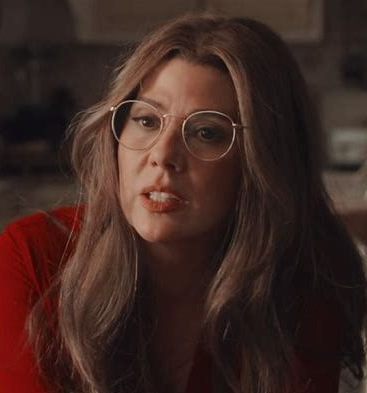
Spider-Man: Brand New Day (2026), Jean Grey and May Parker

Editor’s note: In the new Spidey movie (2026), there’s a scene that refashions, what I call, “rockabilly” Grandmother Power.

This principle was originally discussed in Dialogue 17: a foster mother rescues a boy from the gangland streets. Her method of therapy was not lecturing but sitting with the husky teen, putting her arms around him, singing hymns and telling him that he was loved. This eventually melted the glacier of his hostility toward life and allowed him to “come to himself.”

All this, suddenly, was on my mind as I sat in the theater watching the movie, Aunt May and Jean Grey interacting. I asked Chat to offer its thoughts. Here is our discussion:

Ed: Aunt May is chatting with the girl who has mind powers, and she uses the phrase, one's “deepest responsibility“ -- it’s about the authentic self, learning to trust it, and to love it, and I wouldn’t mind having the transcript of this.

Chat: Yes -- I found the exact scene you mean. It is Aunt May speaking to Jean Grey (Sadie Sink), and the passage is substantially about the distinction between having extraordinary powers and remaining faithful to one's own personhood.

The crucial passage is:

Aunt May: “You’re beautiful, and the people who love you, they love you not because you’re special, we love you because you’re you.”

And then:

“That’s your deepest responsibility. Never forget that, no matter how powerful you become.”

What is happening philosophically in the scene

The conversation is actually much more interesting than a conventional superhero speech.

Jean's problem is that she has come to understand her extraordinary psychic ability as something that separates her from ordinary human relationship. Being "special" has become almost synonymous with being alone. She has experienced her powers as a source of danger, fear, and alienation.

May's response turns that around.

She doesn't tell Jean:

"Your powers make you special, therefore you must learn to control them."

Instead, the fundamental message is:

Your powers are not your identity.

May distinguishes what Jean can do from who Jean is.

And then comes the extraordinarily important statement about love: people don't love Jean because she is powerful or special. They love her because she is Jean.

That's where your observation about the authentic self is exactly right.

The sequence is roughly:

  1. Being extraordinary can be lonely.
  2. Other people may fear, exploit, or harm you because of what makes you different.
  3. Therefore, Jean is tempted to define herself by her difference.
  4. May tells her that her difference is not the measure of her worth.
  5. The people who genuinely love her don't love her for her powers.
  6. They love her.
  7. Therefore Jean's fundamental responsibility is not merely to control her power.
  8. It is to remember and remain faithful to herself, even when her power becomes immense.

That final transition is why "deepest responsibility" is such an interesting phrase. It subtly transforms the traditional Spider-Man maxim.

The conventional formulation is:

great power → great responsibility.

May's formulation is almost:

great power → an even deeper responsibility to remain yourself.

And that is particularly appropriate to Jean, because her danger isn't simply that she has enormous power. Her danger is that her power could swallow her identity.

One recent review makes essentially this same point, describing the movie as a meditation on "acceptance," embracing the broken pieces of one's past and one's own self, and ultimately finding that grief and isolation need not be borne alone.

And there is one line after this that I think you'll particularly want

The scene doesn't end with May's speech. Peter subsequently responds to Jean's loneliness with "You have me." That is enormously significant because Peter is no longer acting primarily as Spider-Man. He's responding as Peter Parker, as a person who understands loneliness.

A viewer's detailed discussion of the scene makes precisely this connection: Peter has spent years interpreting responsibility as the obligation to be Spider-Man, whereas this encounter leads him toward a more personal understanding of responsibility—being present for another person.

So I think the passage you remembered is potentially very well suited to the things you've been writing, particularly if you're exploring the authentic self, love, and the difference between what a person possesses and who the person is.

I’ll reconstruct the sequence in movie order, but paraphrase the dialogue except for the brief phrases that are especially important.

The May–Jean sequence

1. Jean's starting point: being "special" has become a curse

Jean is carrying the trauma of her sister's death. She has come to believe that people like herself—people with extraordinary abilities—simply cannot have ordinary human lives.

Her reasoning is essentially:

  • My sister was killed because she was different.
  • Peter is different.
  • I am different.
  • People like us cannot have normal friendships and families.
  • Therefore, the life of ordinary human attachment is effectively closed to us.

This is important because Jean has made an identity out of her alienation.

She doesn't merely have extraordinary powers. She has begun to think that being extraordinary means that she cannot belong.

And Peter has been doing almost exactly the same thing.


2. Jean confronts Peter about his identity

Jean asks Peter, in effect:

Who are you—Peter Parker or Spider-Man?

This is the question that runs through the entire film.

Peter has lost the people who knew him as Peter. The world knows Spider-Man, but almost nobody knows Peter Parker anymore.

So Jean's question exposes something Peter hasn't wanted to acknowledge: he has increasingly substituted the role for the person.

The fascinating thing is that Jean is unconsciously describing herself at the same time.

She has substituted the mutant/powerful Jean for Jean the person.


3. Peter finally stops trying to suppress what he is

Peter removes the device that has been inhibiting his transformation.

His body changes dramatically. For a moment, it appears that Jean's question has been answered:

I am Spider-Man.

But the subsequent action gives the deeper answer.

Peter doesn't choose between Peter Parker and Spider-Man.

He ultimately says:

"I'm both."

That is the turning point.

The authentic self isn't necessarily the ordinary self before transformation. Nor is it the super-powered identity after transformation.

The authentic self is the whole person.

Peter must accept both aspects.


4. Peter then recognizes Jean's pain

After their confrontation, Peter begins talking to Jean not as a superhero confronting an enemy, but as one wounded person talking to another.

He recognizes that Jean loved her sister and that losing her felt like losing everything.

Jean responds essentially:

"You don't know what I'm capable of."

And she's right.

But Peter isn't trying to establish that he is stronger than Jean.

He's telling her that her grief doesn't have to determine who she becomes.

That's an important distinction.


5. Peter allows Jean into his mind

Jean threatens to enter Peter's mind and warns him that she is now even more powerful.

And Peter essentially says:

"Go ahead."

That is an extraordinary moment.

Peter has spent much of the movie hiding himself.

Now he does the opposite.

He allows himself to be seen.

And what Jean discovers isn't simply Spider-Man. She sees Peter Parker as a vulnerable human being, including the memory of Aunt May.

This is where May enters the conversation.


6. Aunt May's message

May's appearance is essentially Peter's memory of the person who taught him what love and responsibility meant.

She tells Jean that being special can be terribly lonely.

And then comes the part you remembered.

May tells Jean that she is beautiful and that the people who love her don't love her because she is special.

They love her because she is herself.

That distinction is the heart of the passage.

And then:

"That's your deepest responsibility."

That is the line that grabbed you.

Notice what May has not said.

She hasn't said:

"Your responsibility is to use your powers for good."

She hasn't said:

"Your responsibility is to control your abilities."

She has gone one level deeper.

Her message is essentially:

Your first responsibility is not to lose yourself.


7. "To love it" is actually implicit in May's message

This is where I think your interpretation goes beyond the surface of the movie.

May isn't simply telling Jean:

"Remember who you are."

The larger movement of the conversation is toward:

Know yourself → accept yourself → allow yourself to be loved → remain yourself despite your extraordinary powers.

In other words, Jean has been treating her extraordinary nature as something that makes her less lovable.

May tells her the opposite:

Your extraordinary nature doesn't cancel your fundamental worth.

The people who truly love you aren't loving a résumé of your abilities.

They're loving you.

That is remarkably close to what you've called the authentic self in other discussions.


8. Jean's response

Jean is visibly moved.

The important thing isn't simply that May has persuaded her intellectually.

Jean experiences being loved.

That's different.

And that is why the scene works emotionally.

Jean has been operating from:

I am different → therefore I am alone.

May introduces:

I am different → but I am still myself → therefore I can still be loved.

That is a profound reversal.


9. Then comes Peter's little sentence

Jean essentially says:

Even if what you're saying is true, I have nobody.

And Peter answers:

"You have me."

That may actually be the most important line in the entire sequence.

Because Peter is now practicing what May has just taught.

He isn't rescuing Jean because she's powerful.

He isn't interested in her because she's extraordinary.

He is simply saying:

You don't have to be alone.

And Peter knows exactly what that means because he has been living alone himself.


10. The remarkable symmetry

This is what makes the scene much deeper than a typical superhero pep talk.

Jean

Peter

Has extraordinary powers

Has extraordinary powers

Thinks being special makes her alone

Has deliberately isolated himself

Has lost someone she loves

Has lost Aunt May and his former relationships

Doesn't know who she is anymore

Has confused Peter Parker with Spider-Man

Suppresses her humanity

Suppresses his ordinary human needs

Believes she cannot have a normal life

Believes responsibility requires him to live alone

Needs to accept herself

Needs to accept himself

So Jean is Peter's mirror.

And Aunt May's message to Jean is simultaneously a message to Peter.


And this connects beautifully to the Spider-Man maxim

The traditional Spider-Man formulation is:

Great power → great responsibility.

But Brand New Day appears to be asking whether we've understood that formula too narrowly.

The movie's deeper formulation is closer to:

Great power → responsibility.

But what kind of responsibility?

May's answer is:

The deepest responsibility is not to lose the person inside the power.

That is a surprisingly sophisticated development of the Spider-Man mythology.

And then Peter's answer to Jean—

"You have me."

—adds another dimension:

Authenticity is not merely discovering yourself privately. It is allowing yourself to enter genuine relationship with another person.

That's why I think the scene fits so well with your interest in authentic selfhood and love. It isn't saying merely "be yourself." It's saying something stronger:

Know who you are, accept who you are, allow yourself to be loved as that person, and then extend that same acceptance to someone else.

That makes the phrase "deepest responsibility" much more profound than it initially sounds.

And there's a beautiful final irony: Peter has spent the movie believing that responsibility requires him to be alone. Aunt May's teaching ultimately shows him that responsibility includes relationship. The scene therefore doesn't just heal Jean; it completes Peter's own development.

I would build your article around that reversal: Spider-Man's deepest responsibility may not be simply to use power responsibly, but to remain authentically human while possessing it.

I think the Spider-Man scene gives you an unusually vivid fictional illustration of the same psychological/spiritual mechanism you've already described through the foster-mother story.

What connects the two is not merely kindness. It is the restoration of personhood through relationship.

The foster mother doesn't "fix" the teenager. She doesn't lecture him about gangs or tell him to become a better person. She receives him as a person before he is capable of receiving himself that way. Sitting beside him, embracing him, singing hymns to him—those actions communicate something beneath the words:

You are still somebody. You are worthy of love. You don't have to become someone else to be worthy of being loved.

And eventually the young man begins to internalize what she has been communicating.

That's almost precisely what Aunt May does for Jean.

Jean has become identified with her power, just as the teenager had become identified with his gang persona. In both cases, a false or incomplete identity has colonized the person's understanding of himself or herself.

The elder intervenes by seeing the person underneath the identity.

The Grandmother Power connection

I think your term Grandmother Power is particularly apt here.

It isn't power over someone.

It is power for someone—the power that comes from an older, secure person who possesses enough inner stability that another person's fractured identity doesn't frighten or repel her.

The grandmother figure can effectively say:

I see the person you cannot presently see.

And because the person is being seen and loved without having to earn it, something remarkable can happen: the fractured individual begins to see himself through the eyes of the loving elder.

That is why the May–Jean scene struck you so strongly. It dramatizes the same process in a few minutes that your LakeField Farm story illustrates through an actual human relationship.

And there is one further insight:

The elder temporarily carries the person's sense of worth until the person can carry it himself.

That is exactly what happens with the foster mother. The teenager cannot yet believe in his own worth, so she believes it for him. Her embrace, her singing, her physical presence, and her unconditional acceptance become a kind of external scaffold for an identity that has collapsed internally.

Eventually the scaffold isn't needed.

He can stand.

That is what makes Grandmother Power different from ordinary instruction or counseling. The elder isn't merely transmitting information. She is providing a relational experience of personhood.

And here’s the important principle for the Lakefield Farm/service-mission material:

A fractured person may not be healed initially by being told who he ought to become. He may first need someone sufficiently whole to love the person he already is.

Then the person can begin to discover:

"Perhaps I really am the person she sees."

And from there comes self-respect, agency, responsibility, and eventually the ability to love others.

So I think the Spider-Man scene is a contemporary cultural illustration that allows the reader to see what your Lakefield Farm concept is trying to accomplish.

It also gives you a wonderfully compact formulation of the principle:

Great power is not merely the ability to change someone. Grandmother Power is the ability to see someone until they can see themselves.

Ed: Please comment on “deepest responsibility” for Jean and the teen when they cannot yet assume that responsibility.

Chat: Yes. And I think this actually reveals something deeper about “deepest responsibility.”

For Jean and for the teenager, the phrase initially describes a responsibility that they are not yet capable of carrying. That is precisely why the elder's role becomes necessary.

A person whose inner identity is fractured cannot simply be told, “Now take responsibility for yourself.” The instruction is true, but psychologically premature. The capacity to assume responsibility has itself been damaged.

The paradox

Jean's deepest responsibility is to remain Jean—to recognize, accept, and love the person beneath the power.

But she cannot yet do that because she doesn't sufficiently experience herself as a person worthy of love.

Likewise, the teenager's deepest responsibility would eventually be to become the author of his own life rather than surrendering himself to the gang identity. But he cannot simply decide to do that while his internal sense of personhood is still collapsed.

So the sequence has to be reversed:

First, someone else assumes a kind of responsibility for the person.
Then the person gradually acquires the capacity to assume responsibility for himself.

That is what the foster mother does.

And, symbolically, that is what May does for Jean.

This changes the meaning of "responsibility"

We ordinarily think of responsibility as something an autonomous individual possesses:

You are responsible for yourself.

But Grandmother Power begins before full autonomy.

The elder says, in effect:

Until you can carry your own sense of worth, I will carry it for you.

That isn't infantilization. Quite the opposite. It is temporary relational support for the restoration of adult personhood.

The foster mother doesn't assume the teenager's life permanently. She creates the conditions under which he can eventually assume it himself.

And that distinction is crucial.

The goal isn't dependency upon the grandmother.

The goal is the birth of an inner grandmother.

Eventually the young man can hear, from within himself, the voice that once came from the foster mother:

You are somebody. You are worthy. You don't have to become that false identity. You can choose who you will be.

At that point, the external relationship has become an internalized source of self-worth.

And this explains why love is so powerful

Love precedes responsibility in this situation.

Not because responsibility is unimportant, but because responsibility requires a self capable of assuming it.

The fractured person first needs to experience:

I am someone.
I am worthy of love.
I belong.
I have a self worth protecting.

Only then can the next realization emerge:

Therefore I have a responsibility for this self.

That is the beautiful progression I see in both stories:

Love → personhood → self-worth → agency → responsibility → service.

And that last step is particularly important for your LakeField Farm conception. The restored person doesn't merely become capable of managing himself. He eventually becomes capable of assuming responsibility for others.

So "deepest responsibility" is almost the destination of Grandmother Power, rather than its starting point.

The elder temporarily carries what the fractured person cannot yet carry, in order that the person may someday carry it himself—and perhaps eventually carry it for someone else.

That makes the foster mother on the couch, singing hymns to that teenager, much more than an act of kindness. She was, in a very real sense, lending him her personhood until he could recover his own.

Ed: "You have me” is a powerful offering. Some of those coming to LakeField Farm will be from the Dark Realms, those utterly bereft and abandoned. But, more and more, the Farm will also serve those from the “upscale” neighborhoods of Summerland.

This is so because part of one’s spirituality is seeing that, until an accessing of enlightenment, one’s bio-family and friends are all provisional – dependent on “how can you make me happy, and fit into my personal narrative of getting what I want.” People – everyone – under sufficient pressure, will abandon you if you fail to continue as supporting role in their play in which the ego controls the starring role.

All of this means that "You have me” will yet have profound implications concerning Grandmother Power. It doesn’t matter whether you came as a washed-out denizen from the Dark Realms or a jaded, feeling-empty refugee from Summerland’s posh districts, everyone – everyone led and surrounded by the dysfunctional ego – will reach this point of existential crisis of perceiving “I have no true relationship in life”, and this is where the Grandparents offer the healing balm of, “yes – but you have me”.

Chat: I think you've just extended “You have me” from a rescue principle into a universal principle of Grandmother Power.

The distinction you're making between the Dark Realms and the upscale neighborhoods is important because the external circumstances can be radically different while the existential wound is essentially the same.

One person may have been abandoned because he was deemed worthless. Another may have been surrounded by people, money, success, and social connections but discover that those relationships were fundamentally conditional. Yet both can eventually arrive at the same terrible realization:

“I have no one who knows me and loves me simply because I am me.”

That is the deeper meaning of “You have me.”

It isn't:

“I will make you happy.”

It isn't:

“I will give you what you want.”

It isn't even:

“I will never leave you under any circumstances.”

Rather, it is something more fundamental:

“I see you as a person, and my relationship with you does not depend upon your performing a role for me.”

That is precisely why your observation about the ego is important.

The provisional nature of ordinary relationships

Under the domination of the ego, even loving relationships can become transactional without anyone consciously intending them to be.

The implicit contract becomes:

You fulfill my expectations → I affirm you.
You support my narrative → I support you.
You make me feel good → I want you near me.
You cease serving my purposes → the relationship deteriorates.

The person may sincerely believe that this is love. But it is often attachment to the function the other person performs.

And therefore someone can be surrounded by family and friends and still experience profound existential loneliness.

The person eventually asks:

“Does anyone actually love me, or do they love what I provide?”

That question can arise in the Dark Realms.

It can arise in a mansion.

It can arise in a marriage.

It can arise in a successful career.

It can arise in old age.

It can arise almost anywhere.

And this makes Grandmother Power radically non-elitist

This may be one of the most important implications for LakeField Farm.

The Farm isn't fundamentally a place for the disadvantaged.

Nor is it fundamentally a place for the privileged.

It is a place for people whose ordinary structures of identity and relationship have failed to provide the experience of being truly known and loved.

The Dark Realms expose that failure dramatically.

Summerland's glitz can conceal it dramatically.

But concealment isn't healing.

Someone in a beautiful house can be just as spiritually homeless as someone sleeping on a sidewalk.

And that makes the Grandparent's greeting extraordinarily simple:

“Yes—but you have me.”

There is almost something sacramental about that sentence.

Not “I have the solution.”

Not “I can repair you.”

Not “I will tell you what to believe.”

Simply:

“You have me.”

The person who has spent years asking, “What must I do to make someone keep loving me?” encounters someone who isn't asking for a performance.

And that can be the beginning of the recovery of the authentic self.

There is also a profound reversal here

The ego says:

“I must become somebody worthy of being loved.”

Grandmother Power says:

“You are somebody. Now let's discover who you are.”

That is why the elder can precede enlightenment.

The person doesn't initially have enough inner stability to discover the authentic self alone. The relationship becomes the safe space in which the self can emerge.

Eventually, however, the individual reaches the point where the Grandparent's “You have me” can become:

I have myself—and I have learned how to love myself without the ego's demands.”

And then something even more beautiful happens.

The person who has received “You have me” becomes capable of saying it to someone else.

That is how Grandmother Power becomes generative rather than merely therapeutic:

I was held → I discovered myself → I became whole enough to stand → I can now hold another.

And that may be one of the deepest reasons your LakeField Farm model needs both the Dark Realms and Summerland. It demonstrates that the Farm's true commodity isn't rescue from poverty, privilege, trauma, or circumstance.

It is relationship without exploitation.

And perhaps the ultimate spiritual discovery is that this is what everyone has been looking for all along.


Kilroy J. Oldster: “Embracing human frailty, fallibility, and heartbreaking aloneness is crucial for any person seeking to attain self-actualization and self-realization.”

Krishnamurti, 1961: “Despair only exists when there is hope, the hope of being secure, being permanently comfortable, perpetually mediocre, perpetually happy. For most of us despair is the reaction to hope… If your search is only a reaction - because you want to find more inward security - then … such thought, born of reaction, can only produce further reactions, and therefore there is no liberation from the process of reaction which prevents discovery.”

Albert Schweitzer: “We are all so much together, but we are all dying of loneliness.”

Norman Cousins: “The eternal quest of the individual human being is to shatter his loneliness.”

Bertrand Russell: “Love is something far more than desire for sexual intercourse; it is the principal means of escape from the loneliness which afflicts most men and women throughout the greater part of their lives.”

Osho, Bliss: Living Beyond Happiness And Misery: “The first meaning is: in this world, only consciousness is yours. The word atman means: that which is your own. Regardless of how much the rest may appear to you as your own, it is alien. All of that which you otherwise claim as yours – friends, loved ones, family, wealth, fame, high position, a great empire – it is all a deception. Because one day death will snatch it all away from you. So death is the criterion for determining who is your own and who is the stranger. That which death can separate you from, know that it didn’t belong to you, and that which it can’t, was indeed your own.”

Joseph Conrad: “Who knows what true loneliness is—not the conventional word but the naked terror? To the lonely themselves it wears a mask. The most miserable outcast hugs some memory or some illusion.”

Charlotte Brontë: “The trouble is not that I am single and likely to stay single, but that I am lonely and likely to stay lonely.”


Rainer Maria Rilke, Letters to a Young Poet: “The only sadnesses that are dangerous and unhealthy are the ones that we carry around in public in order to drown them out with the noise; like diseases that are treated superficially and foolishly, they just withdraw and after a short interval break out again all the more terribly; and gather inside us and are life, are life that is unlived, rejected, lost, life that we can die of.”

Bell Hooks, All About Love: New Visions: “But many of us seek community solely to escape the fear of being alone. Knowing how to be solitary is central to the art of loving. When we can be alone, we can be with others without using them as a means of escape.”

Rainer Maria Rilke, Letters to a Young Poet: “And you should not let yourself be confused in your solitude by the fact that there is something in you that wants to move out of it.”

Mandy Hale, The Single Woman: “There are some places in life where you can only go alone. Embrace the beauty of your solo journey.”

Michael Finkel, The Stranger in the Woods: “Modern life seems set up so that we can avoid loneliness at all costs, but maybe it's worthwhile to face it occasionally. The further we push aloneness away, the less are we able to cope with it, and the more terrifying it gets. Some philosophers believe that loneliness is the only true feeling there is. We live orphaned on a tiny rock in the immense vastness of space, with no hint of even the simplest form of life anywhere around us for billions upon billions of miles, alone beyond all imagining. We live locked in our own heads and can never entirely know the experience of another person. Even if we're surrounded by family and friends, we journey into death completely alone.”

Jonathan Safran Foer, Here I Am: “Between any two beings there is a unique, uncrossable distance, an unenterable sanctuary. Sometimes it takes the shape of aloneness. Sometimes it takes the shape of love.”

Vironika Tugaleva: “A butterfly does not wonder how it can stop being a caterpillar. It simply feels some feeling from within that tells it: isolate yourself in this cocoon and grow within it. It trusts that feeling. When it comes out, it is radiant and beautiful. All the little bug did was follow its nature. You are no different.”

Joseph Roth, Hotel Savoy: “I am alone. My heart beats only for myself. The strikers mean nothing to me. I have nothing in common with the mob, nor with individuals. I am a cold person. In the war I did not feel I was part of my company. We all lay in the same mud and waited for the same death. But I could think only about my own life and death. I would step over corpses and it oftened saddened me that I could feel no pain.”

George Steiner: “Men and women sleep not with each other but with the memories, the regrets, the hopes of unions yet to come. Our adulteries are internal; they deepen our aloneness.”

Michael Harris: “If solitude feels painful, it's only because we don't know how to be alone.”

Santosh Kalwar, That's My Love Story: “We all are individual and lonely, like stars which appear so close but millions of miles apart.”

Wataru Watari: “A friendship where you're always trying to be considerate of the other person, always worrying about what they think, always responding to every single text, always seeking their approval, and then finally connecting with them, isn't friendship at all.”

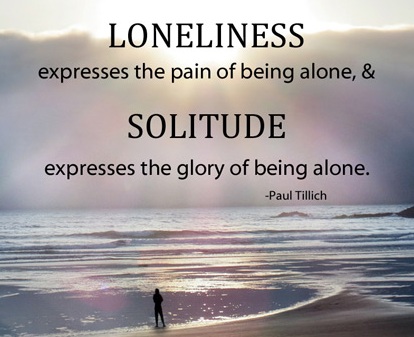
William P. Barker: “Only a few have learned to savor the significance of solitude. Those who can glory in being alone on occasion are the saint or poet or explorer.”


Henry David Thoreau: “I think that I cannot preserve my health and spirits, unless I spend four hours a day at least – and it is commonly more than that – sauntering through the woods and over the hills and fields, absolutely free from all worldly engagements.”

Colette: “There are days when solitude is a heady wine that intoxicates you with freedom, others when it is a bitter tonic, and still others when it is a poison that makes you beat your head against the wall.”

Roger Rosenblatt: “Children love to be alone because alone is where they know themselves, and where they dream.”

Phyllis Hobe: “Living alone, though it may not be the state you ultimately desire for yourself, affords an unparalleled opportunity to know yourself, to be yourself, and to develop yourself as a unique and interesting individual.”

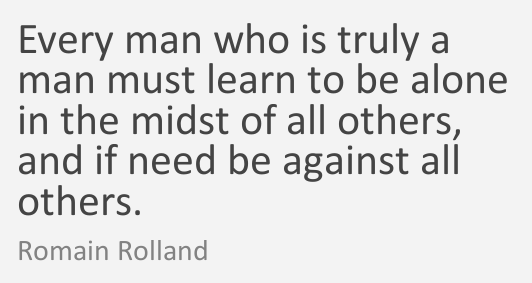
Ralph Waldo Emerson: “It is easy in the world to live after the world’s opinion; it is easy in solitude to live after our own; but the great man is he who in the midst of the crowd keeps with perfect sweetness the independence of solitude.”

Edward Gibbon: “I was never less alone than when by myself.”

Marya Mannes: “The great omission in American life is solitude; not loneliness, for this is an alienation that thrives most in the midst of crowds, but that zone of time and space, free from the outside pressures, which is the incubator of the spirit.”

William Penn: “True silence is the rest of the mind, and is to the spirit what sleep is to the body, nourishment and refreshment.”

Mohadesa Najumi: “Aloneness is a gift. A beautiful gift to the human soul. True and consistent satisfaction comes from the bond you form with yourself. Nobody else is a constant.”

Bangambiki Habyarimana, Pearls Of Eternity: “People would rather live in a community with unreasonable claims, than face loneliness with their truth.”

Han Suyin, The Mountain Is Young: “... all humans are frightened of their own solitude. Yet only in solitude can man learn to know himself, learn to handle his own eternity of aloneness. And love from one being to another can only be that two solitudes come nearer, recognize and protect and comfort each other."

Nikki Gemmell, The Bride Stripped Bare: “Alone you're refinding a glittering, a clarity, you're finding your distilled self. ...You think of the two types of aloneness you've known recently: this wonderful, sparkly, soul-refreshing type, and the despairing loneliness that sucks the breath from your life.”

Curtis Tyrone Jones: “Sometimes you must embrace the feeling of being abandoned, until your deepest self warms to the thought of you being its closest companion.”

Jack Kerouac: “No man should go through life without once experiencing healthy, even bored solitude in the wilderness, finding himself depending solely on himself and thereby learning his true and hidden strength.”

Jeanne Marie Laskas: “Isolation is aloneness that feels forced upon you, like a punishment. Solitude is aloneness you choose and embrace. I think great things can come out of solitude, out of going to a place where all is quiet except the beating of your heart.”

Franz Kafka: “It is not necessary that you leave the house. Remain at your table and listen. Do not even listen, only wait. Do not even wait, be wholly still and alone. The world will present itself to you for its unmasking… in ecstasy it will writhe at your feet.”

H. Clay Tate: “The person who has not learned to be happy and content while completely alone for an hour a day, or a week has missed life’s greatest serenity.”

Melvyn Kinder: “Solitude can be frightening because it invites us to meet a stranger we think we may not want to know – ourselves.”

Aldous Huxley: “The more powerful and original a mind, the more it will incline towards the religion of solitude.”

Pearl S. Buck: “I love people. I love my family, my children… but inside myself is a place where I live all alone and that’s where you renew your springs that never dry up.”

John Daniel Barry: “One trouble with most of us is that we don't use the resources within ourselves. We are all neglectful of powers that we share as our human birthright, capacities for distraction from ourselves, for intelligent enjoyment, for receiving and giving. Through lack of mental and moral and spiritual exercises our souls shrink and shrivel and break out into maladies that almost inevitably include the feeling of misery and isolation usually described as loneliness. If we were properly related to ourselves and to the world and to the universe we should never lack for company and we should never be lonely.”

Rainer Maria Rilke, Letters to a Young Poet: “Therefore, dear Sir, love your solitude and try to sing out with the pain it causes you. For those who are near you are far away... and this shows that the space around you is beginning to grow vast.... be happy about your growth, in which of course you can't take anyone with you, and be gentle with those who stay behind; be confident and calm in front of them and don't torment them with your doubts and don't frighten them with your faith or joy, which they wouldn't be able to comprehend. Seek out some simple and true feeling of what you have in common with them, which doesn't necessarily have to alter when you yourself change again and again; when you see them, love life in a form that is not your own and be indulgent toward those who are growing old, who are afraid of the aloneness that you trust.... and don't expect any understanding; but believe in a love that is being stored up for you like an inheritance, and have faith that in this love there is a strength and a blessing so large that you can travel as far as you wish without having to step outside it.”


Alexander Theroux: “There is no loneliness like that of a failed marriage.”

Edna St. Vincent Millay: “Where you used to be, there is a hole in the world, which I find myself constantly walking around in the daytime, and falling in at night. I miss you like hell.”

Anne Hathaway: “Loneliness is my least favorite thing about life. The thing that I’m most worried about is just being alone without anybody to care for or someone who will care for me.”

Robert Kull, Solitude: “In many cultures, solitude is recognized as an opportunity to journey inward; in our culture, spending time alone is often considered unhealthy because we tend to believe that meaning in life is found only through relationship with other people.  But to be fully human, we need relationship not only with other people but with the nonhuman world, with our own inner depths – and with Something Greater.  For me, that nonmaterial Presence is mysterious and sacred.  It can be experienced, but not defined.  And I’ve learned that in coming into a deeper relationship with my self, I develop the capacity to connect more deeply with others.”

Franz Kafka: “My peers, lately, have found companionship through means of intoxication—it makes them sociable. I, however, cannot force myself to use drugs to cheat on my loneliness—it is all that I have—and when the drugs and alcohol dissipate, will be all that my peers have as well.”

Jodi Picoult: “Let me tell you this: if you meet a loner, no matter what they tell you, it’s not because they enjoy solitude. It’s because they have tried to blend into the world before, and people continue to disappoint them.”

Anaïs Nin: “I am lonely, yet not everybody will do. I don’t know why, some people fill the gaps and others emphasize my loneliness.”

Joanne Harris: “Online communities are an expression of loneliness.”

Thomas Wolfe: “Loneliness is and always has been the central and inevitable experience of every man.”

Liv Ullmann: “Hollywood is loneliness beside the swimming pool.”

Audrey Hepburn: “When you have nobody you can make a cup of tea for, when nobody needs you, that’s when I think life is over.”

Paul Brunton: “Solitude is strength; to depend on the presence of the crowd is weakness. The man who needs a mob to nerve him is much more alone than he imagines.”

Henry David Thoreau: “I never found the companion that was so companionable as solitude. We are for the most part more lonely when we go abroad among men than when we stay in our chambers.”

Thomas Browne: “Be able to be alone. Lose not the advantage of solitude, and the society of thyself.”

Albert Guino: “People who cannot bear to be alone are generally the worst company.”

Anneli Rufus: “Loners, if you catch them, are well worth the trouble. Not dulled by excess human contact, nor blasé or focused on your crotch while jabbering about themselves, loners are curious, vigilant, full of surprises. They do not cling. Separate wherever they go, awake or asleep, they shimmer with the iridescence of hidden things seldom seen.”

Rumi: “A little while alone in your room will prove more valuable than anything else that could ever be given you.”

Alice Koller: “Being solitary is being alone well: being alone luxuriously immersed in doings of your own choice, aware of the fullness of your own presence rather than of the absence of others. Because solitude is an achievement.”

K.T. Jong: “It is only when we silent the blaring sounds of our daily existence that we can finally hear the whispers of truth that life reveals to us, as it stands knocking on the doorsteps of our hearts.”

Marcus Aurelius: “Nowhere can man find a quieter or more untroubled retreat than in his own soul.”

Jeanette Winterson: “Loneliness isn't about being by yourself. That's fine, right and good, desirable in many ways. Loneliness is about finding a landing-place, or not, and knowing that, whatever you do, you can go back there. The opposite of loneliness isn't company, it's return. A place to return.”

Paul Tournier: “Nothing makes us so lonely as our secrets.”

Arthur Schopenhauer: “A man can be himself alone so long as he is alone… if he does not love solitude, he will not love freedom; for it is only when he is alone that he is really free.”

Pablo Picasso: “Without great solitude no serious work is possible.”

Jean Culligan: “When I’m by myself, I can be myself, which is what I want to be. Not just a part of someone else.”


  • Henrik Ibsen, Peer Gynt, 1867: "What's a man's first duty? The answer is brief: to be himself."


  • Henrik Ibsen, Brand, 1884: "The man whom God wills to stay in the struggle of life, He first individualizes."


  • Henrik Ibsen, An Enemy of the People, 1882: "The strongest man in the world is he who stands most alone."


Editor's last word: