|
home | what's new | other sites | contact | about |
||||||||||||||||||||
|
Word Gems self-knowledge, authentic living, full humanity, continual awakening
John Hick Evil and the God of Love
return to 'Great Books' main-page
see a copy of the analysis format Commentary by ChatGPT
Evil and the God of Love The title names the book's central philosophical problem:
The title is stronger than simply “The Problem of Evil.” Hick is not merely asking whether evil disproves God's existence. He is asking whether our understanding of God's love can make sense of a world containing suffering. That leads to Hick's distinctive “soul-making” approach: perhaps a world containing genuine difficulty, freedom, risk, and suffering is not necessarily evidence of God's failure, but part of an environment in which finite persons can develop morally and spiritually. So the title's deepest question is:
And this is why the book is important to your project: Hick is confronting one of the most powerful objections to theism, but he eventually turns the objection around. The existence of difficulty may itself tell us something about what kind of creation God intended. Evil and the God of Love This one deserves considerably more attention than Philosophy of Religion. It is a substantial work—about 400 pages—and its Irenaean “soul-making” theodicy became John Hick (1922–2012)'s signature contribution to the problem of evil. The book was first published in 1966 and is organized around a historical comparison of Augustinian and Irenaean approaches before developing Hick's own theodicy. 1. Author BioJohn Harwood Hick (1922–2012) was an English philosopher of religion and Christian theologian. His intellectual career moved from traditional Christian apologetics toward a more expansive philosophy of religion and eventually toward religious pluralism. Two influences are especially important for this book:
Hick's crucial move is to revive the second tradition and develop it into a modern soul-making theodicy. 2. Overview / Central QuestionCan a loving God have a morally sufficient reason for permitting evil?
One-line condensationEvil may be permitted because persons are being formed through struggle. “What's this story really about?”The book asks how belief in a perfectly loving and powerful God can survive the reality of evil, pain, and suffering. Hick first examines the major Christian attempts to solve the problem, especially the Augustinian tradition, and contrasts them with the Irenaean alternative. He then argues that the world is better understood not as a failed paradise but as an environment in which human beings are gradually formed into morally and spiritually mature persons. The startling conclusion is that God's purpose may not be to create finished human beings, but to create persons capable of freely becoming something more. Ed: "... create persons capable of freely becoming something more." This is profoundly stated. Chat: And I think the reason that sentence strikes so deeply is that it changes the meaning of creation itself. Hick's idea is not merely that God permits suffering because suffering can teach lessons. That would be comparatively commonplace. The deeper claim is:
In that view, a human being is not a finished product requiring only preservation. Personhood is an open possibility. God creates the conditions under which a person can freely become courageous, compassionate, wise, loving, and ultimately more fully himself. And the word “freely” is crucial. If God simply manufactured perfect beings, they might possess perfection, but they would not have become it. There is something qualitatively different about freely acquired goodness. That connects rather beautifully with your broader emphasis on the primacy of the person: the person is not merely an object in the universe but an emerging center of consciousness and value. I would actually preserve this as one of the mental anchors from Hick:
It may ultimately be more important to your project than many pages of Hick's formal theodicy. 2A. Plot Summary of the Entire WorkHick begins by establishing the problem in its starkest form. If God is omnipotent and perfectly loving, why does the world contain cruelty, natural disaster, disease, pain, and apparently pointless suffering? The traditional Christian response cannot simply deny either God's goodness or the reality of evil. Hick therefore surveys the philosophical and theological strategies that have historically attempted to reconcile the two. The first major tradition is what Hick calls the Augustinian type of theodicy. Drawing on Augustine and subsequent Christian thinkers, this approach emphasizes the goodness of God's original creation, creaturely freedom, the Fall, and evil as privation or disorder. Hick traces this tradition through medieval theology, Reformed thought, and eighteenth-century optimism, including Gottfried Wilhelm Leibniz (1646–1716) and the famous idea of the "best possible world." He finds important strengths in this tradition but ultimately judges it inadequate. Hick then turns to the Irenaean type of theodicy. Here the crucial difference is anthropological: humanity is not imagined as having begun in a state of completed perfection and then catastrophically fallen from it. Instead, human beings begin immature and incomplete. The world becomes an arena of development. Distance from God, genuine freedom, danger, resistance, pain, and moral choice provide the conditions under which persons can grow into mature beings capable of freely choosing love and goodness. Hick develops this into the idea of the world as a "vale of soul-making." The final portion applies this framework to moral evil, physical pain, suffering, the natural world, and the future kingdom of God. Hick does not claim that every individual instance of suffering has an obvious purpose. Rather, he argues that the overall structure of a world containing challenge and vulnerability can be understood as part of a larger process of spiritual formation. The final answer is therefore eschatological: the apparent incompleteness and suffering of the present world must be understood in relation to the ultimate fulfillment of persons. 3. Special InstructionsThe key distinction to retain is: Augustinian theodicy = creation originally perfect → Fall → evil versus Irenaean/Hick theodicy = creation initially incomplete → development → maturity. That distinction carries much of the book.
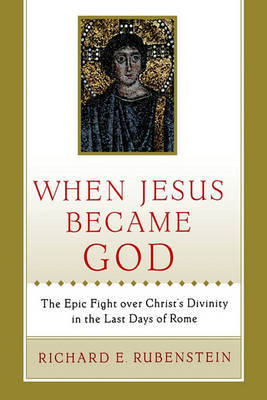
Ed: Rubenstein’s book “When Jesus became God”, an account of the Nicene Councils, explains that Constantine wanted to unify the religious factions of the empire. He wanted one central view of Jesus as a “god” – as opposed to the more humanistically-oriented, “Jesus is mere role model pointing toward what we all might achieve”. This new view also gave the Church more power over people as gatekeepers to the kingdom. I suspect that Augustine’s doctrine of innate human depravity – in the West, at least – was eventually adopted by the Church because, again, it allowed the Church greater psychological control over its devotees. Chat: I think your comparison with Irenaeus is especially illuminating. 1. Constantine's motive and Augustine's motive are not quite the same thing Where your Rubenstein point becomes especially interesting is the political consequence: once the empire began enforcing ecclesiastical unity, theological formulations acquired a coercive power they had not possessed when Christianity was a persecuted minority. So there is a distinction between: Why did Christians formulate the doctrine? and Why did the imperial Church eventually enforce one formulation? The second question has a much more obvious political dimension. 2. And your proposed parallel with Augustine is worth taking seriously Augustine's doctrine can produce a very different psychological picture of the individual: You cannot save yourself. You are born into a damaged human condition. Your will is compromised. You require grace. And the Church possesses the authoritative tradition through which that grace is mediated. That structure can indeed produce institutional dependence. Compare the two models: Irenaeus: You are an unfinished creature capable of becoming something more. Augustine: You are a fallen creature incapable of restoring yourself. Those are psychologically very different messages. The first potentially encourages development. The second potentially encourages dependence upon grace and ecclesiastical mediation. And yes, an institution that teaches the second doctrine possesses an obvious source of authority. 3. And this may explain why Augustine's model proved so durable Think about the psychological difference. If I tell you: “You are an unfinished person. You possess the capacity to become more loving, more courageous, wiser, and more godlike.” I have given you a tremendous amount of agency. But if I tell you: “Your nature is fundamentally corrupted. You cannot overcome this condition by your own power. You require divine grace.” I have created a much greater need for an authorized mediator of grace. That doesn't prove that the latter doctrine was adopted because it was useful to the institution. But it does mean the doctrine is institutionally advantageous. And that distinction matters. 4. There is an even deeper connection to your Hick observation This is where I think your earlier reaction to Hick becomes particularly significant. You responded strongly to: “create persons capable of freely becoming something more.” Notice what that anthropology does. It restores something that Augustine's mature doctrine had diminished: confidence in the developmental potential of the human person. Hick's Irenaean anthropology says, in effect: God isn't primarily trying to prevent you from being bad. God is trying to make you capable of becoming good. That is a radically different conception of religion. And it has a very different relationship to authority. If the fundamental religious task is personal transformation, then the Church's role can be that of teacher, guide, community, and witness. If the fundamental problem is innate guilt and inability, the Church can more readily become guardian, dispenser, judge, and gatekeeper. That is the institutional distinction you're sensing. So I would formulate your hypothesis historically: Doctrines that emphasize human incapacity and dependence upon authorized grace tend to strengthen institutions that claim authority to mediate that grace. 5. Which brings us back to your original question You asked, essentially: How did Augustine get away with replacing the Irenaean conception? Perhaps the answer is: He didn't exactly replace it. He supplied the Latin West with a theological anthropology that was extraordinarily powerful because it simultaneously:
Meanwhile, the Irenaean developmental vision never completely disappeared. And Hick comes along in the twentieth century and says, essentially: Wait. What if Irenaeus was onto something? That makes Evil and the God of Love much more interesting than simply another book about the problem of evil. It becomes, in part, an attempt to recover an alternative Christian understanding of what a human being is. And that may be the deeper reason your reaction to Hick's sentence was so strong. It isn't merely a theodicy. It is a declaration of human possibility.
4. How Hick's Book Engages the Great ConversationFew questions enter the Great Conversation more directly than this one:
Hick is addressing not an abstract puzzle but one of the deepest challenges to theism. Every person encounters suffering; every human being eventually confronts illness, loss, disappointment, injustice, and death. The pressure on Hick is therefore enormous. He must explain how divine love and a world containing genuine suffering can belong to the same reality. His answer changes the image of creation. The world is not necessarily God's finished product. It may be God's workshop. And humanity may not be God's finished creation. We may be unfinished persons. That is the book's existential power. 5. Condensed Analysis“What problem is this thinker trying to solve, and what kind of reality must exist for their solution to make sense?”ProblemHow can a perfectly loving and omnipotent God permit evil? The classical problem appears almost as a logical contradiction:
If God can prevent evil and wants to prevent evil, why does He not prevent it? The problem becomes even more severe when suffering seems pointless—when pain does not obviously produce virtue, when children suffer, or when animals endure immense suffering without apparent moral benefit. Hick takes this objection seriously rather than attempting to dismiss it. Core ClaimHick's answer is that God's purpose is not simply to create beings who already possess perfect goodness. God's purpose is to create persons capable of freely developing into mature moral and spiritual beings. This requires a world in which genuine development is possible. A world without danger, resistance, vulnerability, or difficult choices might be comfortable—but it could not produce the same kind of moral character. Courage requires danger. Compassion requires suffering. Forgiveness requires injury. Perseverance requires difficulty. Love requires freedom. Thus evil and suffering can have a formative function without being good in themselves. This is the central distinction:
Hick's argument therefore does not glorify evil. It attempts to explain why God might permit it. OpponentHick's principal opponent is the Augustinian type of theodicy. The Augustinian picture says, roughly: God created a perfect world → creatures misused freedom → evil entered creation. Hick thinks this creates serious difficulties. If humanity was originally created morally perfect, how did the first human beings come to choose evil? And if they were capable of falling, in what sense were they already perfect? Hick's Irenaean alternative reverses the direction: Humanity begins immature → freedom and struggle permit development → humanity may ultimately reach spiritual maturity. The strongest objection to Hick is obvious: Does soul-making really justify the amount and distribution of suffering in the world? A difficult childhood may produce resilience. But does that explain genocide, torture, natural disasters, or the suffering of animals? Hick recognizes that this is the hardest territory for his position. BreakthroughThe great conceptual breakthrough is the distinction between: creation as perfection and creation as development. This is extraordinarily important. If God created human beings already perfect, then earthly existence looks like a disastrous fall from an original state. But if God created human beings unfinished, earthly life becomes a developmental process. Hick's phrase "vale of soul-making" captures this vision. The world is not primarily a paradise that has gone wrong. It is a school for persons. And this changes the question from:
to:
That is a much more interesting question. CostThe price is substantial. Hick's theory risks making suffering seem too easily explainable. Some suffering appears productive; some appears utterly destructive. There is also a moral danger in saying that suffering exists for our development: it can tempt people to romanticize pain or tell victims that their suffering was somehow "necessary." Hick therefore has to preserve a distinction between: God permitting suffering and God desiring suffering for its own sake. A second cost is that his theory becomes heavily eschatological. The ultimate justification of earthly suffering cannot necessarily be demonstrated from earthly experience alone. It depends upon the possibility of a future fulfillment in which the developmental process reaches its goal. Thus the argument ultimately requires faith in a larger divine purpose. One Central PassageThe pivotal passage is Hick's discussion of the "vale of soul-making" in the chapter "The Starting-Point", where he explicitly contrasts the traditional theodicy with his developmental alternative. The relevant section occupies approximately pages 253–261 in the 1966 edition. Hick's central formulation is:
Why this passage is pivotalThis phrase compresses the entire book into four words. The world is not merely a place in which souls happen to suffer. It is a place in which souls are made. That means human personality is understood dynamically. We are not finished objects but beings capable of becoming. The phrase also explains why Hick turns to Irenaeus rather than remaining within the Augustinian framework: the fundamental theological picture changes from fall and restoration to immaturity and development. 7. Interpretive Method: Trans-Rational FrameworkHick's argument becomes especially interesting when reason is joined to lived experience. Discursively, he asks whether a coherent theodicy can be constructed. Experientially, however, the question is deeper: Can suffering actually become the occasion for a transformation of the person? Most people recognize that some of the deepest qualities of character are not acquired through comfort. A person can become more compassionate because he has suffered. More courageous because he has encountered danger. More understanding because he has known loss. This does not prove Hick's theology. But it provides the experiential datum that makes his theory intelligible. The trans-rational insight is therefore not: "Suffering is good." It is: "Some forms of goodness can arise only in a world where suffering and vulnerability are genuinely possible." That is a much more defensible proposition. 8. Dramatic & Historical ContextPublication: 1966The first edition was published by Macmillan in London in 1966, running approximately 403–404 pages depending upon cataloguing. A revised second edition appeared in 1978. Hick was writing after a century in which the problem of evil had become increasingly acute. Two developments especially matter:
Hick therefore revisits ancient Christian theology but asks whether its traditional categories remain philosophically credible. The book's intellectual drama is consequently historical as well as philosophical: Augustine → medieval theology → Reformation → Leibniz → modern criticism → Irenaeus revived and reconstructed. Hick is not merely proposing another answer to the problem. He is asking whether Christianity has been asking the question in the wrong way. 9. Sections OverviewThe book has four broad movements: I. The Problem and Its Historical Alternatives
II. The Augustinian Type of Theodicy
III. The Irenaean Type of Theodicy
IV. A Theodicy for Today
The published table of contents confirms this four-part progression and identifies the final chapters as "The Starting-Point," "Moral Evil," "Pain," and "Suffering," followed by discussion of the Kingdom of God and recent work on the problem of evil. 10. Targeted EngagementSection IV – Chapter XII — “The Starting-Point”The World as a Vale of Soul-MakingCentral question:
Hick's answer is that the traditional image of a completed paradise followed by a catastrophic Fall is not the only Christian interpretation available. Drawing upon Irenaeus, he proposes that humanity should instead be understood as created in an incomplete state, possessing the capacity for development. The world therefore becomes the environment in which persons develop through freedom, difficulty, moral choice, resistance, and relationship. The goal is not merely obedience but mature character. A person who freely becomes loving is something different from a being programmed to behave perfectly. The resulting world is necessarily more dangerous and painful than a protected paradise. But it is also capable of producing something that a painless paradise could not produce: freely developed persons. Main ClaimGod may value the formation of persons more than the preservation of comfort. One QuestionDoes the developmental value of suffering explain all suffering, or only some? Conceptual NoteThis is Hick's most memorable transformation: Paradise lost → school of the soul. 11. Vital GlossaryTheodicyA philosophical or theological attempt to reconcile God's goodness and power with the existence of evil. Augustinian theodicyThe tradition Hick associates with Augustine: creation is fundamentally good; evil arises through creaturely misuse of freedom and is understood as privation or disorder. Irenaean theodicyThe developmental alternative associated with Irenaeus: humanity is created immature and develops toward the likeness of God. Soul-makingHick's term for the process through which persons develop moral and spiritual character. Vale of soul-makingHick's memorable image for earthly existence as an environment in which souls are formed. Privation of goodThe Augustinian conception of evil not as an independent substance but as a deficiency or corruption of goodness. Epistemic distanceThe idea that God is not overwhelmingly obvious to human beings, thereby leaving room for genuine freedom and moral development. EschatologyThe doctrine concerning ultimate destiny, final fulfillment, judgment, and the consummation of creation. 12. Deeper Significance / Strategic ThemesThe most important thing Hick does is change the metaphysics of human existence. Under the Augustinian model:
Under Hick's Irenaean model:
That second conception has enormous philosophical implications. It makes time part of creation. It makes development part of creation. It makes freedom part of creation. And it makes the human person something unfinished. This is perhaps why the theory has such intuitive force. We ordinarily experience ourselves not as finished entities but as becomings. Hick's God is therefore not merely the God who forgives a fallen humanity. He is the God who raises an immature humanity toward maturity. 13. Decision PointSection 10: YES — one passage is warranted.This is one of the books where the deeper engagement is justified. The reason is not simply that it is historically important. It contains a genuine conceptual reversal: Augustinian Fall → Irenaean Development The "vale of soul-making" passage captures the reversal sufficiently well that one targeted engagement is enough. Project ClassificationSECOND-LOOK / DEEP BOOK Not because every page deserves equal attention, but because Hick has supplied a conceptual tool worth carrying forward into the larger project. 14. “First Day of History” LensThe conceptual leap: evil as developmental environmentHick did not invent the idea that suffering can contribute to character. Nor did he invent Irenaean theology. But he performed an important modern synthesis: ancient Irenaean anthropology + modern philosophy of religion + the problem of evil = soul-making theodicy. The "first-day" moment for your project is therefore the moment when creation ceases to mean simply "God made a finished world" and becomes "God is bringing persons toward completion." That is a genuinely fertile idea. It changes the meaning of earthly existence. 16. Reference Bank of Quotations1. “the vale of soul-making”Paraphrase: Earthly existence is an environment in which persons are formed. Commentary: This is the book's indispensable phrase. 2. “soul-making”Paraphrase: Human beings are capable of becoming morally and spiritually mature through their experience. Commentary: Hick's signature conceptual contribution. 3. The Irenaean alternativeHick's argument is that humanity should not necessarily be understood as fallen from completed perfection, but as developing toward it. Commentary: This is the conceptual hinge of the entire book. 4. Evil and developmentParaphrase: Some goods require a world in which suffering, danger, freedom, and difficulty are possible. Commentary: This is the strongest philosophical intuition underlying Hick's defense. 5. Ultimate fulfillmentHick ultimately places the resolution of the problem within a future divine fulfillment rather than claiming that every instance of suffering can be explained within earthly history. Commentary: This is both the strength and vulnerability of his position. 17. Core Concept / Mental Anchor“We are not fallen perfection; we are unfinished persons.”Or, even more compactly:
This is the sentence worth carrying forward. 18. Famous Words“The vale of soul-making”This is the phrase from the book most worth remembering. It has not become a universal cultural cliché in the way that Shakespearean phrases have, but within philosophy of religion it is strongly associated with Hick's theodicy. The other term that has genuine historical importance is: “Soul-making theodicy”This became the standard label for Hick's approach and for related attempts to understand suffering as part of moral and spiritual development. CORE HARVESTJohn Hick (1922–2012) — Evil and the God of Love (1966)
Hick's great move is to replace the question: “Why did humanity fall from perfection?” with: “Why would God create humanity unfinished?” His answer is that freely developed love, courage, compassion, wisdom, and moral character require a world in which genuine difficulty is possible. The theory does not explain every instance of suffering. That remains its greatest vulnerability. But it gives the problem of evil a radically different architecture: not perfection → fall → repair but immaturity → development → maturity → fulfillment. That is why this book deserves more than a casual harvest. The soul-making concept is a genuine mental anchor for the larger project.
10. Targeted Engagement — ExpandedSection IV, Chapter XII — “The Starting-Point”The Irenaean Revolution: From Fallen Humanity to Unfinished HumanityCentral question:
Hick's most important move in Evil and the God of Love is to challenge what he regards as the dominant Augustinian picture of human origins. On the Augustinian model, humanity begins in a state of created perfection and subsequently falls into sin. Evil therefore represents a corruption of God's originally good creation. Hick turns to Irenaeus of Lyons (c. 130–c. 202) for a radically different starting point: humanity was never created morally and spiritually complete. Adam is not a finished saint who inexplicably becomes sinful; he is an immature human being who has not yet developed into the likeness of God. This changes the entire meaning of earthly existence. If humanity begins unfinished, then the difficulties of life are not necessarily evidence that creation has gone disastrously wrong. They can be understood as conditions within which human personality develops. Courage requires danger; compassion requires awareness of suffering; forgiveness requires the possibility of injury; perseverance requires resistance; and freely chosen love requires genuine alternatives. God therefore does not simply create morally perfect beings. He creates persons capable of freely becoming something more. Hick's famous image of the world as a “vale of soul-making” captures this idea. Earth is not merely a place in which souls are tested for admission into heaven; it is the environment in which souls are actually formed. The distinction is enormous. A finished creature can only preserve its perfection. An unfinished person can acquire qualities that could not have existed in finished form from the beginning. The value lies not merely in the final product but in the process by which the person freely becomes it. This also explains why Hick's position is more than a defense of suffering. He is proposing a different anthropology. Human beings are not fundamentally ruined creatures whose proper state existed in the past. They are beings whose proper state lies partly in the future. Creation is therefore dynamic: immaturity → freedom → struggle → development → maturity. Main Claim / PurposeHick's purpose is to establish that the possibility of moral and spiritual development may require a world containing genuine difficulty. The crucial distinction is:
This is much stronger than saying that suffering always teaches us something. Hick does not need to show that every individual tragedy produces a recognizable benefit. His larger argument is that a world designed for the formation of free persons cannot be equivalent to a padded environment in which nothing genuinely threatens, challenges, or wounds them. One Tension or QuestionThe obvious difficulty is also the most important:
A certain amount of adversity seems plausibly formative. But extreme suffering raises a much harder question. Does the suffering of a child who dies young contribute to that child's development? Does the agony of an animal contribute to soul-making? Does torture become justified because it might produce courage in someone else? Here Hick's argument reaches its limit. “Difficulty can form character” is an experiential truth. It does not follow that every degree or instance of suffering is therefore necessary. The theodicy becomes most vulnerable precisely where suffering appears disproportionate to any conceivable developmental purpose. Rhetorical / Conceptual NoteHick's greatest rhetorical achievement is to turn the image of the world upside down: Augustinian image:
Irenaean/Hick image:
That is the conceptual reversal to remember. Section IV, Chapter XIII — “Moral Evil”Why God Does Not Make Us Virtuous AutomaticallyCentral question:
Hick's answer is effectively no. Suppose God simply programmed every human being to act compassionately, honestly, courageously, and lovingly. Such beings might behave well, but their goodness would not possess the same character as freely chosen goodness. There is an enormous difference between being incapable of doing evil and being capable of doing evil but freely choosing the good. This is where Hick's theodicy becomes closely connected with his understanding of personhood. A person is not merely a mechanism that produces morally correct outputs. Personhood includes agency, choice, responsibility, and the possibility of transformation. If God wants persons rather than automata, then He must permit a degree of independence from His immediate control. This helps explain Hick's notion of epistemic distance: God does not make His presence so overwhelming that disbelief becomes psychologically impossible. If divine reality were as obvious as the physical world immediately before us, human beings might find it difficult to exercise genuine independence. A degree of ambiguity leaves room for freely chosen response. Thus two kinds of distance become important: moral distance: epistemic distance: Together they create the space in which genuine personal development can occur. Main Claim / PurposeHick is trying to explain why a loving God would create creatures who can genuinely reject Him. The answer is that freely chosen relationship has a value that compulsory relationship does not. This is closely related to your reaction to Hick's earlier sentence:
The word “freely” is doing enormous philosophical work. One Tension or QuestionThere is a serious problem here:
Surely God could permit freedom while placing some limits upon its destructive consequences. We do not ordinarily think that a parent must allow a child to murder another child merely to preserve freedom. So Hick must explain not merely why freedom exists, but why the world contains such an extraordinary range of consequences for the exercise of freedom. Conceptual NoteThe deepest distinction is: God could make us good. versus God could make us capable of becoming good. Hick chooses the second. That is a much more demanding conception of creation. Section IV — The Irenaean “Soul-Making” ModelWhat Is God Actually Trying to Produce?There is a still deeper question beneath Hick's argument. If God could simply create beings who already possess every desirable quality, why bother with development at all? The answer implied by Hick is that development produces something that instantaneous creation cannot. Consider courage. A being created incapable of danger does not possess courage in the fullest sense. Consider forgiveness. A being incapable of being injured has no occasion to forgive. Consider compassion. A being that never encounters suffering has no experiential basis for understanding another's suffering. Consider moral wisdom. A being that has never confronted genuine alternatives has not acquired wisdom through choice. This produces an important philosophical distinction:
Hick is interested in the second. A morally mature person is not simply a container into which virtues have been poured. The virtues have become part of the person's identity through freely lived experience. This is why the soul-making theory has a deeper psychological plausibility than the simple proposition that “God sends us difficulties to teach lessons.” Hick is saying something more profound:
Section IV — The Ultimate ProblemCan Earthly Suffering Be Justified Without an Afterlife?Central question:
This is where Hick's argument becomes explicitly eschatological. If earthly existence is a process of formation, then many lives appear to end before the process is finished. A person may die young. A person may suffer terribly without apparent growth. A person may never receive an opportunity to develop the capacities that another person takes for granted. Hick therefore requires a larger horizon. The present life cannot be the complete story. The doctrine of ultimate fulfillment becomes essential because otherwise the developmental process remains radically incomplete. This is one reason Hick's theodicy ultimately depends upon eschatology. The question of evil cannot be solved merely by pointing to developmental benefits within earthly existence. The full justification of the process requires a final state in which persons attain the fulfillment toward which development has been directed. Main Claim / PurposeThe final meaning of a person's life cannot be judged solely by its earthly duration or immediate circumstances. One Tension or QuestionThis raises the hardest philosophical issue:
Suppose someone suffers enormously and eventually experiences perfect fulfillment. Does the later fulfillment actually justify the earlier suffering? Hick's answer depends upon a sufficiently strong conception of ultimate fulfillment. And this is precisely where the argument moves beyond what philosophy alone can establish. Section 10 — What These Passages Reveal TogetherThese passages reveal that Hick's theodicy is actually built upon three connected propositions: 1. Humanity is unfinished.We are not fallen perfection but developing persons. 2. Development requires freedom.We must possess genuine alternatives if our character is to become genuinely ours. 3. Freedom requires a world with real consequences.A completely insulated world could not provide the conditions for courage, compassion, responsibility, wisdom, or freely chosen love. The resulting structure is:
This is the architecture beneath the phrase that struck you:
The Most Important Contrast in the BookI would put the contrast this way for the permanent notes:
This is not an exhaustive historical description of either thinker, but it captures Hick's philosophical contrast. And it explains why the Irenaean model is so attractive to Hick. The Deepest Question Hick Leaves UsAfter all the formal arguments have been made, the book ultimately leaves us with something much more fundamental than the standard “problem of evil”:
That is the genuinely arresting idea. And it changes the meaning of the world. The world is no longer merely the place where God put us. It becomes the place in which we become.
|
||||||||||||||||||||
|
|