|
home | what's new | other sites | contact | about |
||
|
Word Gems self-knowledge, authentic living, full humanity, continual awakening
William Harvey De Motu Cordis (The Motion of the Heart)
return to 'Great Books' main-page
see a copy of the analysis format Commentary by ChatGPT
extended brief bio William Harvey (1 April 1578 – 3 June 1657) was the English physician whose demonstration of the circulation of the blood transformed medicine from a discipline grounded largely in inherited authority into one founded on experiment, measurement, and direct observation. His work ranks among the greatest scientific achievements of the seventeenth century and stands beside those of Nicolaus Copernicus, Johannes Kepler, and Galileo Galilei in inaugurating the Scientific Revolution. Harvey was born in Folkestone, Kent, England, into a prosperous merchant family. He attended the King's School, Canterbury, before entering Gonville and Caius College in 1593. Seeking the finest medical education in Europe, he continued his studies at the University of Padua, then the leading center for anatomy and medicine. There he studied under the renowned anatomist Hieronymus Fabricius, whose investigations of the valves within veins profoundly influenced Harvey's later research. Harvey earned his medical doctorate in 1602 and returned to England to establish his practice. In London, Harvey quickly rose to prominence. He became a Fellow of the Royal College of Physicians, physician to King James I, and later personal physician to Charles I. His royal appointments gave him unusual opportunities to conduct anatomical investigations and to examine a wide variety of animals, both living and deceased. Harvey's enduring achievement resulted from applying quantitative reasoning to physiology. The accepted medical system, inherited from Galen, held that blood was continually produced in the liver, flowed outward through the body, and was consumed by the tissues. Harvey questioned this view by calculating the volume of blood expelled by the heart with each contraction. Multiplying that amount by the number of heartbeats over time, he showed that the body would require an impossibly large quantity of newly created blood if Galen's theory were correct. The only satisfactory explanation was that the same blood continually circulates throughout the body. He published these findings in 1628 in his masterpiece, Exercitatio Anatomica de Motu Cordis et Sanguinis in Animalibus (An Anatomical Exercise on the Motion of the Heart and Blood in Animals), commonly called De Motu Cordis. Through careful dissections, vivisections, observations of heart valves, and simple but decisive experiments, Harvey demonstrated that the heart functions as a muscular pump, propelling blood through arteries and returning it through veins in a continuous circuit. Although he could not directly observe capillaries—they were later seen by Marcello Malpighi using the microscope in 1661—Harvey correctly inferred that tiny vessels must connect arteries and veins. Harvey's conclusions initially met considerable skepticism because they overturned more than thirteen centuries of accepted medical doctrine. Yet the clarity of his experiments and the accumulating anatomical evidence gradually persuaded physicians across Europe. His work fundamentally changed the practice of medicine by demonstrating that scientific authority must rest on reproducible observation rather than tradition. Late in life Harvey turned to embryology, publishing Exercitationes de Generatione Animalium (On the Generation of Animals, 1651). There he investigated animal development and defended the principle Omne vivum ex ovo—"Every living thing comes from an egg"—a major advance in the study of reproduction and developmental biology. Harvey never claimed to possess a complete explanation of life. Rather, he exemplified a new scientific method: formulate questions, devise experiments, measure carefully, and follow the evidence wherever it leads. His work permanently reshaped physiology and established experimental medicine as a model for future biological science. Today William Harvey is remembered not simply as the discoverer of blood circulation but as one of the founders of modern physiology, whose combination of anatomical observation, mathematical reasoning, and experimental verification became a lasting standard for scientific inquiry De Motu Cordis (The Motion of the Heart) Latin Title: Literal Translation: Common Short Title: Breaking Down the Latin
Thus:
Why "Motion" Is the Right TranslationThe Latin motus means more than mere movement from one place to another. It refers to action, operation, function, or dynamic activity. Harvey was not simply interested in how the heart moves mechanically; he was investigating what the heart does. A fuller modern rendering might be:
But "On the Motion of the Heart" has become the traditional English title. Why the Full Title MattersThe abbreviated title can be slightly misleading. Harvey's discovery was not merely about the heart's contractions but about the entire circulatory system. The complete title emphasizes both subjects:
His revolutionary insight was that these are inseparable: the heart's rhythmic pumping produces the continuous circulation of the blood throughout the body. Great Books InsightThe title reflects Harvey's remarkably modest style. He does not announce a "New Theory of Circulation" or a "Revolution in Medicine." Instead, he presents his work simply as an "anatomical exercise" (exercitatio) concerning the motion of the heart and blood. This understated title masks one of the greatest paradigm shifts in the history of science. By asking the seemingly straightforward question, "What is the heart actually doing?", Harvey overturned more than thirteen centuries of Galenic medicine and laid the foundation for modern physiology. De Motu Cordis (The Motion of the Heart) 1. Author BioWilliam Harvey (1578–1657) was an English physician, anatomist, and physiologist whose discovery of the circulation of the blood transformed medicine from reliance on ancient authority to dependence upon observation, experiment, and quantitative reasoning. Educated at University of Padua under Hieronymus Fabricius (1537–1619), Harvey inherited an interest in anatomy and the venous valves that became central to his later discoveries. His greatest influence, however, was not a particular doctrine but the emerging scientific conviction that nature should be interrogated by careful experiment rather than accepted tradition. As physician to James VI and I (1566–1625) and later Charles I (1600–1649), Harvey enjoyed exceptional opportunities for anatomical investigation. 2. Overview / Central Question(a) Form and Length
(b) Whole Book in ≤10 Words
(c) Roddenberry question: “What's this story really about?”Can careful observation overthrow thirteen centuries of accepted certainty? For over 1,300 years physicians accepted Galen (c. AD 129–c. AD 216) as the supreme authority on blood and the heart. Harvey suspected that the accepted picture could not explain what the eye actually sees or what simple arithmetic reveals. By combining anatomy, experiment, and measurement, he demonstrated that the heart functions as a pump driving blood in a continuous circuit. The book is therefore not merely about circulation; it is about replacing inherited certainty with experimentally verified truth. 2A. Plot Summary of Entire WorkHarvey begins by examining the observable motions of the living heart. Rather than relying on accepted theories, he repeatedly watches animal hearts beat, asking what each contraction actually accomplishes. His first conclusion is deceptively simple: the heart is an active muscular organ whose contraction—not its expansion—is its primary action. He next studies arteries, veins, and the heart's valves. Their arrangement suggests one-way movement rather than random ebb and flow. Each anatomical detail points toward an organized system whose purpose is directional transport. Harvey then introduces his decisive argument. Estimating how much blood leaves the heart with each beat, he calculates that the amount pumped in a short time far exceeds the body's total blood volume. Unless blood somehow returns to the heart, the liver would have to manufacture impossible quantities of new blood every hour. The final chapters assemble the evidence into a unified picture: blood leaves the heart through the arteries, returns through the veins, and continually circulates through the body. Although the microscopic capillaries joining arteries and veins could not yet be seen, Harvey confidently inferred their existence from the evidence. The result permanently altered medicine's understanding of the living body. 3. Special InstructionsThis is one of the foundational texts of the Scientific Revolution. Read it less as a medical treatise than as a demonstration of how scientific reasoning defeats entrenched authority. 4. How This Book Engages the Great ConversationThe pressure confronting Harvey was not simply medical ignorance but the enormous weight of intellectual tradition. For centuries, Galen's authority had become nearly unquestionable, even when observation raised difficulties. Harvey addresses enduring philosophical questions:
His answer is revolutionary: reality must ultimately answer to nature itself rather than to even the greatest human authority. Truth is discovered by disciplined observation, careful experiment, and logical inference. 5. Condensed AnalysisWhat problem is this thinker trying to solve, and what kind of reality must exist for his solution to make sense?ProblemHow does blood actually move through the living body? The prevailing explanation could not adequately explain the heart's structure, the valves, or the enormous quantity of blood moved during life. If medicine rests on a false picture of the body, diagnosis and treatment are fundamentally compromised. Underlying assumption:
Core ClaimBlood circulates continuously through the body because the heart acts as a muscular pump. Harvey supports this claim through:
If accepted, physiology becomes a dynamic science governed by measurable processes rather than inherited speculation. OpponentHarvey principally challenges the physiology of Galen (c. AD 129–c. AD 216). According to Galen:
The strongest objection was tradition itself: generations of respected physicians accepted Galen's model. Harvey answers not by rhetorical attack but by inviting readers to observe and calculate for themselves. BreakthroughHarvey introduces measurement into physiology. Instead of asking merely What appears to happen? he asks: How much blood actually moves? That single shift transforms anatomy into experimental science. Mathematics becomes an instrument for discovering biological truth. CostAccepting Harvey requires abandoning one of antiquity's greatest authorities. His model also leaves unanswered questions:
Those answers would await Marcello Malpighi (1628–1694) and the microscope. One Central Passage
This sentence marks the book's turning point. Harvey joins observation with logical necessity rather than speculation. Its importance lies not merely in the conclusion but in the method: experiment, calculation, and inference together establish a new model of scientific proof. 8. Dramatic & Historical Context
Harvey wrote during an age already transformed by Nicolaus Copernicus (1473–1543), Johannes Kepler (1571–1630), and Galileo Galilei (1564–1642). Just as astronomy was abandoning ancient cosmology, Harvey demonstrated that medicine, too, must submit to observation rather than inherited doctrine. 9. Sections Overview
10. Targeted EngagementActivated: Yes (Trigger 1: Foundational work; Trigger 3: A single passage unlocks the whole book.) Chapter 8 – The Quantitative Argument"The Turn to Measurement" Paraphrased SummaryHarvey estimates the volume of blood expelled during each heartbeat. Multiplying this amount by the number of beats over even a short period, he finds that the heart would pump far more blood than the entire body contains. Therefore, blood cannot simply be produced and consumed once. It must return to the heart and be used again. This conclusion is not speculative but mathematically unavoidable. Harvey thus turns arithmetic into a tool of biological discovery. Main Claim / PurposeSimple quantitative reasoning disproves the prevailing theory and establishes continuous circulation. One Tension or QuestionHarvey cannot directly observe the capillaries connecting arteries and veins. His conclusion depends on inference from overwhelming evidence rather than direct visualization. Rhetorical / Conceptual NoteThe argument resembles a mathematical proof more than a traditional medical discussion. Once the numbers are accepted, the conclusion becomes difficult to escape. 11. Vital Glossary
12. Deeper Significance / Strategic ThemesHarvey demonstrates that nature often appears simple only after the correct question is asked. His greatest contribution is methodological: when authority and observation conflict, investigate reality more carefully. The book illustrates how a modest calculation, rigorously pursued, can overturn centuries of accepted belief. 13. Decision PointOne passage—the quantitative argument establishing circulation—carries the intellectual weight of the entire work. Additional close analysis is unnecessary for an abridged review. 14. 'First Day of History' LensHarvey's conceptual leap is the first rigorous demonstration that a major physiological process can be established through quantitative experiment rather than authority or qualitative observation alone. While anatomy had long described structures, Harvey showed that bodily function could be discovered by combining measurement, experiment, and logical inference. This marks a foundational moment in modern physiology and experimental medicine. 16. Reference-Bank of Quotations
17. Core Concept / Mental Anchor"Measure what the heart does; the numbers reveal circulation." 18. Famous WordsAlthough De Motu Cordis did not contribute catchphrases to everyday language in the way many literary classics did, one expression has become emblematic of Harvey's achievement:
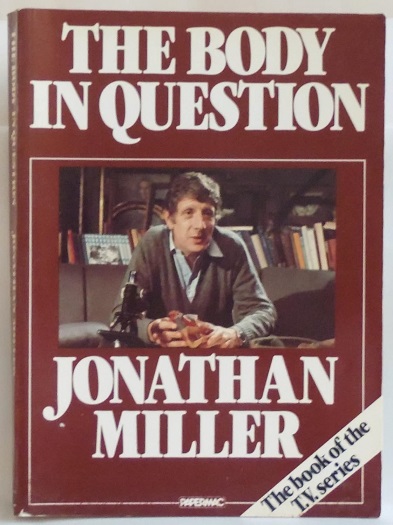
Ed: I vividly recall the debut of Dr. Jonathan Miller’s book “The Body In Question” in the latter 1960s. I saw his interview on the Johnny Carson show and remember being very impressed as a teen by this articulate knowledgeable person. There’s an item in the book which addresses the discovery of the heart as a pump, and how the concept itself would have been particularly difficult to imagine before the workings of a pump had become somewhat common knowledge: Here is a Word Gems review: Jonathan Miller, MD, The Body In Question: Miller explains the power of metaphor as an aid to thinking and problem-solving: "... medicine did not make an effective contribution to human welfare until the middle of the twentieth century. The great leap forward is often attributed to a rapid increase in heroic procedures and the discovery of new drugs, but what distinguishes the medicine of the past twenty-five years is not that its practitioners are equipped with an arsenal of antibiotics and antiseptics, but that they are furnished with a comprehensive and unprecedented understanding of what the healthy body is and how it survives and protects itself. We have today an impressive mastery of our illnesses precisely because we have a systematic insight into the processes which constitute health. This has been achieved by the accurate identification of the sort of thing our body is. And since finding out what something is is largely a matter of discovering what it is like, the most impressive contribution to the growth of intelligibility has been made by the application of suggestive metaphors... In their efforts to manage and master the physical world, human beings have shown a remarkable capacity for inventing devices which lift, dig, hoist, wind, pump, press, filter and extract... The practical benefits of such ingenuity have been so impressive that it is easy to forget how much we have learned from the image of such mechanisms. While they have helped us to master the world, they have been just as helpful in giving us a way of thinking about it and about ourselves. It is impossible to imagine how anyone could have made sense of the heart before we knew what a pump was. Before the invention of automatic gun-turrets, there was no model to explain the finesse of voluntary muscular movement. The immediate experience of the human body is something which we take for granted. We perceive and act with it and become fully aware of its presence only when it is injured, or when it goes wrong. Even then, the subjective experience of the body is usually incoherent and perplexing, and when we want it put right, we refer to people who have learnt to think about it with the help of technical metaphors: experts whose use of analogy has enabled them to visualise the body not merely as an intelligible system, but as an organised system of systems - which does not mean that man is an engine or that his humanity is a delusion."
Chat: This is an excellent reflection, and I think Miller is identifying something genuinely profound about the history of knowledge. His central claim is not merely that metaphors make explanations easier. It is that new technologies create new conceptual possibilities. Human beings often cannot even conceive of certain natural processes until they have built something analogous in their own world. The history of science repeatedly illustrates this pattern.
Each technology becomes a conceptual scaffold. Eventually, science outgrows the metaphor, but the metaphor often opens the door. Miller's observation about Harvey is especially insightful. Harvey certainly observed the heart directly, but he also interpreted what he saw through the concept of a pump. A medieval observer might have witnessed exactly the same contractions and yet lacked the conceptual framework to ask, "Could this be a pump driving a circulating fluid?" Harvey himself rarely indulges in elaborate metaphorical language in Exercitatio Anatomica de Motu Cordis et Sanguinis in Animalibus. His prose is restrained and empirical. Yet his entire interpretation depends on recognizing that the heart behaves like a mechanical pump: a chamber that contracts rhythmically, contains one-way valves, generates pressure, and moves fluid through a closed circuit. What Miller adds is that this recognition was historically contingent. Pumps had become familiar pieces of engineering in Renaissance Europe—for draining mines, supplying fountains, and moving water. Once people understood what a pump does, they possessed a new mental model with which to interpret anatomy. Your quotation also touches on a broader epistemological point that harmonizes with your own Trans-Rational Framework. Miller writes:
That is almost an epistemology of analogy. We understand the unknown through the known. Aristotle explains unfamiliar concepts by comparison; Jesus teaches through parables; Kepler imagines planetary motion through musical harmony; Boyle describes nature as a book; Harvey understands the heart through a pump. The intellect advances not only by deduction but also by recognizing patterns across domains. Where your framework goes beyond Miller is that you would likely say analogy is necessary but not sufficient. Metaphor provides a bridge, but reality itself ultimately judges whether the bridge reaches the far shore. Harvey's genius was not merely finding an appealing metaphor; it was testing it. He asked whether the pump analogy predicted observable facts, performed experiments, measured blood volume, and accepted the consequences even when they contradicted Galenic authority. I was also struck by another sentence in your excerpt:
That phrase, "a system of systems," sounds remarkably modern. Today, systems biology, ecology, network science, and complexity theory all employ essentially that vision. Miller was writing decades before these fields became widely known, yet he recognized that understanding often comes not from reducing everything to isolated parts but from seeing how functional systems interact. One final thought, prompted by your "first day of history" lens. Harvey's discovery may actually have required two inventions before it could occur:
Neither alone would have been enough. A pump without measurement remains only an analogy; measurement without the pump lacks a coherent model of function. Harvey united the two, and in doing so changed medicine permanently. That pairing also illustrates a broader principle of intellectual history: transformative discoveries often arise not simply from new facts but from the convergence of new observations, new conceptual metaphors, and new methods of verification. Harvey's achievement is a classic example of all three arriving at once.
|
||
|
|