|
home | what's new | other sites | contact | about |
||||
|
Word Gems exploring self-realization, sacred personhood, and full humanity
Feminism
"Thomas Paine wrote about the rights of women; not about privileges for women at the price of injustice toward men and children, as much of today’s feminist movement advocates, but something quite different – full humanitarian rights for all women." Kenneth Griffith, Thomas Paine: The Most Valuable Englishman Ever
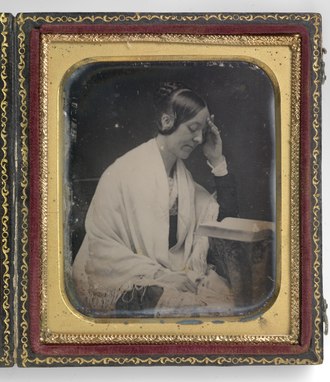
Mary Wollstonecraft (1759 - 1797)
Excerpts from the writings of Mary Wollstonecraft: I do not wish women to have power over men; but over themselves. The beginning is always today. Women are systematically degraded by receiving the trivial attentions which men think it manly to pay to the sex, when, in fact, men are insultingly supporting their own superiority. Strengthen the female mind by enlarging it, and there will be an end to blind obedience. Friendship is a serious affection; the most sublime of all affections, because it is founded on principle, and cemented by time. Only that education deserves emphatically to be termed cultivation of the mind which teaches young people how to begin to think. Women do not want power over men, they want power over themselves. Let woman share the rights and she will emulate the virtues of man; for she must grow more perfect when emancipated ... What, but the rapacity of the only men who exercised their reason, the priests, secured such vast property to the church, when a man gave his perishable substance to save himself from the dark torments of purgatory; and found it more convenient to indulge his depraved appetites, and pay an exorbitant price for absolution, than listen to the suggestions of reason, and work out his own salvation: in a word, was not the separation of religion from morality the work of the priests...? Independence I have long considered as the grand blessing of life, the basis of every virtue; and independence I will ever secure by contracting my wants, though I were to live on a barren heath. Taught from infancy that beauty is woman's sceptre, the mind shapes itself to the body, and roaming round its gilt cage, only seeks to adorn its prison. The being cannot be termed rational or virtuous, who obeys any authority, but that of reason. Women deluded by these sentiments, sometimes boast of their weakness, cunningly obtaining power by playing on the weakness of men; and they may well glory in their illicit sway, for, like Turkish bashaws [a high rank in the Ottoman Empire], they have more real power than their masters: but virtue is sacrificed to temporary gratifications, and the respectability of life to the triumph of an hour. No man chooses evil because it's evil. He only mistakes it for happiness, the good he seeks. The more equality there is established among men, the more virtue and happiness will reign in society. Taught from their infancy that beauty is woman's sceptre, the mind shapes itself to the body, and, roaming round its gilt cage, only seeks to adorn its prison. Men have various employments and pursuits which engage their attention, and give a character to the opening mind; but women, confined to one, and having their thoughts constantly directed to the most insignificant part of themselves, seldom extend their views beyond the triumph of the hour. You know I am not born to tread in the beaten track the peculiar bent of my nature pushes me on. Man preys on man; and you mourn for the idle tapestry that decorated a gothic pillar, and the dronish bell that summoned the fat priest to prayer. You mourn for the empty pageant of a name, when slavery flaps her wing, ... Why is our fancy to be appalled by terrific perspectives of a hell beyond the grave? - Hell stalks abroad; - the lash resounds on the slave's naked sides; and the sick wretch, who can no longer earn the sour bread of unremitting labour, steals to a ditch to bid the world a long good night. Women becoming, consequently, weaker than they ought to behave not sufficient strength to discharge the first duty of a mother; and sacrificing to lasciviousness the parental affection either destroy the embryo in the womb, or cast if off when born. Nature in every thing demands respect, and those who violate her laws seldom violate them with impunity. It appears to me impossible that I should cease to exist, or that this active, restless spirit, equally alive to joy and sorrow, should only be organised dust - ready to fly abroad the moment the spring snaps, or the spark goes out, which kept it together. Surely something resides in this heart that is not perishable - and life is more than a dream. Simplicity and sincerity generally go hand in hand, as both proceed from a love of truth. It is justice, not charity, that is wanting in the world. For years I have endeavored to calm an impetuous tide -- laboring to make my feelings take an orderly course -- it was striving against the stream. The mind will ever be unstable that has only prejudices to rest on. Let us, my dear contemporaries, arise above such narrow prejudices. If wisdom be desirable on its own account, if virtue, to deserve the name, must be founded on knowledge, let us endeavour to strengthen our minds by reflection till our heads become a balance for our hearts...
Editor’s note: Iain McGilchrist interviewed author Carrie Gress concerning her new book. While I would disagree that institutional Christianity is the “antidote” to radical feminism – see the “Jesus” page – in the main, I like what Gress has to say. Feminism and beyond: Carrie Gress's fascinating new book, Something Wicked Argues that feminism in its current form is harming rather than supporting women, and can't be fused with Christianity Iain McGilchrist I was privileged to be able to read Carrie Gress’s new book prior to publication. I found it absorbing and learnt a lot from it. Until recently feminism was one of the many controversial doctrines about which controversy was not permitted. Anyone not giving unthinking and unqualified consent to whatever form it took – and its demands have naturally, as with all such movements, become ever more insistent – was beyond the pale. That is now changing, and this book deserves to be widely read. Whether you agree with her or not, she raises some important questions which cannot continue to be ignored. I interviewed her for this blog. McGILCHRIST: Carrie, I found your book Something Wicked both powerful and wise. Your critical stance on feminism is rapidly gaining ground, as the pre-publication reception of your book suggests, but is still unusual. Can you tell us what drove you to write this book? GRESS: Thankfully, these ideas are catching on, particularly compared to ten years ago when I started writing on this topic. There were several reasons why I wrote this book. The first is obvious, when you look around at women today and recognize the deep damage done by feminism. We see it in violence, brokenness, the war between the sexes, mental illness, and so on. These are its bad fruits, the natural progression of an inherently distorted and distorting ideology. More specifically, I wrote this book because Christianity offers an antidote to the feminist ideology, although many inside the Church have come to believe that, somehow, the two can be compatible. In fact, the regnant belief among many Catholics and mainline Protestants has been that, by integrating the language of feminism into our communities, we will either attract or convert feminists while also helping our own women. The results, however, have been the opposite. Feminism has infected Christianity, sowing deep confusion about womanhood, marriage, family, children, and sexuality. Feminism, meanwhile, has been left largely unscrutinized and unaffected even as it systematically corrupts one family or one faith community at a time. The very thing that has the capacity to clarify and eradicate the feminist ideology–the truth of Christianity–has been silenced, and the Church has been hijacked to spread the deeply anti-Christian ideology. This book, then, shines a spotlight on why the two are deeply incompatible philosophically and theologically. McGILCHRIST: What would you say to people who say that it is not surprising that feminism and Christianity conflict, since Christianity embodies an outmoded ethos? GRESS: For centuries, the West has toyed with a wide array of leftist and utopian ideologies to refashion man into something unrecognizable to Christianity. Feminism is fundamentally just another flavor of this godless egalitarianism. The result has been that women are deeply unhappy, evidenced by measures of happiness, such as increased divorce rates, suicides, depression, substance abuse. Remarkably, for all the advances that feminism was supposed to fix, the basic complaints of its earliest adherents are still of issue: men have not been made better; women haven’t been protected from violence nor have they become more virtuous, loving, or charitable; children are not better appreciated or cared for. Certainly, shifts in laws and policies were important, but feminism is an ideology tethered to the idea that women will be happier the more they become like men. Feminism has, all along, been the wrong medicine for what ails women. Now that seemingly every alternative to Christianity has been tried, many are looking to the past, to see what has the capacity to form flourishing societies. The old ways, long regarded as superstitious, weak, or backward thinking, are being dusted off and looked at afresh. What if there was something to Christianity after all? There has, in fact, been no greater force for women than Christianity because of the way it imparted equal dignity to women, overturning the ruthless pagan ethos where women were chattel. We can see paganism resurfacing today as it always does when Christianity wanes – things we could scarcely have considered two or three decades ago are now becoming common place, like the international sex slave trade, targeting specifically women and children. McGILCHRIST: It seems to me that in our age there is a war on the body and on nature. As part of this, we are now encouraged to disregard the role of biological inheritance, and pretend that reality is whatever we want to make it, despite the obvious lack of evidence for any such idea. All is said to be merely the product of social conditioning. We are, or should be, ‘free’, it is said, as though the idea of freedom here were transparent. Is embodiment a freedom or a constraint on the human condition? Of course there are many constraints on all of us. Would it be better if there really were no constraints? We neglect the role played by boundaries in the founding of all true freedom. GRESS: One of my favorite ways to think about this question of freedom and human nature comes from sports. If you take away the tennis net and court, you don’t really have a tennis match anymore. The net and court (and the corresponding rules about them) provide boundaries in which the game comes alive. Simply banging a tennis ball around on an open lawn can never have the same excitement as when the game is played properly. Similarly, human nature provides boundaries for human flourishing, boundaries that come from our human nature—both as rational and embodied—and from the roles that naturally spring from that nature. These boundaries aren’t merely societal constraints or social constructs. I cannot imagine any healthy person would say, for example, that the elimination of boundaries, particularly sexual boundaries such as those against paedophilia and sex trafficking, would be freeing or good. Feminism is deeply entrenched in a war with nature. We are instructed to battle against our own bodies, starting with our fertility. Because our biology makes us naturally vulnerable, we believe that we will be happier if only we can be more like men. This hostile belief has extended, logically, to gender transitioning. McGILCHRIST: Evolution is more careful of women than men: it takes more risks with the male phenotype than the female, since, as far as furtherance of the species goes, men are more expendable than women. (This lies behind a phenomenon called ‘greater male variability’.) Women are more important to the development of the young, at least in the early stages, into secure, well-socialised adults. Women are, by and large, the purveyors of social cohesion. In Anglo-Saxon, the word for a woman meant the ‘guardian of the peace’. Why is this not properly valued? It seems to me that this has to do with a world where the ideology of capitalism or communism – for both are culpable – is unbridled. In each ‘system’ women supposedly contribute nothing while they remain in the social world and should be dragooned into the factory or office. This seems to me both grievously stupid and about as wrong as it could be. There is an obvious antagonism towards the family, a fact of huge significance for the current epidemic of rootlessness, emptiness, purposelessness and (inevitably) mental illness. In a socialist state, or the world of unbridled capitalism, the woman who dedicates her life largely to love, nurturing and stability ‘produces nothing.’ Would you like to comment on this? GRESS: This idea about production, efficiency, and gain is very significant. Betty Friedan called the home a “comfortable concentration camp” from which women must escape so that they can lead a “productive” life, like men, working outside the home. Work was touted as the means of women’s salvation. “Work will set you free” was no longer just a Nazi death-camp slogan; Friedan turned work into feminism’s pseudo-religious rite. With that attitude, women have fled the home, and the ramifications on the family, as you note, have been incredibly damaging. Women are certainly capable of all kinds of work. What is needed, however, isn’t more focus on career and outside productivity, but on motherhood. We must restore a sense of what it means to be a mother, which goes well beyond just physically bearing children. Mothering–caring for, nurturing, and cultivating space for others to grow–is a truly beautiful and fundamental task. We notice its significance perhaps most dramatically when it is absent, as we see now with the sharp rise in Cluster B personality disorders, the steep increase in anxiety and depression, and our deeply fractured families. I love that idea of the “guardian of the peace.” Women have the capacity for embodying peace, but also for spreading it to others. This is the swaying and soothing mothers do for their children. But it goes well beyond children’s nurseries and into the places wherever healthy women are found. It is a wonderful thing to see a capable, mature, ordered woman engage others; she is the antithesis of most contemporary women (the Karens or Affluent White Female Liberals) who plague us today with self-righteousness and emotionally unhinged divisiveness. McGILCHRIST: As you know, I believe an underlying cause of our so-called ‘metacrisis’ is the way we understand – or rather, misunderstand – what a human being is, what the world is, and what we are doing here. I believe our vision is deeply skewed by the dominance of the left hemisphere’s view of reality, in which the only thing that matters is the acquisition of more – more stuff, and more power – whatever the cost might be. To this crude and purely theoretical world-picture, concepts and dogmas are more important than embedded, and embodied, life. This prevalence of abstract doctrines and dogmas is one reason why feminist writing is, as you point out, so hard to read. In the pursuit of its aims, we are watching the neutering of the mind and body; the reduction of all values to power; neglect of that strength that comes only in what looks superficially like vulnerability (again for both sexes). We fail to see men and women as relational and dyadic – so that changing one inevitably changes both. I think, like you, that women have suffered through the advancement of feminism at all costs, and that men have become worse – both in and for themselves, and in and for women – through the advances of feminism. What are your reflections, if any? GRESS: Yes, this is really a crucial point that men and women are made to live with and for each other. Feminism has made women’s autonomy an idol. This is deeply connected with your diagnosis of the meta-crisis plaguing humanity. Power, control, financial independence, and living without the constraints of family life are all part of this grasping at more. But motherhood, which is a defining characteristic of womanhood, requires the opposite orientation towards the people in our lives: not acquiring, but giving. It is about supporting, nourishing, holding, comforting. Self-giving is, of course, difficult to quantify or measure. But it’s true value is seen in the securely attached child who becomes a healthy, functioning adult, in family and friends who feel loved, seen, and cared for, or even in strangers who receive unexpected but needed warmth and care. Feminism has also deeply damaged men because of the grasping at female autonomy. This largely has rendered the gifts that men have as either unnecessary or deeply devalued. Men’s important and unique gifts to protect and provide for those who are vulnerable have been largely rebuffed and rejected, leaving so many resentful, purposeless, and looking for fulfilment in the wrong places. A recognition of the remarkable gifts that men have and want to use would go a long way in healing the ever-widening rift between men and women. Being male and female was never meant to be a competition. McGILCHRIST: I found your account of the unusual personalities of the most vocal advocates in the history of feminism fascinating. You essentially find what are known to psychiatrists as ‘borderline personality disorder’ traits in many figures. This disorder is characterised by emotional instability, ambivalent attitudes to sex, eating disorders, self-harm, and self-dramatisation, as well as adopting the role of the perpetual victim. (Often the cases you describe had delinquent fathers and controlling mothers.) Can you say a little more about this – and about the cult of victimhood in feminism? GRESS: This aspect of my research was truly fascinating. In my previous book, The End of Woman, I chronicled this pattern among most of the feminist leaders, starting with feminist grandmother, Mary Wollstonecraft. The pattern emerged even more starkly in Something Wicked. Unfortunately, because of space issues, I couldn’t include some of the common patterns I saw among the first wave feminists. For example, most had some kind of profligate father who squandered the family’s fortune and good name, or who was unfaithful, abusive or a drunk. Sometimes, he was all of these, as were the fathers of Mary Wollstonecraft and Simone de Beauvoir. The mothers responded either with complete passivity or by trying to control or clean up their husbands’ messes. Certainly, you would be much better at recognizing what is really at play in the minds of these women, but I found something early feminist Fanny Wright wrote particularly insightful. She was orphaned as a child, and after years of being passed around among family, she wrote (and I’m paraphrasing) that she was going to give herself to ideas instead of to people. It isn’t hard to imagine Fanny or any of these women, because of their parents (or lack thereof), wanting something solid and protective. In many respects, that is what feminism is seen to offer: a way to shield oneself from any kind of vulnerability that comes from interpersonal relationships. This brokenness found among almost all feminist leaders of any wave has been used both to try to eliminate vulnerability, such as in “controlling” our fertility, and to anoint women with the exalted status of victimhood. This new and unprecedented status—stemming largely from the moral vacuum created by the loss of Christian morality and basic directives like the Ten Commandments—has become a guiding moral light for many. The high status of victimhood has also shielded feminism from real scrutiny. Those who question it are immediately accused of not wanting to help women and are somehow unfaithful to the cause, like ungrateful daughters who betray their devouring mother. McGILCHRIST: Finally would you like to say something about the often distorted representation of the man’s role? Men are seen simply as oppressors who enjoy the easy role in life. This looks to me akin to Marxism and other dogmas in which there are only oppressors and victims. What role does the occult play in opposing the ‘patriarchy’? And do you think feminism owes some of its past success to the greater desire for conformity in women – even if the conformity is to an initially novel point of view? GRESS: This issue of men is a very important. From the start, feminism has held in contempt men and their ordered and ordering way of engaging with the world. Feminists’ egalitarian ideals try to flatten hierarchies—except when they serve the needs of women, like corporate or government hierarchies. Much of feminism’s fuel was and continues to be from an idealized belief in egalitarianism. The goal is to wrest away power and control from men, which is what the notion of smashing the patriarchy, still so common today, is all about. What has been missed is that there are benefits—most of which are glossed over—to women that come from the order that patriarchy brings, such as infrastructure, effective and efficient organization, and safe societies that allow women to live generally without fear of crime, of tribal conflict, or of being chattel. As for the occult, the first wave is rife with women involved in seances, mediums, and witchcraft. There has long been the perception that these dark arts are an avenue for power for women. That belief still exists today, evidenced in the uptick of witchcraft in the West. The numbers of women and men practicing witchcraft now surpasses those in some mainline Protestant denominations, like the Presbyterians. As for conformity, one of the elements I look at in Something Wicked is the “romantic lie,” a term from philosopher René Girard. The romantic lie is the belief that our choices are made independently and autonomously, uninfluenced by any outside forces. The reality is much different. For example, consider the world of fashion. Women generally view wearing fashionable apparel as a positive sign, while overlooking the conformity required to be stylish, as dictated by a small and elite group of designers. The same is true of ideas. There are fashionable ideas. Most of us fail to recognize that our ideas aren’t as original as we think but are merely in conformity to some mimetic or aspirational ideal. This isn’t to say that we don’t have free will, but our will is much freer when we understand the ways in which we are influenced and encouraged to conform by wider society. Non-conformity has been a hallmark of feminism’s sales pitch. Feminism wants nothing to do with having women conform to the roles that align with their intrinsic differences from men. Think of lines like “well behaved women rarely make history.” The allure of witchcraft and the occult also seems to stem from a bravado that refuses to conform to Christianity. Even the woke idea of finding one’s most authentic life is a fashionable fad. Ironically, we’re left wondering whether it can still be considered “non-conformity” if one merely follows so-called non-conformist trends. In the effort to not conform, women have opted for a different kind of conformity. One of the accusations that I’ve heard a few times is that I’m merely spewing the ideas from my Christian upbringing, that I’ve been brainwashed by Christian elders. It always makes me laugh because the ideas of my youth were very much informed by the feminist ethos. The road away from feminism was a long and uncharted; I had to break with most of my peers—secular and religious—to come to discover the truth about it. I was asked recently what the world could look like without feminism. I hadn’t ever really imagined that world, and yet, it is amazing to think about how that can look (the question actually brought tears to my eyes). Imagine if we could redirect the ferocity with which women fight for abortion into an energetic resoluteness to care for their children. Imagine men and women working together again, balancing their unique gifts, for the common good of their families. Having been married for almost 18 years, I readily admit that there is nothing utopian about marriage: family life always requires suffering and sacrifice. The difference comes through seeing purpose in pain, greater long-term goods in delayed gratification, and a stronger, happier family through gifts of self. I think of strong women, committed to their husbands, and fiercely dedicated to their children. I think of men of grit and focus, determined to do whatever it takes to protect and provide. I think of daughters, cared for by parents who shield their dignity and femininity, and sons who know deeply that they have a good and important mission in life. This vision can never promise perfection, but there will be a goal, purpose, something worth pursuing and striving toward—not in isolation, but together. Men and women were made different and, yet, to be complementary. If we abandon the endless striving for sameness, the unattainable (and unnatural) ideal of equality that feminism has stirred up for centuries, and traded these in for reality, something beautiful can happen. McGILCHRIST: Thank you very much for the light you have thrown on a topic of the greatest importance in modern Western society. What is clear from your work is that you value the achievement of the emancipation of women, but believe that feminism has now become a destructive force that tends to oppress women and men alike, rather than helping each to fulfil their complementary nature. I wish you all the very best with your latest book, Something Wicked.
|
||||
|
|
.jpg)